Get Full Government Meeting Transcripts, Videos, & Alerts Forever!
Get email alerts on the Organ Donation topic
No spam. Unsubscribe anytime.
Local transplant recipient and her donor boyfriend recount living kidney donation, urge registration and awareness
Summary
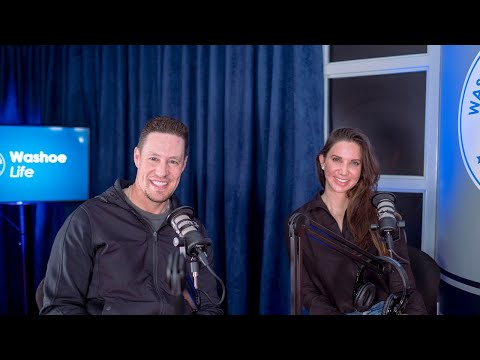
Nancy Nguyen Hagen, host of the Washoe Live podcast produced by the Washoe County communications division, interviewed two local organ-donation advocates about living kidney donation and transplant recovery.
Nancy Nguyen Hagen, host of the Washoe Live podcast produced by the Washoe County communications division, interviewed two local organ-donation advocates about living kidney donation and transplant recovery.
Aliyah Hartung, a two-time kidney transplant recipient and cosmetic dermatology and aesthetics physician assistant and founder of Allura Medical Aesthetics, said she first received a kidney transplant in February 2008 and that graft later declined. She described monitoring with her nephrologist and learning last year that her graft’s filtration rate (GFR) had fallen to about 12 percent. "You never realize how bad you're feeling until you start to feel better and you have a properly working organ," Hartung said.
Blake Lolly, introduced on the program as a former Reno Aces team manager and now the third-base coach for the Miami Marlins, told listeners he volunteered for testing and was informed on January 17 (year not specified) that he was a compatible match. Their transplant surgeries were scheduled at Mayo Clinic in Scottsdale, and Hartung said she had "98% function" within 48 hours after the operation.
Why it matters: Hartung and Lolly used their story to address misconceptions about living donation and to encourage people to register as donors. Hartung said transplant centers screen donors carefully and that donor surgeries are covered by the recipient’s insurance; "they will not let somebody donate unless they're an absolutely perfect candidate for donation," she said. Lolly said he wants to help others by answering questions about the donation process.
Details and context: Hartung described symptoms that signaled declining kidney function, including severe leg cramping and breathlessness climbing stairs, and said she avoided dialysis because a living donor match was found. She and Lolly described the donor nephrectomy as typically laparoscopic with several small ports and a larger lower incision to extract the kidney; Hartung cautioned that abdominal surgery is painful and recovery takes time even though Lolly returned to presence at work about six days after surgery.
They discussed outreach work with Donor Network West and participation in community events, including the Rose Parade, where donor families and recipients are honored. Hartung said Nevada ranks highly for organ procurement but lacks local transplant-surgery capacity in parts of the state, and noted having a transplant facility in Northern Nevada would reduce travel burdens for patients.
Quotes from the interview include Hartung: "I always had a couple of issues with swelling and blood pressure ... my creatinine ... was just steadily increasing" and Lolly: "The one thing I'd love for people to know is, like, you're okay." Both urged people to register as donors and to discuss donation decisions with family. Hartung specifically recommended getting the organ-donor designation on a driver's license and said facilities provide integrated care for donors and recipients.
Ending note: The interview focused on lived experience, clinical monitoring and the transplant process rather than policy. Hartung and Lolly framed their story as a way to encourage testing and registration and to answer practical questions about donor evaluation, surgery and recovery.