Get Full Government Meeting Transcripts, Videos, & Alerts Forever!
Get email alerts on the Judicial topic
No spam. Unsubscribe anytime.
Tennessee Supreme Court hears whether TPPA shields lawyers from malpractice claims
Summary
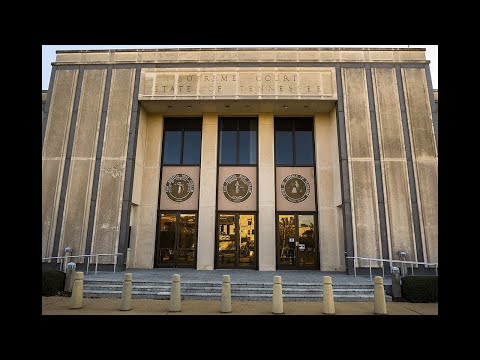
At an oral argument before the Supreme Court of Tennessee in West Tennessee, attorneys for Allen Cartwright and for Thomas & Hendricks debated whether the Tennessee Public Participation Act allows lawyers to seek dismissal of malpractice suits that arise from litigation conduct.
At an oral argument before the Supreme Court of Tennessee in West Tennessee, attorneys for Allen Cartwright and for the law firms Thomas & Hendricks argued whether the Tennessee Public Participation Act (TPPA) allows lawyers to seek dismissal of malpractice suits that arise from litigation conduct.
The question presented is whether a malpractice suit that challenges an attorney’s decision to file and maintain lawsuits can be treated as a legal action “filed in response to a party’s exercise of the right to petition,” triggering the TPPA’s dismissal procedure. The outcome could determine whether some malpractice claims are subject to early dismissal under the statute.
Petitioner’s counsel, identified in the record as Mr. Duncan, told the court that this is a straight legal-malpractice case and that the TPPA should not bar the claim because the right to petition protected by Article I, Section 23 of the Tennessee Constitution (and the First Amendment) is, as this court has recently explained, “only enforceable against a government entity,” not private parties. Duncan argued the underlying trust suits between private parties did not assert a constitutional petition right that could be invoked by the defendants as a shield in malpractice litigation. He told the court the defendants’ refiling of suits that were time-barred is the basis for the malpractice damages alleged and emphasized that the malpractice claim rests on settled elements — duty, breach, causation and damages.
Defense counsel Lucien Parra urged the court to read the TPPA’s plain language and purpose broadly. Parra said the statute was enacted to “encourage and safeguard the constitutional rights of persons to petition” and provides a new procedural mechanism for quickly dismissing abusive litigation. Citing the central provision, Parra quoted the statute’s text in argument: if a legal action “is filed in response to a party’s exercise of the right to petition, that party may petition the court to dismiss [the] legal action.” He told the court that the trial court and the court of appeals both found the lawyers’ filings — the fifth and sixth trust lawsuits at issue — were exercises of petitioning activity and that the TPPA applies on that basis.
Justices pressed both sides on limiting principles and practical consequences. One justice asked whether the statute, if read broadly, would sweep in routine litigation steps such as motions to compel discovery or individual pleadings; Parra acknowledged uncertainty about how far the language might extend but said resolving every hypothetical was unnecessary to decide the present case: “I do think, in a proper case or even here, this court could address the question of whether legal action includes every motion,” he said, and added, “I do think it is both the client and the lawyer with that right. I don't think it matters under the TPPA.”
Duncan countered that allowing a lawyer to invoke the TPPA as a defense against a malpractice claim would substantially change the landscape for malpractice litigation, and that Tennessee precedent (as he read it) limits the petition clause’s enforceability to government actors. He pressed that the TPPA “is not meant to create any new cause of action or alter any existing cause of action” and argued the statute should not be read to give attorneys blanket procedural immunity for allegedly negligent litigation choices.
Both sides relied on out-of-state authorities and prior Tennessee decisions in different ways during argument. Parra cited Button and other precedents to argue that attorneys can, in some circumstances, be deemed to exercise petitioning or First Amendment-protected activities; the justices referenced federal and state decisions that read Button more narrowly (for example, Jacoby & Myers in the Second Circuit) and queried whether Tennessee law has resolved whether an attorney may assert an independent constitutional petition right distinct from the client’s.
The justices also discussed statutory text and structure. The parties debated provisions and section citations from the TPPA that the record identifies as Tenn. Code Ann. § 20-17-101 et seq. (the briefs and argument repeatedly referenced § 20-17-102, § 20-17-104(a), and § 20-17-105). Defense counsel pointed to the statute’s broad-purpose language directing courts to construe the TPPA to encourage and safeguard petitioning rights; petitioner’s counsel emphasized limiting constructions drawn from Tennessee case law.
No decision was announced from the bench. After argument, the court thanked counsel and called the next scheduled matter.
Votes or orders were not issued at argument; the court will issue an opinion or order at a later date.