Get Full Government Meeting Transcripts, Videos, & Alerts Forever!
Get email alerts on the Judicial Tppa Interpretation topic
No spam. Unsubscribe anytime.
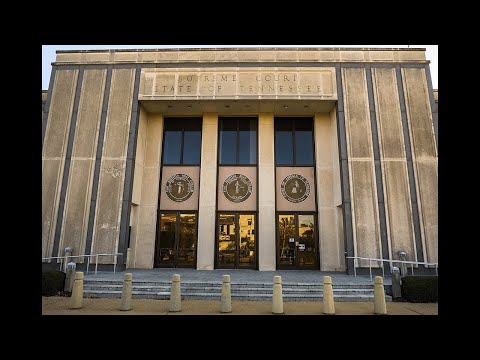
Tennessee justices probe limits of anti‑SLAPP law in trustees’ malpractice suit against opposing lawyers
Summary
The Tennessee appellate court heard oral argument over whether the Tennessee Protection of Participation Act (TPPA) bars a trustees’ lawsuit that accuses opposing counsel of malpractice and deception in a long-running trust dispute.
The Tennessee appellate court heard oral argument over whether the Tennessee Protection of Participation Act (TPPA) bars a trustees’ lawsuit that accuses opposing counsel of malpractice and deception in a long-running trust dispute.
The issue centers on two statutory provisions. Counsel for the trustees argued the suit targets malpractice — "the tort of another" — not protected petitioning activity, while lawyers for the defendants said the complaint is at least "related to" the trust lawsuits and therefore falls within the TPPA. Chief Justice Kirby and other justices repeatedly asked whether §104(a)’s "filed in response to" language is a gating requirement and how it fits with §105(a)’s broader "relates to" phrasing.
Why it matters: The court’s interpretation could determine whether a litigation‑related malpractice claim by third parties can be dismissed under Tennessee’s anti‑SLAPP procedure, potentially affecting access to a fast dismissal mechanism in cases where alleged torts and underlying litigation overlap.
At oral argument, David Wade, who said he represents the trustees (the Garners), told the court his clients did not sue because of the filing of the trust lawsuits themselves but because the Mitchells allegedly "failed and neglected to disclose, failed and neglected to communicate, failed to disclose their conflicts of interests, and [failed to advise] his need to obtain independent counsel." Wade said those allegations (cited in the complaint at paragraphs 69–71) show the gravamen of the claim is malpractice, not petitioning activity. He argued courts should examine the specific wrongful acts alleged rather than treat every lawsuit filing as dispositive.
Lucian Perra, representing the defendant lawyers and law firms, answered that the Garners’ complaint "at the very least relates to the filing of the trust lawsuits" and that Judge Stafford’s opinion and the Court of Appeals found the complaint tied to the litigation. Perra told the court, "We believe their claims are frivolous. We believe their claims are exactly the kind of claims that the TPPA is intended to provide an exit ramp for quickly." He urged that §104(a) and §105(a) should be read together and that the trial court and Court of Appeals correctly identified the connection to petitioning activity.
Justices pressed both sides on framing and remedy. Chief Justice Kirby asked, "How do 104(a) and 105(a) work together?" and whether §104(a) is the prerequisite that a plaintiff must satisfy before the procedural relief in §105(a) can be reached. Justice Campbell and another justice raised hypotheticals about malpractice claims that stem from failures to communicate during litigation to test whether every malpractice action tied to litigation would be swept up by the TPPA.
Counsel discussed case law from other jurisdictions and lower courts. Wade and others cited Corotronic Corporation (a California appellate case) for the proposition that courts should determine the gravamen of the complaint and treat protected litigation activity as incidental if it is only evidence of wrongdoing. Perra pointed to a Texas decision (Youngkin) and the Court of Appeals’ reasoning in this matter to support a broader reading of the TPPA. Both sides referenced Judge Stafford’s opinion at the trial level and other lower‑court rulings in the long procedural history.
Factual and procedural background recited at argument: counsel said the dispute grew out of eight successive trust lawsuits spanning roughly 15 years, beginning with a chancery filing in February 2004. Wade said an amendment to the trust ultimately increased Allen Cartwright’s distributions by about $1,300,000 and that the trustees did not themselves sue the Mitchells after earlier rulings; at one point the Lewis Thomason firm withdrew from representation. Perra emphasized that portions of the Garners’ complaint seek recovery for fees and costs incurred defending those trust suits.
Several justices explored possible remedies if the court agreed with parts of either side’s statutory reading — for example, whether the court could construe the complaint narrowly to bar plaintiffs from seeking damages tied to the filing or maintenance of the trust suits while permitting other claims to proceed. Wade said he had not found authority for a piecemeal TPPA dismissal and relied on gravamen analysis to argue for an all‑or‑nothing determination.
The court concluded oral argument and announced the case would be submitted for decision.