Get Full Government Meeting Transcripts, Videos, & Alerts Forever!
Get email alerts on the High School Program Of Studies topic
No spam. Unsubscribe anytime.
Saucon Valley board approves revised high school Program of Studies, expands dual enrollment and records middle-school credits on transcripts
Summary
After discussion, the board approved changes to the 2025-26 high school Program of Studies that add dual-enrollment opportunities, revise English and ELL course designations, include AP Seminar/Research sequencing and add a statement that qualifying middle‑school courses can carry graduation credit and be recorded on transcripts.
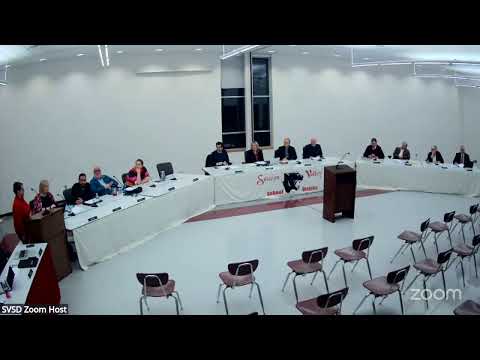
The Saucon Valley School District Board of Education voted to approve revisions to the high school Program of Studies for 2025-26 on April 8 after staff described a set of mostly procedural and curricular updates intended to expand dual enrollment and clarify course placement.
Dr. Kasky, who presented the revisions with administrative colleagues, said the changes include renaming English A–D for English language learners to English 1 and English 2 and using WIDA ACCESS scores to place ELL students. The program will add an NCC (Northampton Community College) Intro to Communications dual-enrollment course pending identification of an approved teacher, and it removes a set of specialty electives (for example, honors analytical writing options) while adding English 12 and English 12 Honors and emphasizing writing across grades 9–12.
Kasky said AP Research will be added back into the program of studies, alongside AP Seminar, because AP Research requires prior completion of AP Seminar. The revisions also add the district’s course-advancement policy (policy 2 15.1) and clarify prerequisites and whether courses count as electives or required credits.
Administrators told the board they intend to increase dual-enrollment offerings by meeting with college partners and using articulation agreements so students can earn high school and college credit for courses taught at the high school by qualified staff. Kasky and Miss Davis said schools will pilot materials and emphasize writing instruction while cataloging middle-school courses (Spanish, French, Algebra I and others) so they can appear on high-school transcripts when taught and assessed comparably to the high-school version.
Board members pressed for clarity on how recording middle-school courses for graduation credit interacts with the district’s prior direction that students take a math course each high‑school year. One board member called the change “not de minimis” and requested more committee-level discussion; Dr. Kasky and administration responded that the policy language already exists and that including it in the Program of Studies improves transparency. A motion to approve the Program of Studies passed by voice vote; an exact roll-call tally was not recorded in the meeting transcript.
Because the Program of Studies links to board policy and graduation requirements, the administration said any change to the district graduation‑credit minimums (for example, requiring four years of math) would need a separate board policy action.
The board approved the Program of Studies by voice vote during the education section of the meeting.