Get Full Government Meeting Transcripts, Videos, & Alerts Forever!
Get email alerts on the School Climate topic
No spam. Unsubscribe anytime.
New Britain Board hears school climate survey showing students feel less safe and less engaged than adults do
Summary
District presentation showed high marks for school leadership and teacher relationships but identified gaps in student safety, peer respect and family communication; district to expand restorative-practice training and begin full PBIS rollout ahead of a state July 2025 climate-specialist requirement.
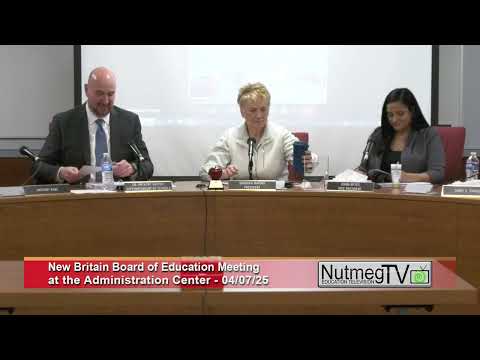
The New Britain Board of Education on April 7 reviewed results of a districtwide school climate survey that found strong ratings for school leadership and teacher-student relationships but notable gaps in student safety, peer respect and parent communication.
The presentation by district staff said 56 percent of students (grades 3–12) responded to the survey and that 82 percent of students agreed their teachers care about them. But only 68 percent of students said they feel safe at school — compared with about 85 percent of parents and 76 percent of staff — and only 55–56 percent of students said they like going to school each day.
District officials said the findings matter because the perceptions point to issues that affect attendance, school climate and learning. "School leadership is widely respected," said Harold Richardson, summarizing a takeaway from the data, but he added that differences in safety perceptions and low peer-respect scores mean the district must improve supports and consistent practices across schools.
Kate Esolero, who led the slide presentation with Richardson, said strengths include teacher feedback and high expectations: 74 percent of students reported receiving regular feedback, and 89 percent of staff said they challenge students to use higher-order thinking skills. "We'll show you what's working well for our students, our families, and staff," Esolero said at the start of the report.
But Esolero and Richardson highlighted three principal areas for growth: student perceptions of safety, student engagement and the consistency of positive school-to-home communication. They said only about 40 percent of students believe their peers are respectful and kind. The district plans targeted interventions including restorative-practice training for climate specialists and a first-year districtwide rollout of Positive Behavioral Interventions and Supports (PBIS).
Richardson said the state will require a climate specialist in every school starting July 2025; the district said it already assigns climate responsibilities to existing staff (assistant principals or social workers in smaller programs) and is training them now to be restorative-practice trainers so they can return to schools and deliver consistent training.
Officials described specific steps to address gaps: district-led professional development, walkthroughs with feedback for principals, stronger school plans for regular teacher feedback to families, expanded outreach techniques (phone, text, email, multilingual materials, QR codes at events) and partnering with community-based organizations to support restorative practices.
Board members and other attendees pressed for details. Board member Annie Parker and others asked whether the data are disaggregated by grade band; staff said the decline in peer respect begins in middle school and becomes more pronounced in higher grades. Board member Tina Santana, joining remotely, asked about special-education family participation; staff said the presentation did not include a breakdown by special-education status but recommended approaches (student ID tracking or targeted outreach) to increase response rates.
The board noted the low family response rate (11 percent) and heard staff explanation of outreach methods: multiple rounds of phone calls, emails, texts, printed flyers in multiple languages, social media posts and school-level encouragement at events such as parent-teacher conferences.
Staff said the spring survey is limited (about 20 questions) to encourage completion and that the district decided to use in-house tools rather than a commercial survey vendor to reduce costs. Board members suggested additional tactics — on-site tablets during events, raffles or incentives (to be checked for policy constraints) and improved faith-based partnerships — to boost participation.
District leaders framed the survey as a starting point for annual school improvement plans and principal goal-setting. They said the findings will be used to inform training, PBIS implementation timelines and new communication goals for the 2025–26 school year.
Looking ahead, the district plans follow-up reports as PBIS and restorative practices are implemented and as climate specialists finish their trainer certifications this spring and summer.