Get Full Government Meeting Transcripts, Videos, & Alerts Forever!
Get email alerts on the Childcare Group Home topic
No spam. Unsubscribe anytime.
Planning commission continues review of proposed Lake Havasu girls’ group home after lengthy public hearing
Summary
Mohave County Planning and Zoning Commission heard hours of testimony and continued action on a special use permit request from Impact 928 to build a licensed congregate group home for girls in the Lake Havasu Heights area; commissioners voted to continue the item to the next meeting to allow the applicant more outreach to neighbors.
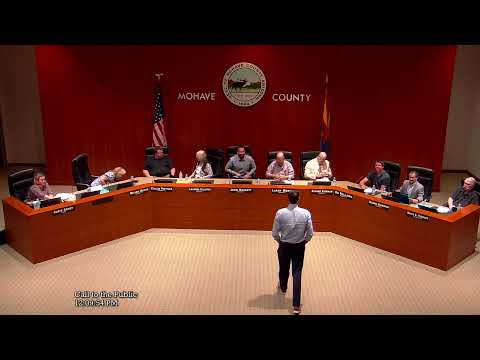
Mohave County Planning and Zoning Commissioners continued consideration of a special‑use permit for a proposed girls’ group home in the Lake Havasu Heights area after a multi‑hour public hearing that drew dozens of neighbors and multiple commissioners’ questions.
The commission took no final approval or denial on the application from Impact 928, the applicant and nonprofit that seeks to build and operate the congregate care home for girls ages roughly 13–17. The commission voted to continue the item to the next Planning and Zoning meeting so the applicant can meet directly with nearby residents and provide additional information.
The item matters because the facility would be the first group home aimed at foster girls in Mohave County and would house up to a permitted maximum (the applicant’s permit application listed up to 12 residents but the applicant said they plan for about eight). Commissioners, neighbors and the applicant debated safety, access to schools and medical services, road conditions, and whether the rural site is appropriate for a congregate care use regulated by the state.
Impact 928 board member Sheri Pontolillo, the applicant’s agent, described the intended program as a residential, non‑punitive home for girls in state care: “This is going to be not looking like a jail. It's going to look like a residence. It's gonna be quiet. It's very secure,” she said, adding the group expects to pursue licensing and follow state staffing and supervision rules.
Maddie, a program operations specialist introduced during the hearing, explained regulatory oversight: “The group home is … regulated by the Arizona Office of Licensing and Regulations. They have set regulations on staffing ratios … We also do have to have awake night staff, so they will be monitored 24/7,” she said, describing typical staff ratios used in congregate care.
Several commissioners probed logistics. Commissioner Martin and others asked whether the plan includes onsite schooling, how many staff would be present, and emergency response times. The applicant said staffing would generally follow a 12‑on/12‑off rotation with daytime direct‑care ratios commonly around 1:4 and nighttime coverage of 1:8; the applicant also said children would generally receive on‑site or online credit‑recovery education and, when possible, be transported to local schools.
Neighbors voiced a range of concerns during public comment. Multiple speakers said the chosen parcel is remote from hospitals, schools, and counseling services and cited dirt roads and long emergency response times. “I don't think putting 10 girls out in the middle of the desert with a bunch of old retired people is going to be very stimulating for them,” said Laurie Johnson Graves, a retired educator, describing her concerns about distance to services and internet reliability for on‑site instruction. Other residents raised property‑value, security and traffic worries and submitted a petition and letters of opposition.
An attorney speaking for neighbors, Tim Lasota, argued the proposed use conflicts with zoning and the Mohave County general plan, telling commissioners the county code treats larger group care uses as commercial and asserting the location does not meet the general plan’s description of appropriate commercial or highway‑serving uses.
Impact 928 responded with funding and program details: the group described private donations supplemented by a $141,000 ARPA‑related grant award; the applicant said roughly $30,000 had already been used for initial programming and that placements by Arizona Department of Child Safety (DCS) would supply ongoing per‑placement revenue if children are placed at the facility.
After questions and hours of public comment, Commissioner Morse made a motion to continue the application to the commission’s next meeting so the applicant can meet with neighbors and provide further information; Commissioner Kirkham seconded. The roll‑call vote passed on the motion to continue.
Next steps: The applicant will meet with neighbors and return to Planning and Zoning for another hearing. The commission’s recommendation will then be forwarded to the Board of Supervisors, where final approval or conditions would be decided.