Get Full Government Meeting Transcripts, Videos, & Alerts Forever!
Get email alerts on the State Budget topic
No spam. Unsubscribe anytime.
Senate adopts budget package with targeted reductions, transfers and new higher-education formula
Summary
The West Virginia Senate approved a committee substitute budget (House Bill 2026) that trims some appropriations, adds targeted investments in economic development and infrastructure, and implements a higher education funding formula. Lawmakers debated reductions and restorations before approving the plan.
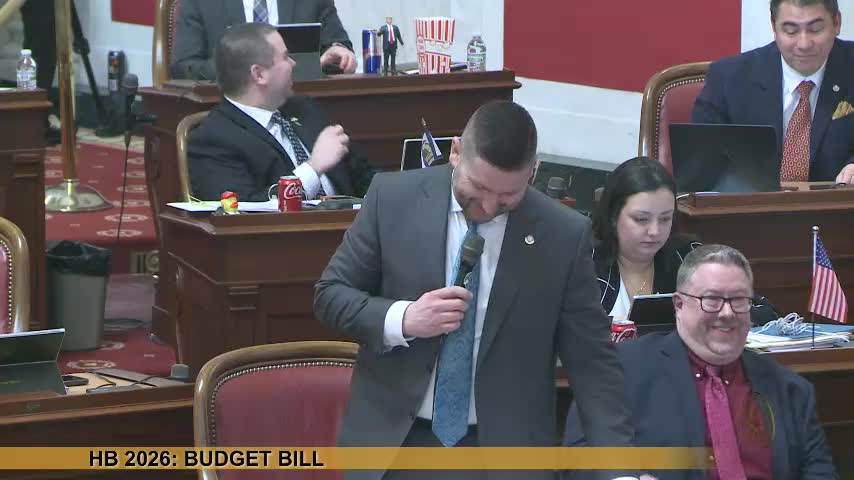
The West Virginia Senate on April 8 approved a committee substitute of the fiscal 2026 budget, adopting House Bill 2026 after debate over reductions and restorations to the governor's introduced plan.
The committee substitute reduces total general revenue by about $930,000 compared with the introduced budget while adding directed transfers and programmatic improvements, including a new higher education funding formula and $50 million transfers to a high impact development fund and to the state road fund for maintenance.
The committee's overview emphasized the substitute's mix of discretionary cuts, technical corrections and program increases. The Senate's presenter, Senator from Sixteenth (state senator), said the substitute reflects changes including discretionary reductions in the judiciary and public defenders, adjustments to education funding lines based on county property valuations, and a $21 million reduction in the medical services appropriation tied partly to other statutory changes and realignments. "These include discretionary department mental reductions, adjustments based on legislation, and reductions offered by the governor in his adjustment letter," the senator said in explaining the substitute.
Why it matters: the Senate version preserves core services including Medicaid and PEIA while adding investments the chamber prioritized for economic development, roads and higher education. The written committee summary attached to the floor remarks lists $3,764,690 in improvements to implement provisions of five bills that passed the Senate, plus specified additions for SNAP-related programs, pregnancy centers, school mapping and a directed transfer to the personal income tax reserve.
Key details from the floor debate and committee summary - Net change to general revenue: a $930,000 reduction from the introduced budget (as presented by the committee). - Noted reductions: judiciary discretionary cuts of roughly $5.8 million and actuarial adjustments of roughly $70,976; discretionary reductions to public defenders totaling $21.4 million (committee noted these would result in half of funding requiring a future supplemental appropriation); a $21 million reduction in medical services appropriation (partly related to Senate Bill 128 and Medicaid realignment). - Additions: $3,764,690 to cover provisions of five Senate-passed bills; $360,000 for a SNAP step-stretch program at the Department of Agriculture; $3,000,000 for pregnancy centers; $3,100,000 for school mapping; a $35,800,000 directed transfer to the Department of Revenue to strengthen the personal income tax reserve fund; the committee implemented a higher education funding formula for the first time with a net institutional improvement of roughly $91,000.
During debate Senator from Harrison (state senator) framed the package as a forward-looking plan: "We chose to build, we chose to lead, and we chose to put the future first," he said, adding that the budget "is both balanced and bold" and that it maintains core services while investing in roads, education and workforce training.
The Senate adopted the amendment that incorporated the committee substitute and then voted to pass House Bill 2026. The roll call recorded 34 yeas, 0 nays; the Senate then voted to make the bill effective from passage by a two-thirds vote (34 yeas, 0 nays).
What the Senate did not do: The substitute's sponsors noted some items remain subject to future action, such as supplemental appropriations or adjustments once further revenue or county data are finalized; the committee's presentation described several items as adjustments or technical corrections rather than permanent policy changes.
Next steps: The Senate clerk was instructed to communicate the Senate's action to the House. Any further changes would require House concurrence or conference action.