Get Full Government Meeting Transcripts, Videos, & Alerts Forever!
Get email alerts on the Public Health Newborns topic
No spam. Unsubscribe anytime.
Senate Rejects Amendment to Change Newborn Eye Prophylaxis Law; Roll Call 13-16
Summary
An amendment to remove a code provision concerning antibiotic ocular prophylaxis for newborns failed on a roll-call vote. Supporters cited blindness prevention and historical public-health practice; opponents cited changing standards and guidance from pediatric professional groups.
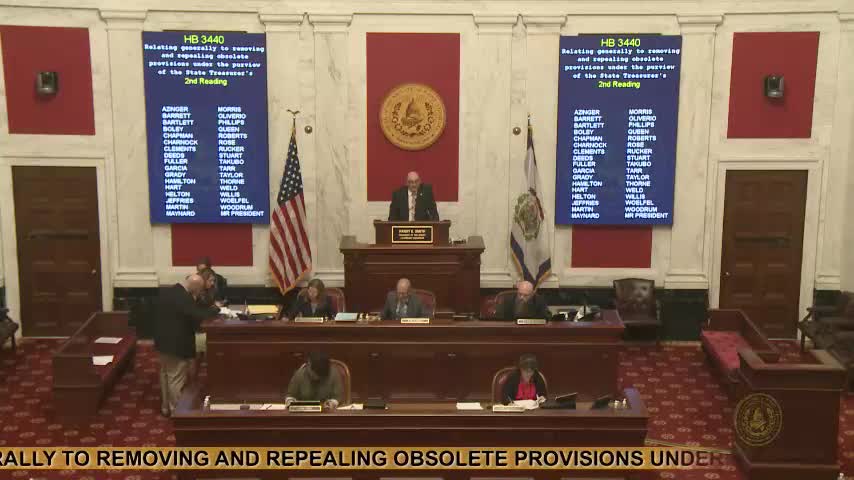
During second reading of the Engrossed Committee Substitute for House Bill 34-44, which relates to inflammation of newborns’ eyes, the Senate debated a floor amendment offered by the Senior Senator from the Seventeenth. The amendment would have removed an older code provision and eliminated penalties associated with the statutory requirement, effectively creating an opt-out for parents; the amendment failed on a recorded vote, 13 yays, 16 nays, with 5 absent.
The Senior Senator from the Seventeenth explained the amendment on the floor, saying routine prophylactic antibiotic ointment applied to newborns’ eyes within the first hour after birth prevents infections that can lead to blindness. On the floor the senator said West Virginia has about “16,000 to 17,000 births” and that, “statistically” without prophylaxis about “50 or so” children could be at risk of blindness, and urged colleagues to preserve the statutory language to protect infants’ vision.
Senator from Ohio urged rejection of the amendment, citing a February review in the American Academy of Pediatrics and guidance from the Canadian Pediatric Society that questioned universal topical ocular prophylaxis; the senator said prophylaxis prevents gonococcal ophthalmia neonatorum but not infections caused by other common pathogens such as chlamydia, and cited concerns about increasing resistance to erythromycin. Senator from Jefferson said removing statutory penalties eliminated the rationale for keeping the old language in code and defended existing medical standards and hospital consent procedures.
There was discussion on alternative practices, including a floor exchange describing colostrum applied to the eyes as a homeopathic or natural option for some parents. After floor debate the Senate held a roll-call vote on the amendment; the clerk reported the result as 13 yays, 16 nays, 5 absent. The amendment was rejected; the clerk then reported the bill would be advanced to third reading.
The recorded machine vote and the debate appear in the Senate transcript for April 8, 2025.