Get Full Government Meeting Transcripts, Videos, & Alerts Forever!
Get email alerts on the Libraries Obscenity topic
No spam. Unsubscribe anytime.
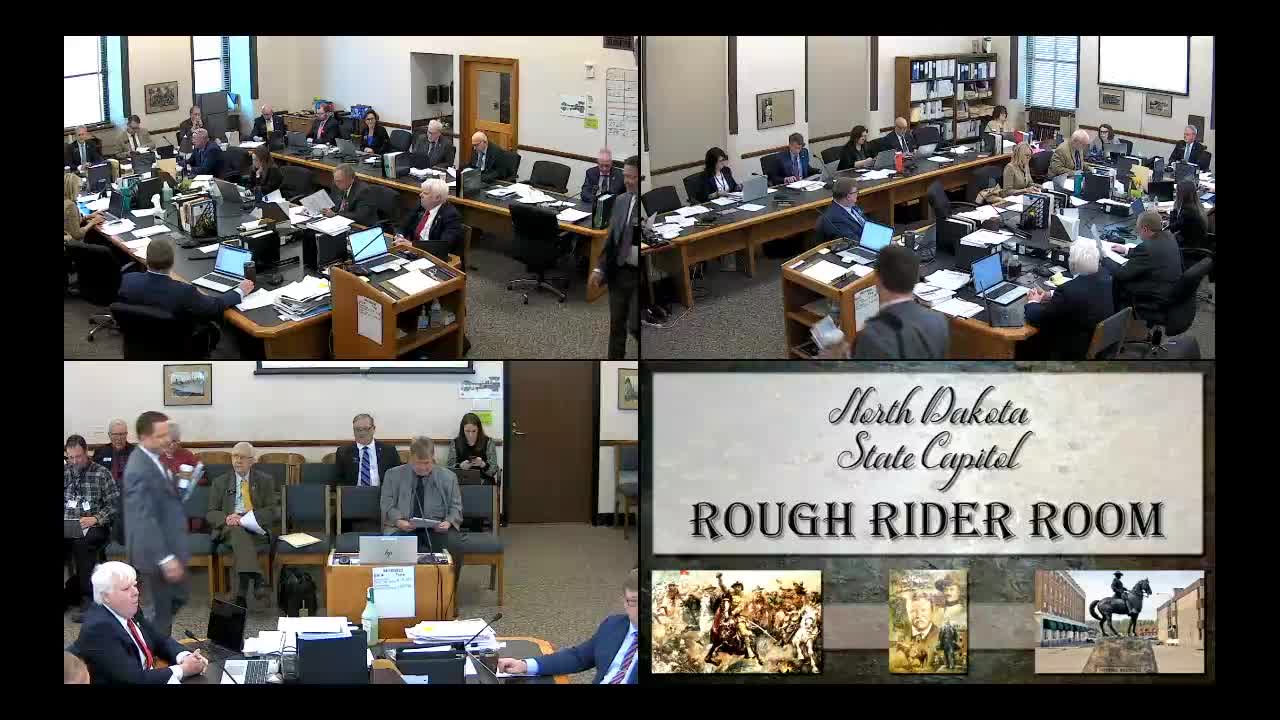
Committee hears lengthy debate on bill to relocate sexually explicit material in schools and public libraries; no vote
Summary
Representative Lawrence Clamine told the House Appropriations Committee Senate Bill 2,307 would require public school districts and public libraries to adopt policies ensuring material the bill defines as explicit is relocated to areas not easily accessible to minors; the committee heard lengthy testimony on enforcement, digital access and fiscal impact and did not vote on the bill.
Representative Lawrence Clamine, chair of the House Judiciary Committee, presented Senate Bill 2,307 on behalf of its Senate sponsors, telling the House Appropriations Committee the measure would require school districts and public libraries to adopt policies ensuring “explicit sexual material” is not easily accessible to minors and to relocate any such materials to areas not readily reachable by children. “This bill does not ban any books nor does it require any books to be removed from the library,” Clamine said as he summarized the bill’s text, which incorporates the Miller test for obscenity.
The bill would add public school libraries to the list of places where minors are ‘‘invited as part of the general public’’ and would require each school district and public library to form a committee to reconsider relocations when asked by an individual and to refer disputes to the local state’s attorney. If a state’s attorney determines material is obscene under the Miller standard and a library or school district does not take corrective action, the state’s attorney could notify the state treasurer or the superintendent of public instruction to withhold state funds until compliance, and may prosecute for failure to comply.
Senator Keith Behm, the bill’s Senate sponsor, offered an amendment that removes a disputed Section 6 (which addressed digital-age access and had generated a fiscal note tied to ODIN, the statewide library technology network) and substitutes references to the federal Children’s Internet Protection Act, or CIPA. “All libraries that receive E‑rate funding have to follow this already,” Behm told committee members, saying the amendment was intended to remove the ODIN fiscal note attached to the original section.
Corey Quirk, deputy CIO for Court Technology Services and a witness for ODIN, told the committee the proposed amendment would eliminate ODIN’s previously estimated fiscal exposure. “The proposed amendment as presented to you this morning . . . would eliminate the need for the current fiscal note,” Quirk said, referring to software costs tied to age‑verification and electronic resource access.
State’s attorneys’ offices and other witnesses warned the committee the bill could create new workload and legal obligations. Jonathan Byers of the North Dakota State’s Attorneys Association said his members would be required not only to review material but to investigate and, in many counties, to hire outside prosecutors because ethical rules bar an office from acting as investigator, expert witness and prosecutor in the same matter. “The example is: you’re the investigator, the expert witness and the prosecutor — all for no additional money — and that is what these state’s attorneys are going to have to do,” Byers said, and he described a resulting fiscal impact for county prosecutors.
Committee members pressed several other practical questions. Representatives asked whether moving material to a higher shelf or a locked cabinet would count as “not easily accessible” in small, volunteer‑run libraries; whether the penalty of withholding state funds from an entire school district would be legally and practically workable; and whether ODIN, which provides statewide electronic access through apps such as Libby or Hoopla, would still allow remote access to materials in a way the bill would not constrain if the Section 6 digital measures were removed.
Representative Murphy and others raised concerns about relying on a local state’s attorney as the final arbiter of the Miller test, asking how consistent application would be across counties. Clamine said the bill changes one word of the Miller language — replacing “ordinary” with “reasonable” — to create what he described as an “objective” standard, and said a state’s attorney would consult case law when asked to render an opinion.
Members discussed a packet of challenged‑book lists from the American Library Association as evidence of the types of titles that have generated complaints nationally and in North Dakota, but several committee members and witnesses noted those lists track challenges, not judicial findings of obscenity. Some members who recounted local incidents said anecdotal failures of local processes motivated the bill. Others, including representatives from larger library systems, warned of implementation burdens for small, volunteer libraries and the risk of inconsistent enforcement.
After more than two hours of questions and testimony — including a detailed explanation of the ODIN fiscal note and the states’ attorneys’ concerns — the committee did not act. Committee leaders said Senator Behm’s amendment would be entered into the record and the fiscal presentation was on file; the bill will return to the committee at a later date for additional consideration.
Why it matters: The bill would change how local libraries and school districts handle material challenged as sexually explicit and would add a formal legal review and potential financial penalties for noncompliance. Opponents warn that relying on local prosecutors and withholding broad state funding raises legal and financial questions, while supporters say the bill is narrowly tailored to protect minors rather than to ban books.
What’s next: The committee explicitly did not take a vote and left the bill pending; Senator Behm’s amendment and the fiscal analysis by ODIN are part of the committee record for future hearings.