Get Full Government Meeting Transcripts, Videos, & Alerts Forever!
Get email alerts on the Minor Medical Exam Access topic
No spam. Unsubscribe anytime.
Senate defeats bill that would have required parent or guardian presence in most minor medical exams
Summary
House Bill 1450 — which would have required providers to give parents or guardians the right to remain in medical exam rooms with minors and to disclose standardized screening questions in advance — failed on a 18–29 vote after extended debate and a failed amendment to clarify exceptions.
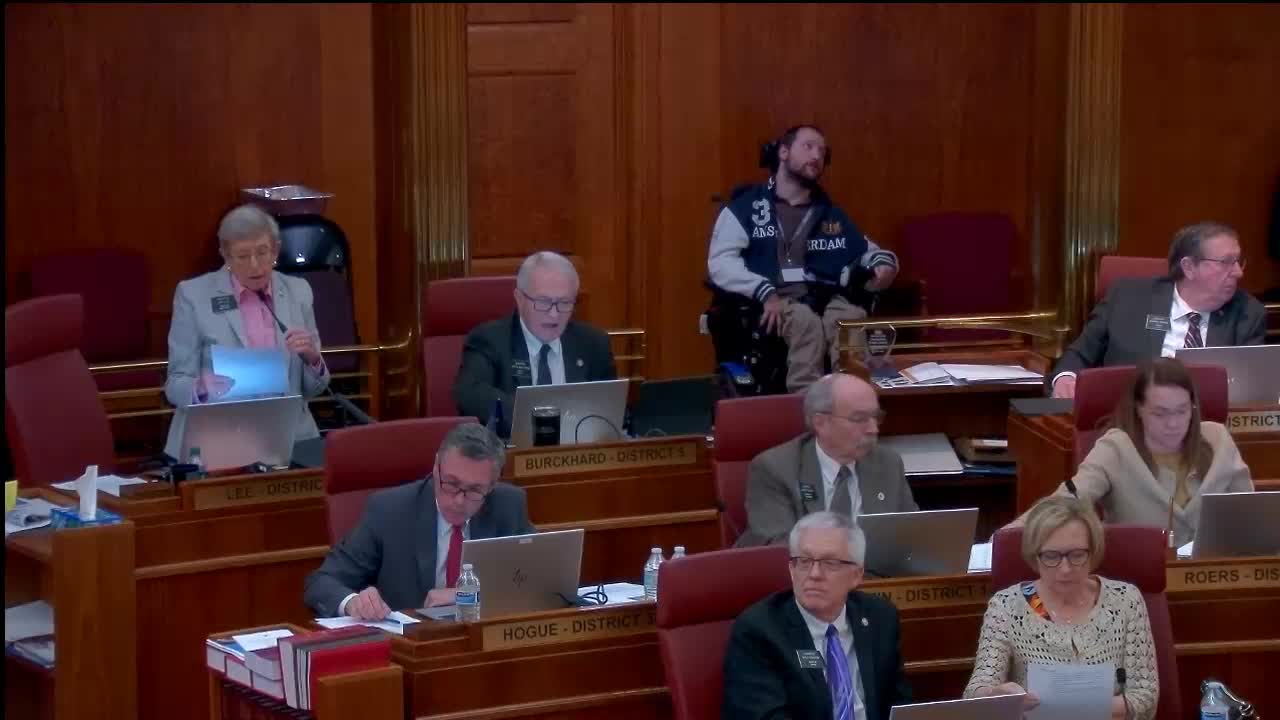
The North Dakota Senate debated House Bill 14 50 on April 10, 2025, and defeated the measure on final passage by a vote of 18 ayes to 29 nays.
The bill would have required health care providers to give a parent or guardian the right to remain in a medical examination room when a minor receives care, and to provide notice in advance of standardized oral or written screening questions. Exceptions in the bill included suspected cases of physical or sexual abuse and other narrow circumstances; proponents additionally sought an amendment to add human trafficking to the listed exceptions and to adjust wording about who may be present.
Senator Lee introduced the bill on the floor and summarized the committee’s split recommendation (a 3–3 tie), and then outlined the bill’s provisions and the competing viewpoints. Lee said the bill aimed to ensure parental awareness and oversight of questions posed to minors during medical visits. "There are many good people on both sides of this issue, including in our own committee, all of whom care about their children," Lee said, and concluded by urging senators to "vote nay" on the bill in his view (he stated his opposition in committee and on the floor).
Opponents — including pediatricians, hospital officials and mental health professionals who testified to the committee — warned that mandatory parental presence could prevent minors from disclosing suicidal ideation, abuse, or other sensitive information. Medical witnesses and several senators described screening tools for depression, anxiety and suicide risk that are typically used in adolescent care and said removing private time between clinician and patient could limit clinicians' ability to identify urgent risks. Senator Paulson, who spoke in opposition on the floor, said the bill would hinder clinicians’ ability to protect vulnerable youth.
The Senate considered a floor amendment (moved by Senator Clemens) intended to add exceptions and to alter some language in the bill. That amendment was the subject of a verification vote and failed 21–26. After further floor debate from both supporters and opponents, the Senate voted on final passage; the bill failed 18 ayes, 29 nays.
Members who spoke on the floor described deeply personal experiences on both sides of the issue. Supporters framed the bill as protecting parental rights and allowing parents to be present for preventive and routine care; opponents emphasized the public-safety and child-safety risks when minors do not have confidential access to clinicians in certain situations. Several senators said committee work tried but failed to find a compromise, which is why the bill reached the floor without a committee recommendation.
Because the bill was defeated on final passage, no statutory changes to the North Dakota Century Code were adopted.