
Committee outlines framework for rare-earth and critical-mineral bill tied to coal and fly ash; draft due next week
Get AI-powered insights, summaries, and transcripts
Subscribe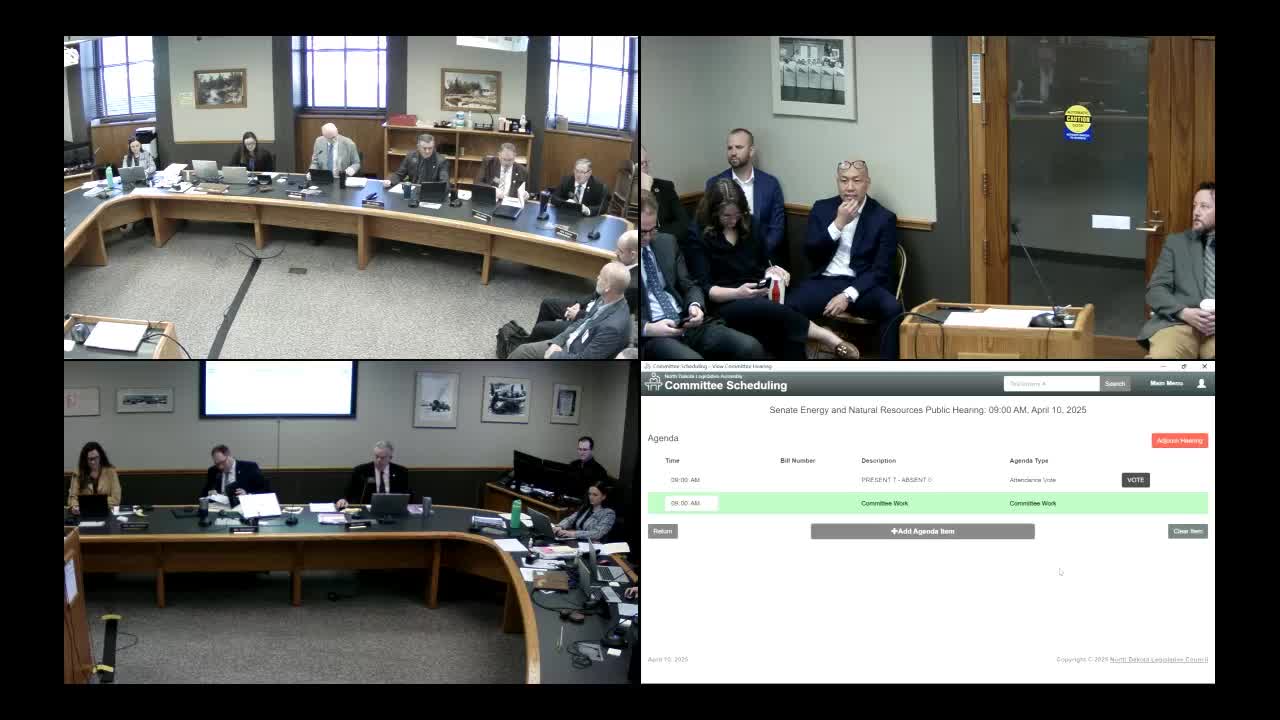
Summary
The Energy and Natural Resources Committee discussed House Bill 14-59, a measure to study and clarify ownership and development pathways for rare-earth elements and critical minerals associated with coal and fly ash. The chair said a draft will be ready early next week and the committee will act next Thursday; no formal vote was taken.
The Energy and Natural Resources Committee on an unspecified date detailed a four-part approach to House Bill 14-59, the proposal addressing rare-earth elements and critical minerals associated with coal and fly ash. Chair, Energy and Natural Resources Committee, outlined study language, public-policy language, a clarification of mineral-estate status and a review of when mineral ownership becomes part of post-combustion byproducts.
The committee chair said, "There will be either a dead bill next thursday or a live bill next thursday," and said the chair expects a draft early next week. The chair described one component as "clarifying language in the bill that would state that the rare earth elements and critical minerals are part of the mineral estate." The chair also said unresolved issues may have to be resolved in court rather than by legislation.
Representative Anderson, a member of the Legislature from District 6, urged faster action and said technological change and market opportunity create a narrow window. Anderson said, "fly ash contains about 6% of the rare minerals," and described a recovery method: breaking the glass structure, then rinsing with a mild acid solution. Anderson added, "technology doesn't wait for anyone."
Committee members and the chair said stakeholders in the discussion have included utilities, coal miners, landowners, the governor's office and the attorney general's office. The chair said the Department of Mineral Resources will be consulted as the draft is developed.
The chair described the public-policy portion as something to be coordinated with the governor's office and the attorney general's office and said those components "are not something that we would litigate over." The chair framed that language as protecting the state's interest and mineral owners and enabling profitable development for industry and owners.
Members discussed timing and competition from other jurisdictions. The chair and Representative Anderson referenced activity in Wyoming and potential competing sources overseas; Anderson said if the state waits six months it could "miss an opportunity."
No formal motions or votes were recorded on HB 14-59 during the meeting. Committee members said a draft bill would be circulated early next week and the committee planned to act on the measure at the committee meeting next Thursday. The chair warned that parts of the issue may eventually be litigated if negotiations do not resolve competing claims.
The discussion distinguished between three types of work: drafting study language to guide future analysis; developing public-policy language in consultation with executive offices; and statutory clarification that the identified minerals are part of the mineral estate. Committee members also discussed the question of when mineral ownership is lost and becomes part of post-combustion fly ash, an issue the chair said would be addressed in the draft.