Get Full Government Meeting Transcripts, Videos, & Alerts Forever!
Get email alerts on the Elections School Policy topic
No spam. Unsubscribe anytime.
Committee hears bill to create civil penalties for school districts that use public resources for electioneering
Summary
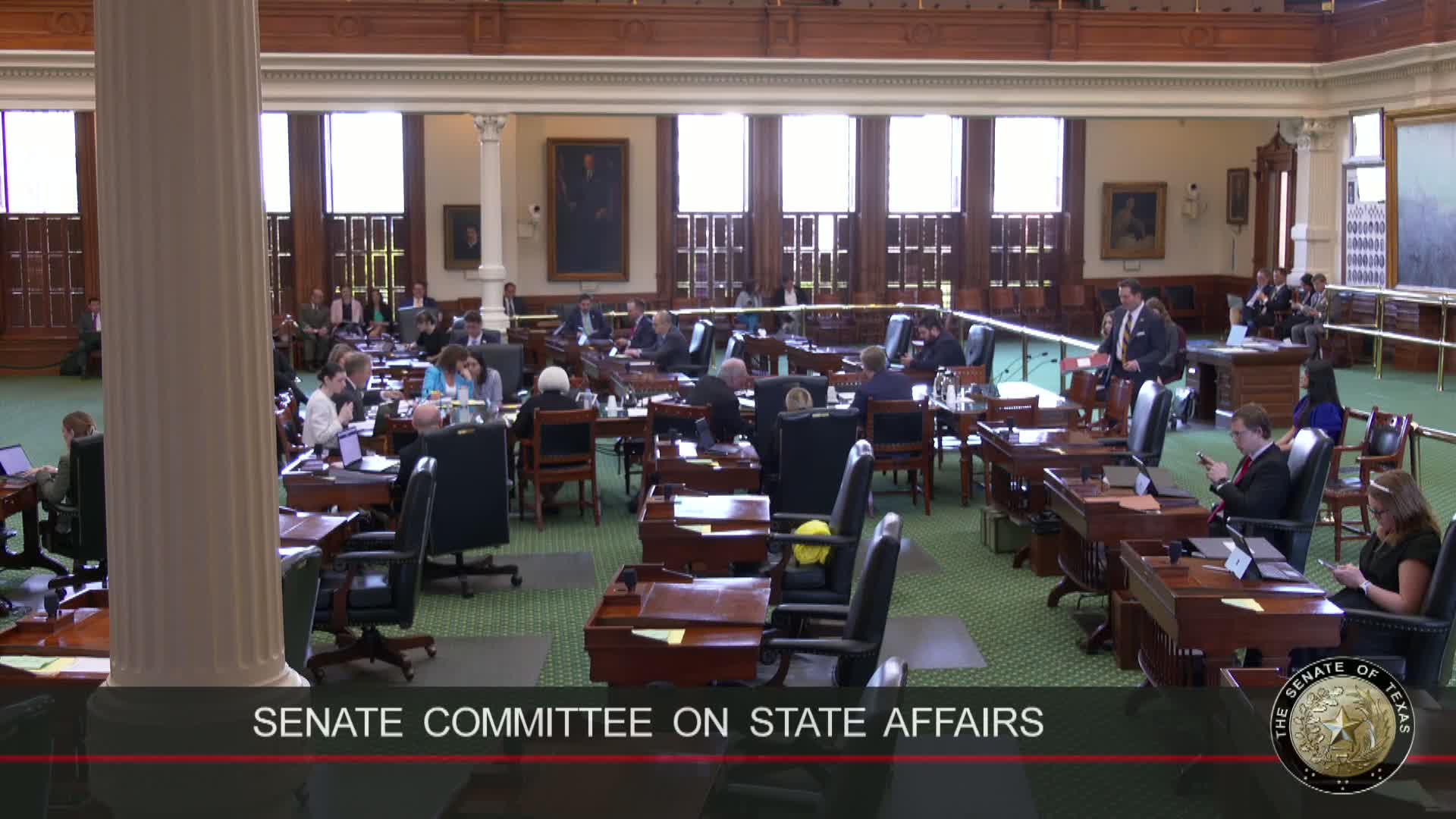
Senate Bill 2742 would create civil penalties and waive certain immunities for school districts and officials who use public resources for electioneering; the bill was presented to the Committee on State Affairs and left pending after limited public testimony.
Senator Hagenbu, the bill's author, told the Senate Committee on State Affairs that current law prohibits school officials from using public resources for political advocacy but provides no civil penalty, leaving courts and the attorney general with limited remedies.
"Senate Bill 2742 would create a means to deter ISDs from electioneering by establishing a civil penalty for this behavior," Senator Hagenbu said, explaining the measure would create penalties for boards of trustees and responsible officers and waive immunity for school districts and their officials when they violate the statute. The bill would allow the attorney general to sue to collect penalties and recover attorneys fees.
Senator Hagenbu said the committee substitute did not change the bill's policy but converted the draft to committee form. Ernest Garcia, chief of the administrative law division at the Office of the Attorney General, attended as a resource witness; no registered witnesses offered live testimony for or against during the public-comment period and the bill was left pending.
Senator Hagenbu said the measure is intended to "uphold the integrity of public institutions and ensure taxpayer resources are not misused for political purposes." Committee members took no recorded votes and the bill remains pending for further committee work.