Get Full Government Meeting Transcripts, Videos, & Alerts Forever!
Get email alerts on the Gator Scholarship Implementation topic
No spam. Unsubscribe anytime.
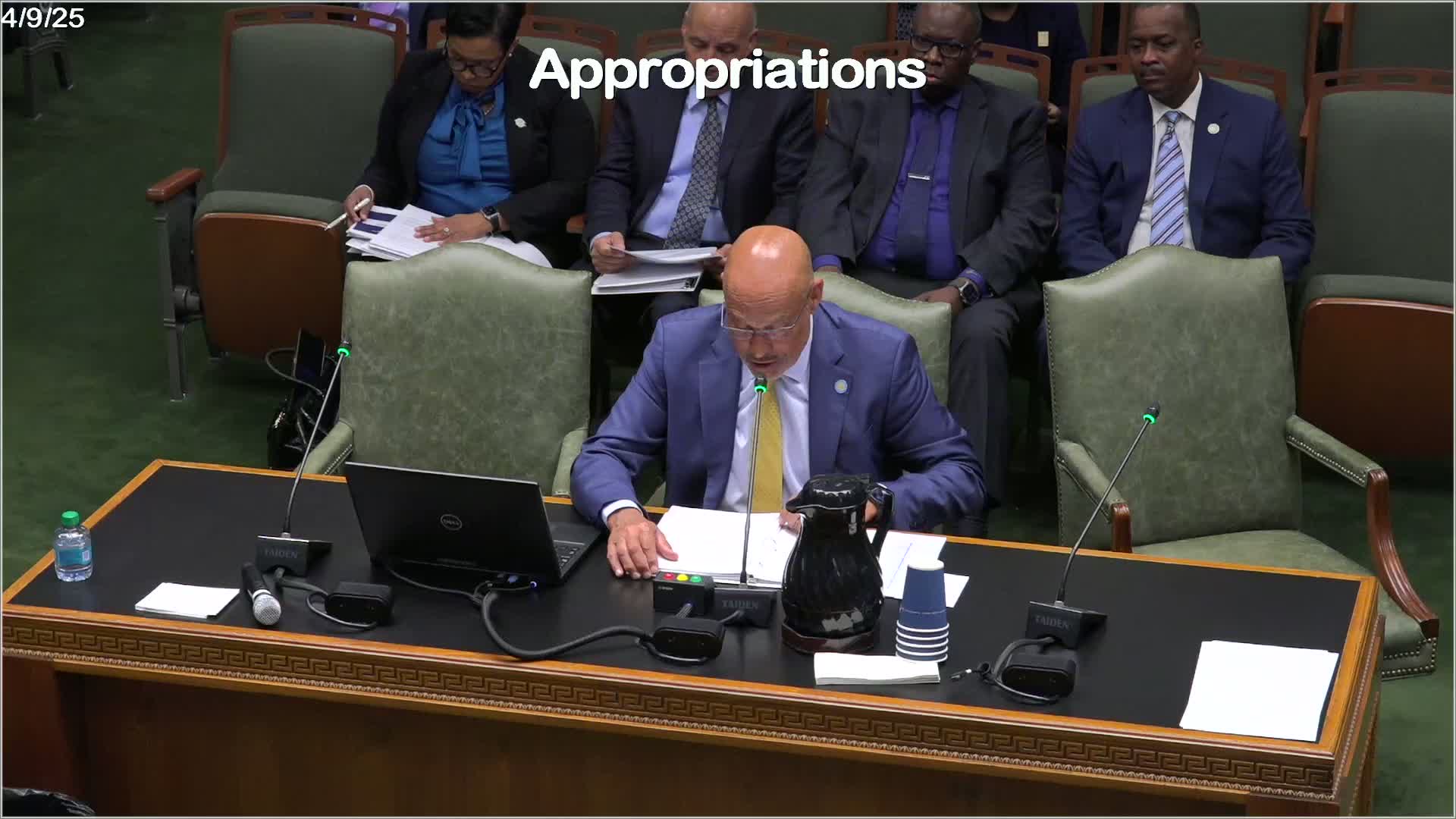
GATOR scholarship applies to 33,000 applicants; committee hears LDOE outline phased priority and first‑come process
Summary
The Louisiana Department of Education told the House Appropriations Committee that the state’s new GATOR education‑savings program had 33,000 applicants as of early April and outlined the phased, priority and timestamp (first‑come) rules that will be used to allocate awards if appropriation funds are limited.
The Louisiana Department of Education and House Fiscal Division summarized the state's new education savings account program (Act 1 of 2024, known in committee as "GATOR") and early‑childhood funding during the House Appropriations hearing.
House Fiscal analyst Ashari Robinson told the committee the application portal had received roughly 33,000 applications as of early April. "33,000 applications are in," Robinson said, adding that roughly 5,000 of those are students who already received vouchers under the previous state program.
What the committee heard: LDOE (Superintendent Cade Brumley) and House Fiscal staff described the GATOR statute as structured in phases and priorities. Phase 1 gives priority to existing voucher recipients; within later priorities the law directs eligibility for students from families at or below certain income thresholds and for students with disabilities. If appropriation funds are exhausted inside a specified priority, LDOE will allocate awards by timestamp (first‑come, first‑served) within that priority. Ashari Robinson summarized the implementation approach: "Phase 1 priority 1 is the voucher kids," and "priority 2 ... those from a family with total income at or below 250% of the federal poverty guideline or a student with a disability." That means families who applied earliest in an eligible priority will receive accounts before those who apply later.
Why it matters: The governor's FY26 executive budget included funding to serve roughly 11,000 students under GATOR; the department's application count (33,000) makes clear demand could exceed that appropriation. Committee members pressed department staff on sequencing, available seats in schools, and how families will know whether a school or provider has space.
Key details from the hearing: - Applications: House Fiscal reported ~33,000 total applicants (about 5,000 existing voucher recipients included in the count). The department expects to finalize counts after the application window closes. - Priorities and process: The statute sets three phases with ordered priorities; LDOE has published administrative rules that define the sequence and clarifies that within a priority awards are allocated by timestamp so earlier applicants are served first if available funds are limited. - Funding arithmetic: The executive budget would fund about 11,000 students under the GATOR approach; committee members asked for follow‑up estimates of what it would cost to serve the present applicant pool. - School participation: LDOE testified that many nonpublic schools and some public systems have expressed interest in participating as providers; but a school must commit seats and staffing before families can be guaranteed a place. Department staff said program design intentionally provides families a choice platform (account + spendable balance) rather than a simple vouchers check mailed to a school. - Early childhood: Separately the committee discussed early‑childhood funding (LA 4, CCAP). LDOE said CCAP continued but wait lists remain in some areas (reporting roughly 4,800 children on the CCAP wait list) and that some proposed federal programs (local food to school/childcare pilot) were not funded in the latest federal guidance.
What the committee asked for: LDOE and House Fiscal were asked to provide a parish‑by‑parish breakout of applications and school participation, estimate the cost to serve the current applicant pool, and provide additional information on seats promised by providers.
Ending: LDOE said it will continue to run the application platform and provide follow‑up numbers to the committee; the House Fiscal analyst reiterated the need for the legislature to weigh demand and funding choices before finalizing any appropriation for GATOR in FY26.