Get Full Government Meeting Transcripts, Videos, & Alerts Forever!
Get email alerts on the Higher Education Budget Review topic
No spam. Unsubscribe anytime.
Board of Regents budget review: higher education funding mostly steady, formula and enrollment shifts in focus
Summary
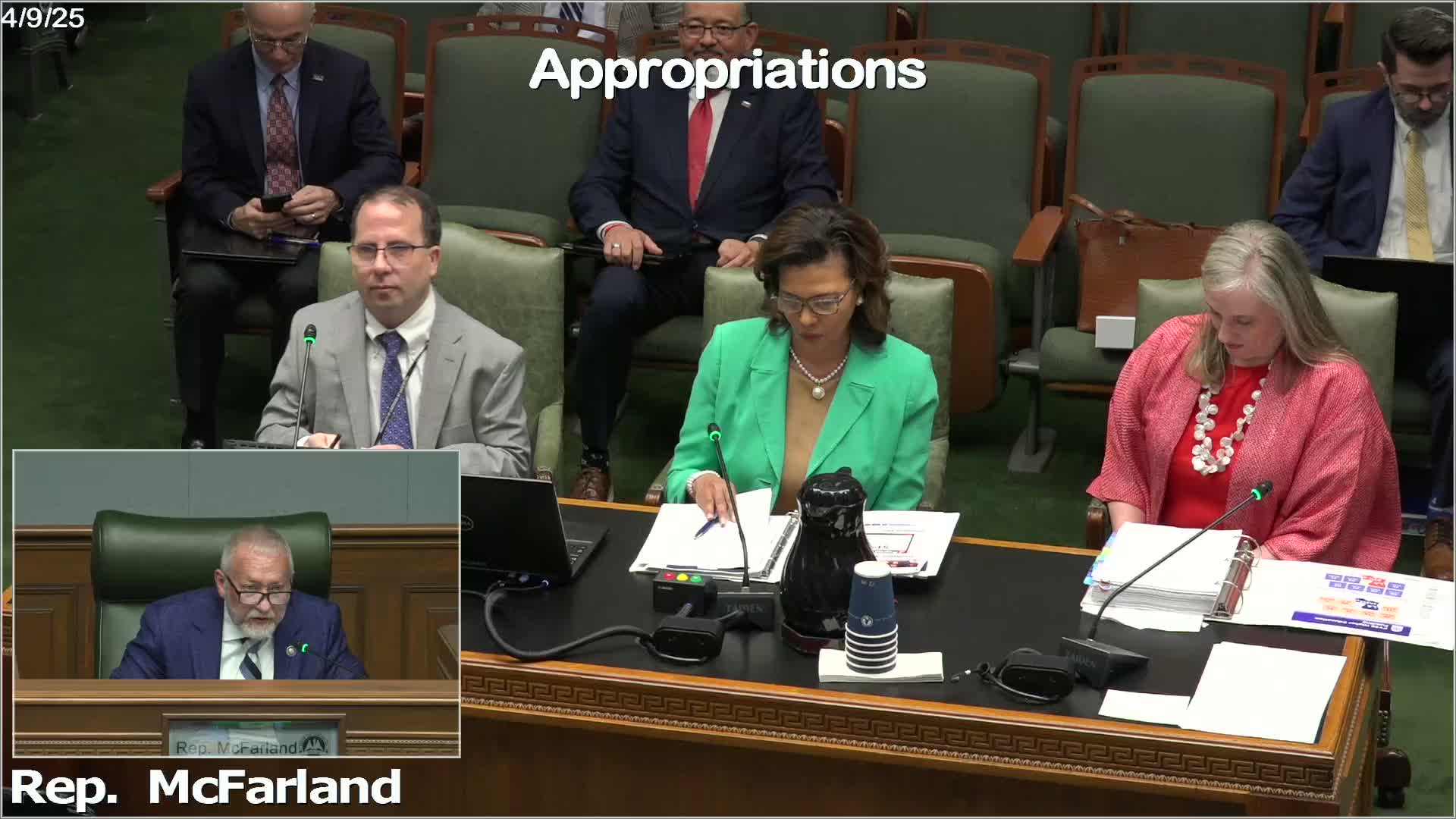
Balair LeBlanc of the House Fiscal Division presented the House Committee on Appropriations with the executive budget review for higher education, noting a funding mix that relies heavily on self‑generated revenues and significant one‑time items that have been removed from the FY26 starting point.
Balair LeBlanc of the House Fiscal Division presented the House Committee on Appropriations with the executive budget review for higher education, noting a funding mix that relies heavily on self-generated revenues and significant one‑time items that have been removed from the FY26 starting point.
The review and remarks by Kim Hunter Reed, Louisiana Commissioner of Higher Education, emphasized the sector’s dependence on tuition and fees and the need to expand credentials for the state’s workforce. "We proudly educate over 200,000 students across our colleges and universities in Louisiana," Reed said, adding the Board of Regents' goal for the state: at least 60% of adults holding a credential of value by 2030.
Why it matters: lawmakers heard that, while the FY26 starting point contained no across‑the‑board cuts, the executive budget removes one‑time investments used in FY25 and relies on a mix of state general fund, statutory dedications and self‑generated revenues (primarily tuition). Committee members and higher‑education leaders pressed on the potential effects on student aid (TOPS and GoGrant), the ability to hire faculty and staff under a statewide hiring freeze, and risks from federal research funding uncertainty.
Key details from the presentation: - The Fiscal Division framed the sector as largely self‑funded (tuition and fees) with the state general fund covering a smaller share; presenters emphasized that one‑time FY25 investments were being removed in the FY26 baseline. - The Board of Regents’ outcomes‑based funding formula was explained as shifting toward a 65% base / 35% outcomes split for FY26; outcomes metrics include completers, transfers and high‑demand fields. - Commissioner Kim Hunter Reed highlighted deferred‑maintenance needs (a multi‑hundred‑million backlog), the MJ Foster workforce scholarship (credentialing program) and workforce demands tied to announced economic projects in the state. "We are currently at 51% educational attainment, trending positive," Reed said, and asked the committee to consider recurring support for deferred maintenance and targeted financial aid. - TOPS and GoGrant funding stability and competitiveness were raised repeatedly. LA higher‑education leaders described students choosing out‑of‑state options when other states offer larger packages; committee members asked for further data on acceptance and enrollment behavior.
What was not decided: the committee did not vote on any appropriation during the hearing. Members and higher‑education leaders agreed the FY26 discussion is an opening for negotiations; follow‑up data requests and meetings with system presidents and regents staff were scheduled.
What legislators asked for: more detailed, campus‑level information on TOPS/GoGrant impacts, the hiring freeze’s operational effects (faculty, student services, financial‑aid processing), and clearer proposals for recurring funding of deferred maintenance and workforce scholarships.
Ending: Commissioner Reed closed by saying the systems are focused on increasing completion and aligning training with projected employer needs; she and the Board of Regents will continue to work with legislators on targeted investments and workforce training priorities.