Get Full Government Meeting Transcripts, Videos, & Alerts Forever!
Get email alerts on the School Budget topic
No spam. Unsubscribe anytime.
Lewiston superintendent presents $117.2 million school budget; insurance update may cut local request
Summary
Lewiston Superintendent Jake Langley told the City Council the Lewiston Public Schools FY2026 budget request is $117,177,091 and said a late insurance projection that health costs will rise about 3.3% could reduce the district's approved local mill‑rate request of 3.44% by an anticipated $200,000–$400,000.
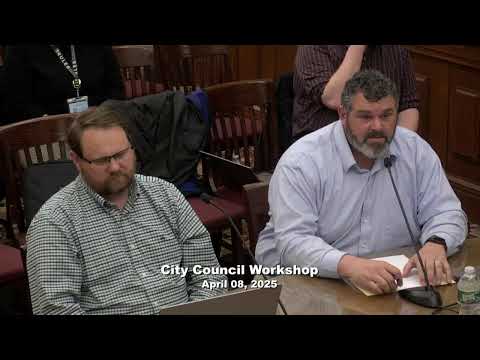
Lewiston Superintendent Jake Langley told the City Council at a workshop that the Lewiston Public Schools current FY2026 budget request is $117,177,091 and that the school committee recently approved a local tax increase request of 3.44 percent, which the district estimated would raise the local portion to $31,382,997 and increase the mill rate by about $0.46.
The budget presentation centered on two late developments that could change the local ask: a health‑insurance projection and continuing work to expand in‑house special‑education services. “Yesterday afternoon, we got verified information that Lewiston Public Schools health insurance increase would be 3.3%,” Langley said, describing the number as a “welcomed sigh of relief” after earlier, larger projections. The superintendent said the committee expects to consider adjustments based on that figure and that he anticipates between $200,000 and $400,000 could be removed from the current request.
Why it matters: health‑insurance and collective‑bargaining increases are among the largest drivers of the school budget. Langley said the district had originally budgeted at 10% for insurance and that the difference between a 10% assumption and the 3.3% projection is about $865,000; how much of that the committee returns to taxpayers will depend on its public deliberations.
The superintendent walked the council through district budget “articles” that mirror state accounting categories. Highlights from the presentation included a 6.33% change in Article 1 (regular instruction), a 9.49% change in Article 2 (special education) tied to the CLIMB/client program expansion, and a 13.89% change in Article 3 (career and technical education/ LRTC). Langley said the total current request represents a 3.44% local mill increase but reiterated that the school committee would meet to consider adjustments after the new insurance numbers.
Special education and the CLIMB/client program featured prominently. Langley described a shift away from tuitioning students out of district toward building in‑house capacity. He said the district estimates it would cost roughly $4,000,000 to tuition the current cohort elsewhere but that providing services in‑district costs about $2,000,000, a difference the superintendent characterized as “deflecting cost.” He said roughly 23 students were currently in the client program, that some students have returned to mainstream programming, and that the district’s multi‑year target includes substantial additional in‑house placements if space and staffing allow.
Space and staffing remain constraints. Langley and council members discussed limited room at McMahon (where the CLIMB program is using a wing and three modulars), the possibility of using 287 Main Street for program expansion, and the need to balance growth against building capacity and operating costs. Langley said the district had cut 91 positions over the last two years and was cautious about further reductions amid rising enrollments.
Transportation and contractors: the presentation noted transportation costs rising in Article 8. The district is in one of the last years of a contract with Hudson Bus Lines and is seeking bids for the next contract. Langley told the council driver shortages and the need for subcontractors to cover routes added costs; he said fuel costs in some subitems had fallen while contractual increases and added subcontracting drove the overall transportation uptick.
Federal and state funding uncertainty was another theme. Langley identified Title funds, USDA nutrition funding, and federal grants such as ESSER/ EASER as important but potentially unstable revenue sources. He said the district has no practical contingency to replace large federal funding if it were abruptly cut: “We do not have a financial contingency for something that just gets shut off that needs to be done,” he said, and noted the district has discussed operational options such as charging for lunches if federal meal funding disappeared.
Fund balance and local share: the superintendent said the district’s unassigned fund balance was $6,700,000 (as of the figure shown in the presentation) and that the budget proposes using approximately 3.45 (million) of fund balance for the FY2026 proposal. Langley encouraged public input and said the school committee would hold a public session to consider any changes.
Next steps: Langley asked the council and public to submit questions promptly; he said the school committee would meet to vote on any insurance‑related adjustments and invited the public to attend that meeting. He gave the committee’s next public meeting time as “5:30 at the Green Ladle on Monday, the 20 eighth,” and urged residents to vote in the May 13 referendum if they wish to approve the budget.
Council members praised the CLIMB program’s early returns, asked for continued reporting on metrics such as students returned from out‑of‑district placements and graduation outcomes, and pressed for clarity on class sizes, vacancy counts and the timeline for revisions. Langley and staff answered detailed questions about vacancies (59 EdTech openings and 37 teacher openings on the day of the presentation, he said), staffing coding changes, and mechanisms for interdistrict reimbursement at the technical center.