Get Full Government Meeting Transcripts, Videos, & Alerts Forever!
Get email alerts on the Streetlight Maintenance topic
No spam. Unsubscribe anytime.
Baltimore City council probes streetlight maintenance, urges DOT–BGE contract and system fixes
Summary
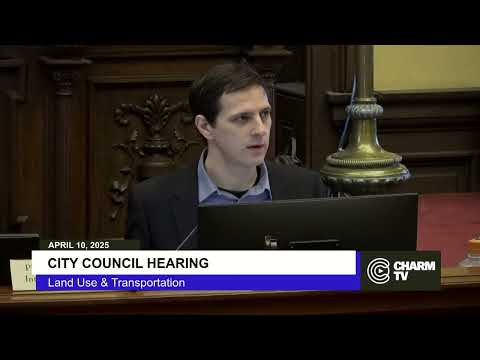
BALTIMORE CITY — On April 10 the Baltimore City Council's Land Use and Transportation Committee pressed the Department of Transportation (DOT) and Baltimore Gas & Electric (BGE) to fix persistent gaps in streetlight maintenance after officials and council members described missing contracts, fragmented data systems and inventory shortfalls that slow repairs.
BALTIMORE CITY — On April 10 the Baltimore City Council's Land Use and Transportation Committee pressed the Department of Transportation (DOT) and Baltimore Gas & Electric (BGE) to fix persistent gaps in streetlight maintenance after officials and council members described missing contracts, fragmented data systems and inventory shortfalls that slow repairs.
"Baltimoreans should expect to live in a city with safe and comfortable streets," Council President Zeke Cohen said in opening remarks, adding that the hearing followed a city investigation into the Street Lighting Maintenance Division. The committee's chair, Councilman Ryan Dorsey (Third District), opened the presentation by asking, "Why does it take so long to get my streetlight fixed in Baltimore City?" and laying out what he and staff say are failures in contracting, asset management and data sharing.
The meeting focused on three recurring complaints from residents: no formal written agreement that defines DOT's relationship with BGE, multiple and incompatible service-request categories in the city's 311 system, and DOT's lack of an internal asset map for the streetlight inventory. Dorsey told the committee he had driven city streets and photographed at least 27 knocked-down or missing lights to show the scale of the problem.
DOT Director Veronica Macbeth said the agency has begun steps to address the problems. "We have a current process flowchart that we are working to further develop," she told the committee, and described efforts to geocode 311 service requests so they can be simultaneously assigned to BGE and reflected inside DOT's CityWorks system. Macbeth also said DOT will develop public-facing fact sheets explaining how residents should report outages and what to expect.
DOT and BGE described operational gaps. Dorsey and other council members said BGE maintains an asset-based outage map with individual asset identifiers; by contrast, DOT currently relies on address-based 311 categories, which the committee said are inconsistent. Dorsey said the 311 system has seven different streetlight-related service-request types and that BGE and DOT do not agree which of those types prompt BGE action.
BGE representatives said they maintain an asset-level dataset and that, in incidents where a responsible driver is identified, insurers sometimes contact BGE for cost details; BGE then bills the responsible party and the company and DOT reconcile materials costs afterwards. "BGE does not file claims to insurance companies. Insurance companies will contact us with information," Debbie McKee, an analyst with BGE Outdoor Lighting, told the committee, explaining BGE's role in documenting labor and contractor charges while the city supplies materials in some cases.
Committee members also discussed procurement and inventory. Dorsey cited long delays to replace certain obsolete poles in the Inner Harbor and downtown (some knocked down as far back as 2015 and 2018), and asked why DOT had not identified suitable replacements sooner. DOT staff said some replacement poles are made-to-order and can take months, and that the city has ordered materials from vendor Signify under a contract that the Board of Estimates recently extended. DOT said it will use existing inventory for immediate repairs and pursue further procurement.
Several operational commitments and next steps were documented during the hearing: DOT and BGE agreed to begin regular meetings (weekly, starting in April, per DOT maintenance chief Damien Taylor) to coordinate scheduling and data exchange; Director Macbeth committed to engaging the Law Department and reporting back to the committee with a timeline for formalizing a contract between DOT and BGE (Council President Cohen requested a committee update within two weeks); DOT agreed to work with the Office of Performance and Innovation (OPI) to consolidate 311 service-request types and to develop an asset map that mirrors BGE's asset-level view; and the streetlighting team agreed to create a knockdown-tracking system that catalogs location, pole type and condition when poles are found down.
Council members pressed for immediate access to materials held in DOT inventory that BGE needs to complete repairs. By the close of the hearing DOT agreed to make specified quantities of poles available to BGE (DOT agreed to allow BGE to take 75 of certain 20-foot units and 29 of 30-foot units, while reserving other stock for city crews) and to provide a count of additional available 25- and 30-foot poles by close of business the next day.
Committee members also asked DOT to coordinate with the Maryland Transit Administration (MTA) on planned light-rail shutdowns so replacement work that requires rail outages can be scheduled during known windows; DOT said it will include maintenance staff in monthly coordination meetings with the MTA.
What the committee did not do at the hearing was vote on legislation. The session functioned as oversight and produced administrative commitments and follow-up requests rather than formal council action. The committee intends to hold follow-up oversight sessions to track progress on the inventory, data-integration and contracting items discussed at the hearing.
For residents: DOT said it will publish fact sheets and improve 311 feedback so that a single service request can show step-by-step status updates; until systems are harmonized, staff recommended residents use the method DOT identifies on the agency website and in council office communications.
The committee scheduled follow-ups: Director Macbeth will report a timeline for contract negotiations with BGE (requested within about two weeks), DOT will provide a materials-count report by the next business day, and DOT and BGE will continue weekly coordination meetings to reduce the backlog of streetlight repairs.