Get Full Government Meeting Transcripts, Videos, & Alerts Forever!
Get email alerts on the Courthouse Renovation topic
No spam. Unsubscribe anytime.
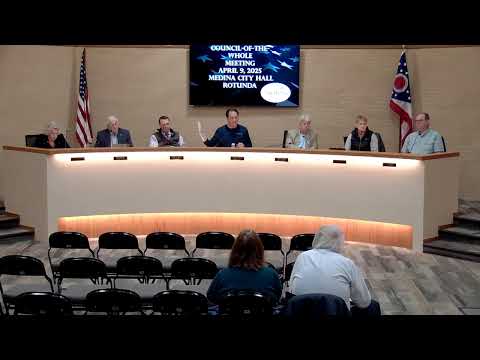
Medina Council reviews $7.6 million GMP 3 for 1969 courthouse renovation and options to close funding gap
Summary
Medina City Council and court officials reviewed Ruhlin's guaranteed maximum price package 3 (GMP 3), a $7,600,000 construction bid package for mechanical, electrical, plumbing, courtroom technology and building finishes for the renovation of the 1969 courthouse building.
Medina City Council and court officials reviewed Ruhlin's guaranteed maximum price package 3 (GMP 3), a $7,600,000 construction bid package for mechanical, electrical, plumbing, courtroom technology and building finishes for the renovation of the 1969 courthouse building.
Council President opened the discussion by describing GMP 3 as "the third and the largest cost, component of the project," and asked Ruhlin's project team to present the package. Mike Schumacher, identified in the meeting as Ruhlin's project manager, said: "The total amount was 7,600,000.0 which is less than what we had expected which is good news." Schumacher and the design team told council GMP 3 was bid after finishing design documents so the city could get competitive subcontractor pricing for flooring, painting, roofing, fire protection, plumbing, electrical, mechanical and technology work.
The project team said bidding produced strong local interest and that the GMP 3 package separates firm subcontract quotes from separately carried allowances. Schumacher explained that "anything that's listed in the allowances will not be included in anybody's subcontract" and gave examples including flooring-prep, wall patching and the courtroom technology package; the allowances are meant to make subcontract pricing "apples to apples" and to be awarded or refined later with the city and architects.
Council members and court representatives pressed for clarity on the total package cost and how to pay for it. One council speaker summarized the combined cost including architect fees at roughly $11,483,743 and noted a funding shortfall. The council discussion quantified available funds and options: the court's special-projects account (Fund 169) had about $3,000,000 remaining, the city's general capital account (301) held about $3,100,000, and prior spending on the renovation had already reduced balances. Under a previously discussed approach, the council and the court would split amounts over the courts'special-projects balance 50/50; at current GMP estimates that split implies each side would need to cover roughly $3.4 million of the remaining gap, though participants noted the exact numbers could move up or down as allowances are refined.
Members discussed options to preserve the city's future ability to borrow. The city has already retained bond counsel; the council and finance staff described issuing internal bond-anticipation notes now (which the city would hold itself) to preserve the option of later issuing bonds to replace that internal advance if rates become favorable. As finance staff explained, issuing bond-anticipation notes now is an administrative step required to preserve the legal ability to borrow for a capital expenditure made today rather than attempting to borrow two years later.
Speakers also discussed risk-management items in the GMP: a recommended allowance to cover possible material-cost escalation or tariffs (an illustrative example figure of $150,000 was offered), owner contingency proposals (the project team recommended a contingency in the $200,000 to $300,000 range with the engineer asking for $250,000), and the separation of firm subcontract amounts from allowances so council can review contingency or allowance spending before it is committed. The project team said some small savings from GMP 1 and GMP 2 (approximately $15,000'$20,000 and other minor items) could be applied against GMP 3 line items.
Council and court representatives reiterated project benefits beyond cost: consolidating courts and shared security features such as a single sally port and secure circulation would improve safety and operational efficiency for court users and staff. The team said the anticipated substantial completion was about March of next year with an estimated move-in in April, giving roughly a year for construction and procurement.
No final funding vote was recorded in the transcript. Pat (project staff) said he submitted a request to council for approval of GMP 3 and that finance will review the numbers at an upcoming finance meeting; the council indicated it will consider exact account transfers and whether to use cash on hand, internal advances or bond anticipation notes to cover the remainder.
The council asked staff to finalize the exact figures and contingency allowances so finance can review the ordinance and recommendation at the next finance meeting before formal council action.
Ending: The council closed the discussion with a direction to have final numbers prepared for the finance committee and to bring the GMP 3 approval request forward to council after the finance review; no recorded vote or ordinance adoption appears in the transcript from this session.