Get Full Government Meeting Transcripts, Videos, & Alerts Forever!
Get email alerts on the Public Infrastructure District topic
No spam. Unsubscribe anytime.
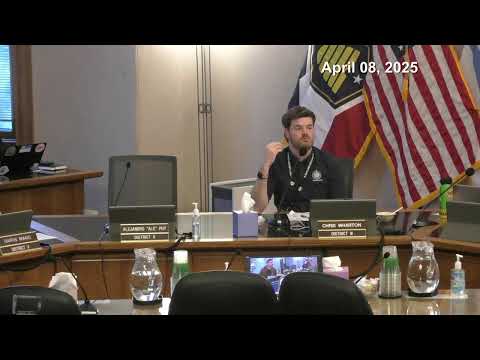
Salt Lake City Council unanimously creates public infrastructure district to finance downtown redevelopment
Summary
At a limited formal meeting the Salt Lake City Council voted unanimously to create a public infrastructure district to help finance redevelopment of the Delta Center, Salt Palace, Abravanel Hall and UMOCA and related downtown projects. Council members expressed support while warning of limits on municipal control and long-term financial risks.
The Salt Lake City Council unanimously adopted a resolution creating a public infrastructure district to facilitate financing the redevelopment of the Delta Center, Salt Palace, Abravanel Hall and the Utah Museum of Contemporary Art (UMOCA), and related downtown projects.
Council members said the district is a financing vehicle that preserves the city’s seat at the table as redevelopment moves forward. Council member Petro said constituents should understand the difference between recent state-level actions and the city’s vote: “What we do today with this resolution is to simply create a vehicle. We create the entity that is going to make sure the bills get paid.”
The resolution, the council said, is intended to make it easier to fund a package of projects in the entertainment and convention district, including work tied to the Delta Center and the Salt Palace. Council member Dan Dugan moved adoption of the resolution; Council member Lopez Chavez seconded the motion. After discussion, the council voted and the motion passed unanimously.
Council members who spoke framed the vote as a limited, procedural step rather than a final design or funding choice. Council member Lopez Chavez said the authority to form the district is “predetermined by state law,” but warned that recent state actions expanded the scope of discussion by adding a parcel known as Block 67 to the conversation: “The addition of the property known as Block 67 was not part of the original agreement with the public,” Lopez Chavez said, and she added that the situation “undermines public trust and exposes the city to long term financial risk.”
Several members said they support the city remaining engaged in the work despite limits on local control. Council member Romano said he was “hopeful” the district could keep the Utah Jazz and Utah hockey team downtown and contribute to a “revitalization of Japantown,” while cautioning that many design and implementation choices remain outside the council’s direct control. Council member Pui and others expressed optimism about long-term improvements but reiterated concerns about state financial tools that, they said, can limit municipal authority.
Council members emphasized that the resolution itself does not obligate the city to particular expenditures or design decisions. Council member Petro described the measure as preserving the city’s ability to “continue to fight, to protect” residents’ interests as future choices are made by multiple partners, including county, state and private entities.
The council opened no general public comment at this limited formal meeting; staff noted the next public comment opportunity is scheduled for April 15, 2025, at 7 p.m. The meeting adjourned after the single agenda item was decided.
Votes at a glance: the council adopted the resolution creating the public infrastructure district; the motion was moved by Council member Dan Dugan and seconded by Council member Lopez Chavez and passed unanimously.