
Richland 02 reviews alternative programs; Blythewood Academy staffing, facilities and wraparound needs highlighted
Get AI-powered insights, summaries, and transcripts
Sign Up Free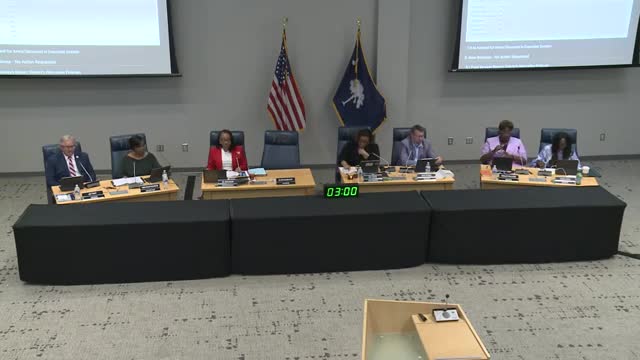
Summary
District staff briefed the board on Blythewood Academy and other alternative pathways, citing enrollment figures, staffing mixes, wraparound services, transportation issues and research into virtual and evening high‑school options.
District staff presented an overview of alternative pathways at the April 8 Richland School Board meeting, emphasizing Blythewood Academy’s program model, staffing, enrollment and operational challenges and possible program expansions such as virtual pathways and an evening high‑school pilot.
Cleve Smith, Chief of Pupil Services, and Dr. Sabrina Suber, executive director for secondary schools, delivered the report. Smith said the district’s alternative-program annual headcount through the March reporting period was 255 students, while the academy’s active enrollment at the end of the 39‑week reporting period was recorded as seven students. "From the beginning of the year until that time, we had a total of 255 students," Smith said; he later described a recidivism figure as "only 1 student that returned ... out of the 270 that we had there."
Nut graf: The presentation described classroom staffing, course offerings and wraparound supports at Blythewood Academy, and identified shortfalls — limited psychological/therapeutic capacity, a part‑time (0.5 FTE) social worker, no regular extracurricular activities and facility and security needs. District staff also described options under study, including expanding virtual alternatives and piloting an evening high‑school program to reach over‑age students.
What staff presented
- Program model and staffing: Mr. Smith presented staffing counts: middle‑school staffing roughly five teachers (4 core + special education) and high‑school staffing listed as 11 positions (including core teachers, special ed and a virtual facilitator). Instruction often occurs in small groups and 1:1 settings to meet students’ needs.
- Enrollment and participation: Smith said 255 students had attended the alternative program at some point since the start of the year and that enrollment at the end of the 39‑week period was seven students. He also noted the district tracks “no‑shows”; for the period cited, the report identified two no‑shows that may have been transportation related (a ninth‑grade and an eleventh‑grade student).
- Academic and behavioral requirements to exit: Staff described exit criteria including successful completion of coursework, attendance expectations (no more than two absences per the district standard) and behavioral progress; family intervention services (mandatory, per staff comments) and counseling are required parts of students’ plans.
- Wraparound supports and limitations: The district uses counseling, an LSS team and an external referral service (Care Solace). Smith and Dr. Suber noted a shortage of therapists/interns, and that the social worker assigned to Blythewood Academy is 0.5 FTE. Staff said more dedicated mental‑health capacity and additional security upgrades would be beneficial.
- Program challenges noted by staff and board members: Staff described stigma attached to placement at Blythewood Academy, limited extracurriculars, transportation burdens for families, shared or cramped spaces and facility upgrade needs (including upgraded security glazing). District staff said they have available land but no immediate relocation plan; a board staff member estimated an approximate new‑building cost at roughly $400 per square foot and suggested a 30,000‑square‑foot facility would be costly and take about a year and a half to build.
- Pathways and pilot ideas: Staff described the Pathways to Promotion program (started in 2018) that has served 48 students since inception and is intended to provide expelled students an opportunity to earn credits through virtual courses. The district is researching an evening high‑school option; Smith said the team has contacted a neighboring district with an existing program and is still determining whether such a program would produce a district high‑school diploma or a GED.
Board member concerns and staff responses
Board members raised the rigor of instruction, the effect of placement on students’ progress after returning to home schools, family supports and the need to prioritize a full‑time counselor/social worker at the academy. Ms. Williams (board member) voiced concern that some students who attend Blythewood Academy lose grade‑level rigor and fall further behind when they return to their home schools. When asked whether family intervention services were mandatory, Dr. Suber replied, "Family intervention service is mandatory."
Dr. Moore (Superintendent) and Mr. Anderson (district facilities/operations representative) told the board the district does not currently have another facility to rehouse Blythewood Academy and would need to rent or build; the facility study completed in February 2018 recommended eventual replacement, and staff said a new facility would be a multi‑year, high‑cost undertaking.
Ending
Board members asked for continued study and visits to the site; staff said they will continue research into virtual expansion and evening programs and will return to the board with options. Several trustees advocated prioritizing counseling/social‑work capacity and exploring community partnerships and volunteer models to expand student supports and extracurricular options without large capital expenditures.
Provenance (selected transcript excerpts):
"New business, no action requested. We'll move to, 8.1, pupil services report, district's alternative program." — meeting introduction to the item.
"From the beginning of the year until that time, we had a total of 255 students." — Cleve Smith, on year‑to‑date participation.