Get Full Government Meeting Transcripts, Videos, & Alerts Forever!
Get email alerts on the Public Safety topic
No spam. Unsubscribe anytime.
Lawrence‑Douglas County Fire & Medical outlines service pressures and two budget reduction proposals; commissioners seek joint city–county discussion
Summary
LDCFM presented rising call volumes, longer response times and two proposals responding to a requested $1.9 million city budget reduction; one option would add a medic unit and up‑staff a ladder while removing an engine and shifting county cost share.
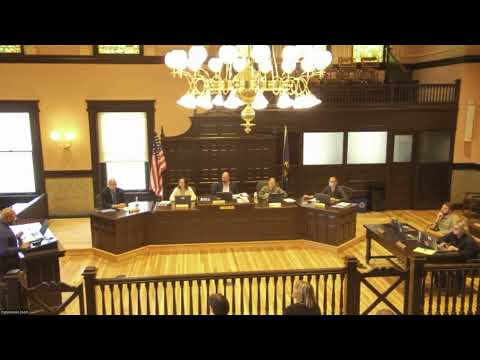
Lawrence‑Douglas County Fire & Medical (LDCFM) officials presented data to the Board of Douglas County Commissioners on April 9 showing rising call volumes, growing unit use and lengthening emergency response times, and outlined two budget‑reduction proposals that have been discussed with the City of Lawrence.
Acting Fire Chief Joe Hardy and Interim Chief of Staff Mackenzie Ezell told the commission that call volume growth since 2020 had outpaced additions to ambulance resources, that travel and total response times have trended upward in several planning zones, and that the department’s 2024 and 2025 data show increasing pressure on unit reliability. Chief Hardy said a city budget directive led LDCFM to construct proposals in response to a requested $1.9 million reduction in the city’s 2026 contribution.
Chief Hardy summarized the department’s preferred option: remove Engine 5 (a frontline engine in Station 5), up‑staff one ladder truck from three to four personnel, and add an additional medic unit (an additional staffed ambulance). He said the proposed shift would change the city/county cost‑share percentage because of changes in staffing on medic units and would reduce the department’s minimum staffing by one FTE (from 39 to 38) in the short term. “April 1, we were, given a task to give the city … a net net, amount of $1,900,000 cut to the 2026 budget for LDC FM,” Hardy said.
Chiefs described an alternative, deeper‑cut option that would reduce battalion chief positions (from six to three), reduce prevention and training staff and remove a frontline engine; department leaders characterized that option as “drastic” and said it would have greater impacts on incident command, training and prevention capacity.
Commissioners asked detailed questions about the data underlying response‑time changes and about rural versus urban distinctions. LDCFM staff described the metrics they track (alarm handling, turnout and travel time) and said they separate urban and rural planning zones for analysis. Chief Darling (EMS) and other staff described particular strain on ambulances stationed in Baldwin City and Eudora, noting those units often travel long distances and can be out of their primary areas for extended transports.
Commissioners discussed possible mitigations: strengthen non‑emergency transfer policies, pursue payer/partner arrangements (for example Medicaid or hospital partnerships) for certain transports, and pursue additional coordination with KU and other regional partners. County staff and commissioners stressed the need for joint city–county planning and earlier involvement in discussions about service‑level changes and cost allocations. County staff said LDCFM would be asked to provide the county budget office a more detailed supplemental request if the commission is to consider the county bearing increased costs.
Public comment included two LDCFM paramedics who urged the commission to expand ambulance capacity rather than cut units. Simon Stevenson, an engineer‑paramedic with LDCFM, said, “The data before you paints a picture…of increasing call volumes, increasing response times, which in turn lead to increased overall on‑call times and a less reliable system.”
Why it matters: LDCFM provides combined fire suppression and advanced life‑support ambulance services across the city and county. Changes to staffing, apparatus or stationing alter response times and resource reliability for residents in both jurisdictions and would change the county’s fiscal obligation under the current joint governance and cost‑share arrangements.
What’s next: Commissioners asked staff to obtain more detailed, auditable data and asked LDCFM to submit formal documentation and a supplemental budget request that breaks down the county impact. Commissioners also requested that the City of Lawrence participate directly in joint discussions about the proposals before the county finalizes budget decisions.