Get Full Government Meeting Transcripts, Videos, & Alerts Forever!
Get email alerts on the Transportation Planning topic
No spam. Unsubscribe anytime.
Beach Drive multi‑use path draws broad public opposition and technical questions; commission says FDOT approval, further votes required
Summary
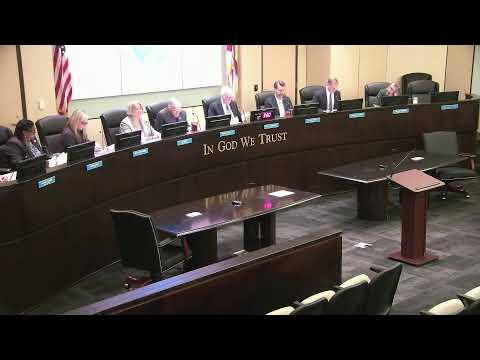
A proposed West Beach Drive multi‑use path and related stormwater work prompted a sustained public debate at the April 8 Panama City Commission meeting, with residents and business owners sharply divided over tree impacts, traffic and whether state approval is in hand.
Residents, business owners and advocacy groups filled the commission chambers April 8 to press competing views about the proposed West Beach Drive multi‑use path, associated drainage improvements and an environmental add‑on known as BaySavers.
Speakers repeatedly asked whether the Florida Department of Transportation would transfer the state road to the city, whether DOT had formally approved plans, and whether the grant funding and the path’s engineering estimates were accurate. Commissioners and staff said the grant and project design work preceded any formal request to transfer the road and that DOT review and approval of plans will be required before the city can bid the work.
Why it matters: The project would alter a major east‑west thoroughfare used by commercial trucks, commuters and school and college traffic. Opponents warned narrower travel lanes and the removal of mature trees would increase congestion and harm the character of Beach Drive. Supporters said the path would improve walkability and quality of life and connect parks, marinas and downtown destinations.
What staff said City staff told the commission the original concept cost estimate shown in early grant materials was about $9.4 million and that more recent engineering estimates place construction around $6.5 million. Staff also said design, surveying, arborist work and legal review across the entire corridor have driven engineering and consulting costs and that engineering and related preconstruction work can represent a significant share of total project cost. A staff representative said the city has submitted revised plans to FDOT and is awaiting further comments and that FDOT review — whether the road is transferred or not — is required for construction inside the state right of way.
Questions about the road transfer and FDOT Multiple speakers, including business owners, said they had been told by DOT representatives that a formal transfer would not happen now and asked whether the city should proceed with a referendum or other steps if the road was not transferred. City staff and commissioners said the grant and the subrecipient agreement were not predicated on a road transfer and that the project can be built either with a state right‑of‑way use/permit or, if the state does not grant the same permissions, a narrower path would be required east of Balboa Avenue. Staff said that without a transfer the path width would necessarily narrow to eight feet in constrained sections east of Balboa; with transfer and modifications a wider corridor could be achieved in spots on the west end.
Environmental components and permits Staff also clarified that the BaySavers — structural stormwater treatment installations described by speakers — are an add‑on that prompted the need for an environmental resource permit from the Florida Department of Environmental Protection. Staff said the environmental permit process is separate from the FDOT right‑of‑way permitting and that the BaySaver work increases the project’s permitting complexity.
Public concerns Speakers raised several recurring concerns: that the project would remove mature live oaks and other trees, that 11‑foot travel lanes proposed in some revisions would be unsafe for trucks and leave minimal clearance, that traffic would be displaced to narrower neighborhood streets such as 11th and 15th Streets, and that engineering and legal fees already billed to the city exceeded figures previously discussed. One public commenter presented a packet alleging the city had spent about $1.3 million on engineering and legal costs to date and that design expenses exceeded approved amounts; staff said the packet mixed application worksheets and actual grant agreements and pledged to provide updated spreadsheets and documentation.
What comes next Commissioners and staff said they will continue the FDOT review process; staff emphasized the next formal commission decision will be whether to accept a construction bid and award a contract once FDOT concurrence and an approved final design are in hand. Commissioners noted that, depending on FDOT approvals, the project could be built in a different configuration and that further public meetings and formal votes would take place before construction funding is committed.
City staff and the public works director answered many of the audience’s questions at the meeting and pledged to provide clearer documentation about costs and the status of permits. No formal vote on the path design or construction was held April 8.