Get Full Government Meeting Transcripts, Videos, & Alerts Forever!
Get email alerts on the Land Use Urbanization Md6c topic
No spam. Unsubscribe anytime.
Council adopts MD‑6C urbanization plan after debate over wetlands, traffic and street reservation
Summary
The council voted 5‑2 to adopt an urbanization plan for 25.99 acres north of South Stage Road (MD‑6C) after public testimony raised concerns about wetlands, wells and traffic; council added a 100‑foot reservation at the north end of the future Reed/Bridal Lane and directed staff to draft compensation language.
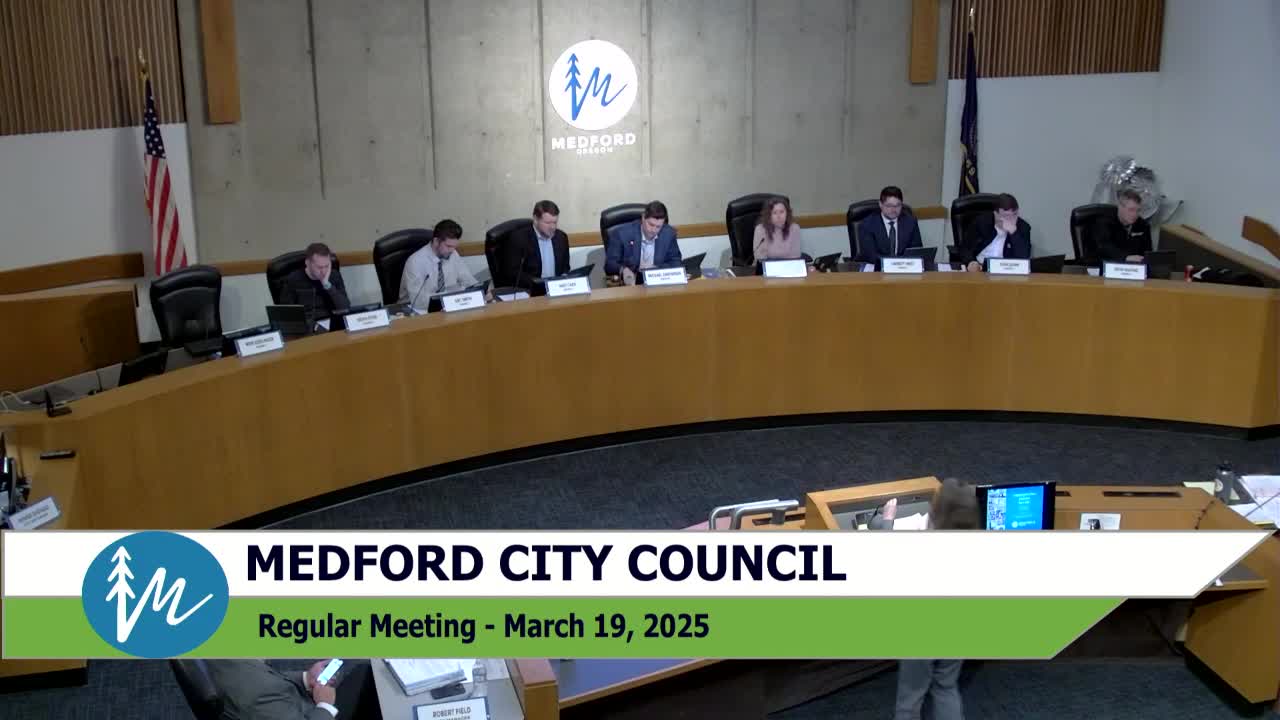
The Medford City Council on March 19 approved an urbanization plan amendment for the MD‑6C planning unit, a 25.99‑acre area north of South Stage Road, in a 5‑2 roll‑call vote after extended public testimony and council debate about wetlands, traffic and future right‑of‑way impacts.
Carla Palladino, senior planner, presented the staff report and described the urbanization plan as a high‑level framework that establishes a commercial general land use designation, conceptual circulation, and protections for mapped wetlands on the site. The project area is within the city’s 2018 urban growth boundary expansion.
Clark Stevens, agent for the applicant South Stage Road LLC, told the council the applicant had delineated wetlands, obtained Department of State Lands concurrence on the delineation and intends to preserve wetland areas on site with buffers and enhancements. Stevens confirmed the plan now extends Reed (Bridal) Lane to the northern property line after staff requested the alignment be revised.
Residents and stakeholders urged caution. Jay Harlan, representing Harry & David, asked the council to add a caveat preventing an automatic dedication or build‑out of the north‑end right of way and recommended a “no‑build” reservation or easement short of an immediate right‑of‑way dedication. Multiple neighbors from Starlight Lane — including Courtney Westfall, Liana Sorensen, Laurie Barnes and Aaron Olsen — testified that the site is saturated this year, contains wetlands and irrigation ditches, and that increased impervious surface and multi‑family development could worsen drainage, affect wells and be incompatible with the rural character.
Council debate touched on several issues: the plan’s commercial general land use designation (which permits multifamily at 20–30 units per acre in future zones), the reliability and timing of wetland delineations, and whether city policy and regional planning processes required the area’s designation.
Councilor Nick Card moved to approve the urbanization plan with amendments to Exhibit A: correct a clerical reference to MD‑6C and add a 100‑foot street reservation at the north end of future Reed/Bridal Lane, with a negotiated compensation agreement for that reservation to be worked out later. Councilor Garrett West seconded. After a failed motion to continue the item to May 7, the council voted to adopt the plan, 5 yes and 2 no (Councilors John Quinn and Jessica Ayers voted no).
Why it matters: the urbanization plan is a legislative policy action that adds the MD‑6C plan to the comprehensive plan’s neighborhood element; it sets the framework for future annexation, zoning and development decisions in southwest Medford. Palladino told council the plan does not itself approve detailed development; future zone changes, traffic studies and site plans would be required before construction.
Clarifications and next steps: staff and the applicant said follow‑up technical work remains, including a wetlands follow‑up delineation completed by the applicant’s consultant shortly before the hearing and forthcoming traffic impact analysis during later zone change review. The council directed staff to include the 100‑foot reservation language in Exhibit A and to draft compensation terms for future right‑of‑way acquisition. The ordinance is scheduled for a second reading at the next council meeting.
Public record: the Planning Commission had forwarded a favorable recommendation by a 4‑2 vote; minutes show some commissioners were concerned about the commercial designation and potential residential use. Several neighbors asked the council to deny or continue the matter so additional hydrology and drainage information could be submitted and considered.