Get Full Government Meeting Transcripts, Videos, & Alerts Forever!
Get email alerts on the Business Reparations Study topic
No spam. Unsubscribe anytime.
Researcher outlines data-driven plan to support Black-owned businesses as part of Evanston reparations work
Summary
Dr. Twyla Blackman Larnell presented an economic-harm study framing for reparations-related support to Black-owned businesses, stressing the need for data, targeted programs and legal diligence.
The Evanston Reparations Committee on April 3 received an update on an economic-harm study aimed at shaping reparations policies for Black-owned businesses.
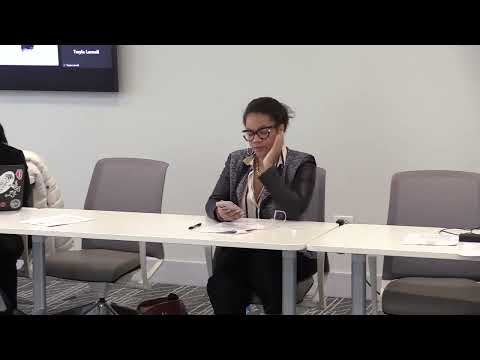
Dr. Twyla Blackman Larnell presented the study framework, saying the report will document historical and current disparities, identify barriers faced by Black business owners in Evanston and recommend narrowly tailored policies to support legacy Black‑owned businesses and create new ones. She emphasized the legal context: race‑conscious municipal programs will need strong data and careful design to meet judicial scrutiny.
The study includes a survey for business owners that Dr. Blackman Larnell described as taking roughly 15 to 20 minutes. The questionnaire asks about how businesses were founded, interactions with city procurement and licensing, barriers to growth, and includes open‑ended questions for issues not captured in the fixed survey items. She asked committee members and community partners to help increase response rates and said she will post the survey link in the meeting chat.
Her recommended policy tools include targeted training and technical assistance, municipal loan and grant programs, bolstering community development financial institutions, business incubators and workforce development, real‑estate supports such as land trusts or property‑tax relief, and place‑based investments to raise visibility in commercial corridors with legacy Black businesses (she cited Church and Dodge as an example). She noted some programs can be designed as race‑neutral but targeted in effect, which may help legal defensibility.
Dr. Blackman Larnell said the report will include objective performance measures and periodic reviews to assess whether policies meet goals and to include sunset clauses and other mechanisms courts expect. She also said she is coordinating with the city's procurement office to obtain comparative data and that she hopes to "wrap this up by the end" (timeline not fully specified in the meeting).
Committee members suggested outreach partners (Sunshine Enterprises and other community organizations) and encouraged targeted outreach to unlicensed entrepreneurs and small‑cash businesses. Dr. Blackman Larnell said she will continue canvassing businesses and follow up with the committee about data access and the report timeline.
No formal action or vote was taken at the April 3 meeting; the study is advisory and intended to inform future policy recommendations and potential ordinances.