Get Full Government Meeting Transcripts, Videos, & Alerts Forever!
Get email alerts on the Senior Services topic
No spam. Unsubscribe anytime.
Senior‑service leaders warn ACL elimination, Social Security changes threaten meals, respite and transportation
Summary
Local senior‑center directors and the county Area Agency on Aging told supervisors that elimination of the federal Administration for Community Living and recent Social Security policy changes could cut services and increase isolation, malnutrition and avoidable hospitalizations for Lake County seniors.
County staff and senior‑service providers told the Board of Supervisors on April 24 that proposed federal changes are threatening day‑to‑day services for older adults in Lake County.
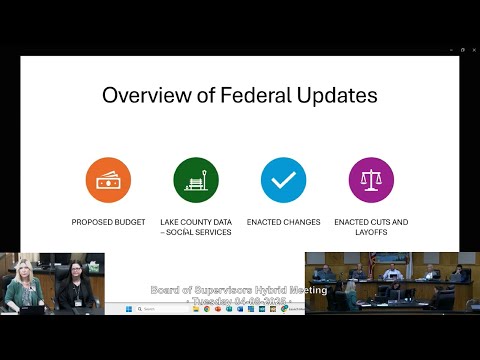
Rachel Dillman Parsons, Lake County social services director and Area Agency on Aging (AAA) coordinator Dina Eddings described the federal Administration for Community Living (ACL) elimination and said the ACL’s programs and grants support meals, transportation, adult day services, caregiver respite and legal assistance for older adults and people with disabilities. Dillman Parsons said no transition plan had been released for absorbing ACL functions into HHS and that the loss of staff at the federal level could make it difficult or impossible to draw down funds or get technical assistance.
Local senior leaders described the impact. Amanda Gonzales, introduced herself as a realtor and executive director of the LaSern Alpine Senior Center, saying the center is a “lifeline” that provides nutrition overseen by a nutritionist and social activities that help elders remain independent. Lisa Varro, who said she administrates the Lakeport Senior Center through Lake Family Resource Center, urged the board to advocate to protect Older Americans Act funding and requested a congressional letter or local resolution to press the county’s federal delegation.
Jill Rexroad, executive director of the (Fort Bragg) Senior Center (participating by Zoom), said her center serves roughly 55,000 meals a year between Meals on Wheels and congregate dining and that staff and volunteers are already planning contingency steps. Area Agency on Aging staff said they had directed state funding to senior centers to be used for meals and to provide flexibility, and noted that some contracts will be executed at the county’s April governing board meeting.
On Social Security changes, Dillman Parsons said federal rules now require identity proofing to start or change direct deposit and that, beginning March 27, Social Security overpayments may be recouped at 100% until repaid — a change she said could leave recipients without adequate income for months and increase demand for county adult‑services resources.
County and senior‑center speakers requested continued advocacy and coordination with the county’s congressional delegation and state partners to protect Older Americans Act funding and to ensure timely reimbursements. Supervisors asked staff whether county or senior‑center resources could help with identity‑verification barriers; Dillman Parsons said staff would try online assistance first and could transport homebound individuals if needed, and that adult protective services can assist with referrals when necessary.
Ending: Supervisors thanked partners and urged continued monitoring and advocacy; staff said AAA resource lists are available in English and Spanish in the lobby and that the county will provide Dillman Parsons’ presentation and notes to the board.