Get Full Government Meeting Transcripts, Videos, & Alerts Forever!
Get email alerts on the Ranked Choice Voting topic
No spam. Unsubscribe anytime.
Residents urge the Charter Review Commission to add ranked-choice voting to the charter; supporters offer resources for outreach
Summary
Two residents — Andrew Branch and Kyle Vernon — urged the commission to consider a charter amendment implementing ranked-choice voting (RCV) for Stow municipal elections, citing research and offering outreach and expert connections.
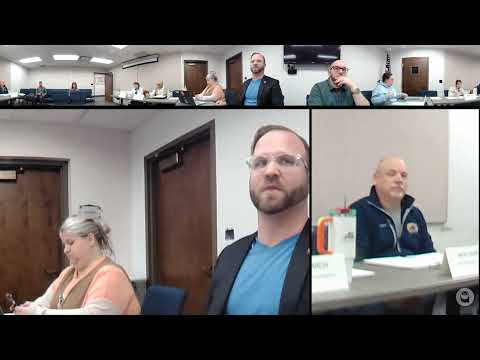
At the public comment portion of the Stow Charter Review Commission meeting two residents urged commissioners to consider adding ranked-choice voting (RCV) to the municipal charter.
Andrew Branch, who identified his address for the record, told the commission the Stow charter’s preamble “pays homage” to the U.S. Constitution and said implementing ranked-choice voting would be an empirically beneficial exercise of municipal home rule. Branch described RCV briefly: voters rank candidates in order of preference and candidates with the fewest votes are eliminated until one candidate has a majority. He cited studies — including a March study by the American Bar Association and a 2024 University of Chicago paper — that, he said, found RCV increased representation, campaign quality, turnout and reduced policy volatility.
Kyle Vernon, who gave his address and said he has supported ranked-choice voting since 2015 and helped found Rank the Vote Ohio, seconded Branch’s remarks and offered to connect the commission with experts and educational resources. Vernon said several Ohio cities have used RCV in the past (he listed Cleveland, Cincinnati, Ashtabula, Hamilton and Toledo) and that community education would be essential before a ballot initiative; he and Branch both offered to assist with outreach and to bring subject-matter experts to future meetings.
Commissioners asked questions about where RCV is used nationally and in Ohio, how instant-runoff tabulation works in races with multiple candidates, and whether a city charter amendment would apply only to city elections (it would). Speakers noted statewide examples (Maine and Alaska were cited for statewide use) and said local voting equipment can be configured to handle ranked ballots. The speakers emphasized public education and outreach would be necessary for success if the commission decides to pursue a charter amendment and placement on a local ballot.
Commissioners discussed logistics for later agenda items (article 16 on elections will be considered at a future meeting) and several commissioners asked the public-commenters for help with community education. Branch and Vernon offered contacts and suggested the commission could hold a public town-hall session on RCV; commissioners expressed interest in seeing draft charter language and operational options before deciding.
No formal commission action was taken on RCV at this meeting; commissioners noted the topic will be considered later when the commission addresses the charter sections on nominations and elections.