Get Full Government Meeting Transcripts, Videos, & Alerts Forever!
Get email alerts on the Gaming topic
No spam. Unsubscribe anytime.
Management Council establishes Select Committee on Gaming, cites need for education and uniform rules
Summary
Following extended debate, Management Council created a Select Committee on Gaming to study state and local controls, taxation and regulatory gaps; presiding officers will appoint co‑chairs and LSO will staff the committee.
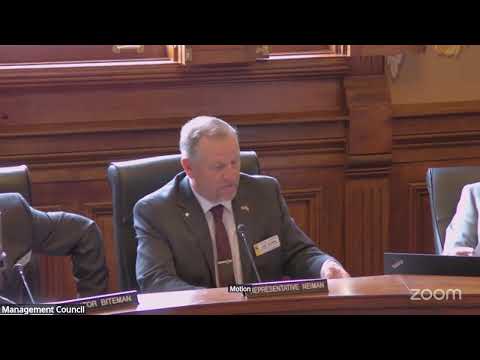
The Management Council voted to establish a Select Committee on Gaming to study the rapid growth and regulatory complexity of gambling in Wyoming.
Senators Colin Cole and Craigle (speakers during the request) urged the council to create a focused group because previous committees have repeatedly reviewed gaming without producing durable solutions. “It is out of control,” one sponsor said, describing how local control has weakened as new forms of wagering and machine‑based play have spread. Sponsors framed the immediate purpose as education and consensus‑building among legislators, local governments and industry representatives.
Members discussed whether the issue should remain with the standing committee that has historically addressed gaming (TRW) or be moved to a specially appointed select committee. Several council members said the scale and complexity of modern gaming — including historical horse racing, skill‑based games, online wagering and machine‑based operations — exceed the capacity of a single standing committee and recommended a multi‑meeting interim effort.
The council approved a motion to create the Select Committee on Gaming composed of three members from each chamber; presiding officers were directed to name co‑chairs and LSO will staff the committee. The council also set a baseline expectation that the select committee meet for the standard interim duration used by other select committees (four days) and allowed the committee to request additional meeting days if the work warrants it.
Council members said the group’s initial tasks should include education about industry structure and revenue flows, examination of local control and zoning, consideration of anti‑money‑laundering gaps, and producing recommendations for taxation or statutory reform if consensus emerges. Several members urged the committee to keep meetings lean and product‑oriented; others warned the subject may require multiple meetings over the biennium.
Ending: The council approved the committee and directed the presiding officers to appoint members and co‑chairs; the committee may request additional interim days if more work is necessary.