Get Full Government Meeting Transcripts, Videos, & Alerts Forever!
Get email alerts on the Personnel Compensation topic
No spam. Unsubscribe anytime.
Council approves revised job descriptions, adds EMS annual fitness evaluation; longevity and salary ordinance changes adopted
Summary
The Clinton County Council approved revised job descriptions that add an annual fitness evaluation for EMS staff, amended the salary ordinance to condition pay on compliance with the county personnel handbook, and adopted a longevity-pay ordinance; all motions passed 7‑0.
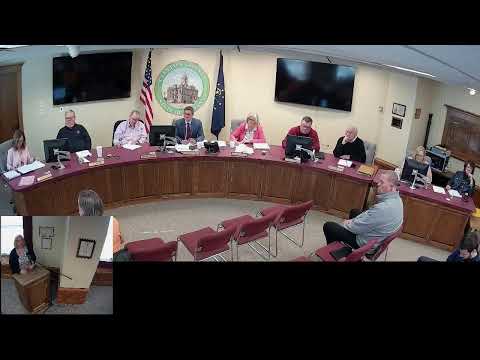
The Clinton County Council approved a set of revised job classifications and two related personnel ordinances during its April meeting, adopting changes that include a new annual fitness standard for emergency medical services staff and formal rules for longevity pay.
Mary, chairman of the council's job classification committee, said the EMS job description change inserts a single sentence requiring an annual fitness evaluation for paramedics and EMTs. "The main change there is or actually the only change there is that it adds 1 sentence, which is the ability to pass an annual fitness evaluation," Mary said during the meeting. The committee recommended the change and the council approved the slate of revised job descriptions by voice vote, 7‑0.
Council members also approved an amendment to the county salary ordinance to make payments contingent on "strict compliance" with the Clinton County personnel policy handbook dated Jan. 1, 2024. The amendment adds two sentences tying pay to adherence to benefits, compensation and state and federal requirements. The motion to add the language passed 7‑0.
Separately, the council adopted Ordinance 2025‑08 establishing the county's longevity-pay program, which specifies eligibility, per‑year payment amounts, a cap and timing of payment (a designated first non‑payroll day in November). Mary said the ordinance fleshes out the program approved at budget time and sets an explicit payment date; the motion to adopt passed 7‑0.
During department reports, Steven, an EMS official, confirmed the department supports an established fitness standard as part of professional expectations for first responders. He also reported that the agency recently graduated three paramedic students who passed the national registry and noted the training program is continuing into a second cohort.
All personnel-related votes recorded at the meeting were unanimous, 7‑0. Council members said the classification committee will continue to receive and review proposed classification changes from departments through the April 15 deadline outlined in the classification ordinance.