Get Full Government Meeting Transcripts, Videos, & Alerts Forever!
Get email alerts on the Zoning Code topic
No spam. Unsubscribe anytime.
Springfield city staff present comprehensive rewrite of zoning code, call it a "living document"
Summary
City staff and consultant Zoneco LLC presented a complete rewrite of Springfield's zoning code during a work session, highlighting clearer organization, new housing types, infill standards and administrative approvals. The ordinance to replace Part 11 was introduced as a first reading (title only); no final vote was taken.
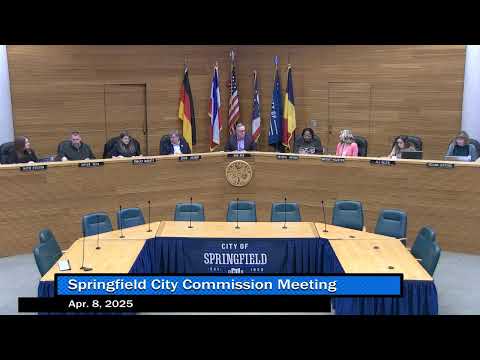
Springfield City Commission work session — City staff and a private consultant presented a comprehensive rewrite of Springfield's zoning code and described it as a "living document" that officials plan to review regularly.
Deputy Director of Community Development Steve Thompson introduced Todd Kinski of Zoneco LLC, who walked commissioners through the new format, use tables and illustrations intended to make the code easier to read and administer. "Most importantly, you'll see in the code ... examples of using graphics and tables throughout code to make it the code easier for the average reader to understand what's going on," Kinski said.
Why it matters: The proposed rewrite consolidates and reorganizes zoning rules long scattered through the codified ordinances, adds explicit standards for housing types and infill development, and shifts some routine approvals to administrative review to reduce the need for repeated board hearings. City staff said the effort is intended to lower barriers for predictable development while preserving review where needed.
Key points from the presentation
- Organization and navigation: The new code uses graphics, tables and hyperlinks so users can find rules and related sections more quickly. Thompson said the goal is a user-friendly, plain-English document.
- Districts and uses: The draft reorganizes district names and the way uses are listed. Kinski described a single, multi-page table that cross-references all districts and uses and shows whether a use is permitted, conditionally permitted or requires a discretionary approval.
- Housing and infill: The rewrite explicitly adds housing types that were missing under the old code, including duplexes, multiplexes, courtyard apartments, several mixed-use typologies, accessory dwelling units and cottage-court patterns. "I particularly am pleased to see the amount of attention you paid to housing. It is such a critical problem for us in this community and particularly affordable housing," Commissioner Dr. Estrop said.
- Administrative process and flowcharts: The draft includes flowcharts describing permit and review processes and expands administrative decision-making for minor, routine items that were historically routed to boards and commissions.
- Design standards and other topics: The code adds urban design standards, improved screening and landscaping diagrams, updated sign regulations with consideration of recent Supreme Court decisions on signage, standards for community gardens, lighting and limited provisions for small alternative energy systems such as rooftop solar.
Discussion and next steps
Commissioners asked about public engagement, staff training and how the new code would be used by outside developers. Thompson said staff and the consultant tested parts of the draft internally and intend to conduct training across departments before formal adoption. Thompson said the city plans to treat the code as an "evergreen" document and to review it regularly: "We don't intend to wait another 20 years to, rewrite or update this code. Instead, we plan to regularly evaluate how this code is working, identify what could be improved, and bring those proposed amendments to commission on a regular basis," Thompson said.
Commissioner Houston asked about public turnout for engagement sessions; Kinski replied that turnout was typical for zoning work and that online engagement had produced additional input. Commissioners expressed support for the emphasis on housing and for measures meant to ease redevelopment of infill lots.
Formal action: During the meeting clerk's reading of the formal agenda, staff introduced an ordinance to amend the codified ordinances by repealing and replacing Part 11 (the zoning code) in its entirety as a first reading (title only). No final adoption vote was taken at the work session.
What's next: The commission will consider formal readings of the ordinance at later meetings. Staff said it intends to refine the draft using public feedback and to return with training plans and proposed amendments as needed.