Get Full Government Meeting Transcripts, Videos, & Alerts Forever!
Get email alerts on the Fy26 Budget Outlook topic
No spam. Unsubscribe anytime.
Mayor outlines FY26 budget risks: school requests, federal funding uncertainty, free-cash limits and targeted hiring freezes
Summary
Mayor briefed the Finance Subcommittee on fiscal pressures for FY26: large school budget requests, uncertain state and federal aid, potential loss of federal education funds, rising health insurance costs, and options including careful use of free cash, targeted hiring freezes and limited levy increases.
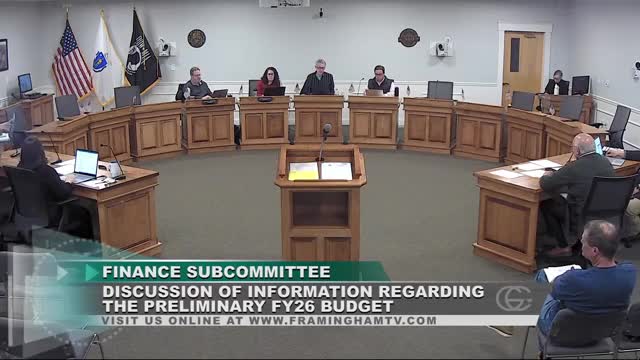
Mayor and administration staff gave the Finance Subcommittee a high-level briefing on the FY26 budget outlook on March 25, flagging several revenue uncertainties and expense pressures that will shape budget choices.
Administration officials said the school department initially proposed an FY26 budget increase of about $18 million; that figure was reduced to roughly $14 million and later to a proposed $12 million increase after school leadership made additional reductions. The mayor told the subcommittee the governors proposed FY26 budget includes roughly $6.5 million more in Chapter 70 school aid for Framingham, but cautioned the House and Senate review could alter that number and timing.
The mayor and finance staff outlined four primary levers to address the gap between projected revenue and departmental requests:
- Tax levy capacity: the city has excess levy capacity and could raise revenues above the 2.5% Proposition 2—1/2 baseline; administration emphasized this is an option, not a recommendation. The administration said each 1% increase in the levy collects roughly $2.23 million and estimated an average homeownercost of about $100 per year for a 1% levy increase (based on current average assessment levels discussed in the meeting).
- Free cash: the city has roughly $19 million of available free cash but officials cautioned against heavy reliance on non-recurring funds for recurring operating costs. Bond-rating advisors encourage conservative use of free cash.
- Targeted hiring freezes/attrition: the administration identified about 30to32 current vacancies and said roughly one-third to one-half could be targeted for delay. Some positions are mission-critical (for example, assessor staffing and certain treasurer's office roles) and must be filled.
- Department-level reductions: including potential program reductions or delaying capital projects when feasible.
The administration highlighted other fiscal risks: possible federal cuts to education-related programs that fund special-education and other services, a projected 13% to 15% increase in health-insurance costs for FY26, and growing costs for collective-bargaining settlements and debt service tied to capital plans. The mayor also noted Keefe Technical High School (Keefe Tech) has been accepted into the MSBA program and that, if built, Framinghamwould carry a substantial share of the regional districts capital cost when that project proceeds.
Committee members asked for clearer revenue projections and said they want early, specific guidance about priorities (for example, whether the subcommittee is willing to use levy capacity, how much free cash to rely on, or whether to apply a partial hiring freeze). The mayor asked for input and said he would plan the proposed FY26 budget with that guidance in mind.
Administration staff said they will limit non-essential fourth-quarter spending where possible and prepare a more detailed FY26 budget proposal and vacancy analysis for subsequent subcommittee meetings.