Get Full Government Meeting Transcripts, Videos, & Alerts Forever!
Get email alerts on the Compensation Classification topic
No spam. Unsubscribe anytime.
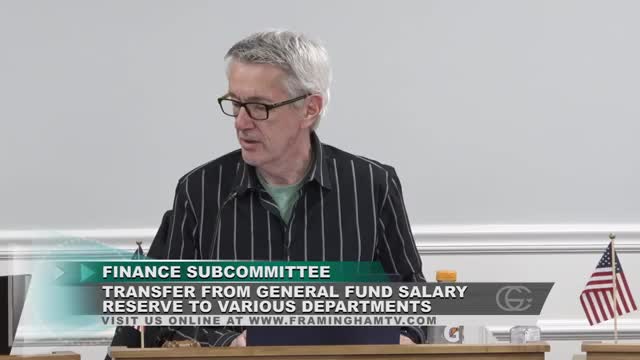
Finance subcommittee adopts revised classification and compensation structure retroactive to Jan. 1
Summary
After months of review, the subcommittee approved the classification and compensation proposal presented by consultants, adopting the version dated 03/12/2025 and making implementation retroactive to Jan. 1, 2025; annual cost estimates were reduced from initial proposals.
The Framingham City Council Finance Subcommittee voted to adopt a revised classification and compensation structure for city positions and to make the changes retroactive to Jan. 1, 2025.
Subcommittee members approved the version of the consultant's proposal labeled "revised 03/12/2025" after several rounds of review of job grading and step placement. The subcommittee chair said the adopted plan "fairly puts people on the level they should be on" while reducing the annual cost from an earlier estimate of about $715,000 to under $300,000 per year.
The compensation work was conducted in two phases: a classification (job-evaluation) process to establish internal equity and salary grades, followed by a market-based compensation analysis to recommend salary ranges. The consultant collected salary survey data (sixtieth-percentile analysis) from comparable communities and proposed consistent grade spacing and range spreads. Presentation materials covered approximately 145 positions across city departments.
Consultant representatives explained that the classification process relies on job-analysis questionnaires, interviews and a nine-factor evaluation to group "relatively equal work" into salary grades. Implementation guidance recommended that employees be placed at least at the minimum of a new proposed range, but the consultant and administration acknowledged budget constraints can affect step placement decisions.
Committee members debated implementation detail: whether to place employees at the first step of a new range or to apply a higher step plus a percentage increase. The subcommittee ultimately adopted the more conservative implementation (the "yellow" 03/12/2025 variation) that followed the consultant's grade recommendations but exercised committee discretion on step placement so the total annual cost fit budgetary realities. The motion approved adoption retroactive to Jan. 1, 2025.
Committee discussion emphasized balancing fairness to employees and fiscal prudence for taxpayers. One member said the plan gives "people growth in their job descriptions and job levels" while another cautioned that adoption creates recurring costs that will need to be reflected in the FY26 budget.
The subcommittee recorded the motion and affirmative acknowledgements during the meeting and instructed staff to carry implementation steps forward with Human Resources and finance for payroll action and budgeting.