Get Full Government Meeting Transcripts, Videos, & Alerts Forever!
Get email alerts on the Land Use topic
No spam. Unsubscribe anytime.
Commission holds first reading of ordinance to change rules for parking major recreational equipment
Summary
The commission conducted first reading of Ordinance 11‑77 to change where major recreational equipment may be stored on residential properties, but commissioners asked staff to clarify exemptions and enforcement implications before a second reading.
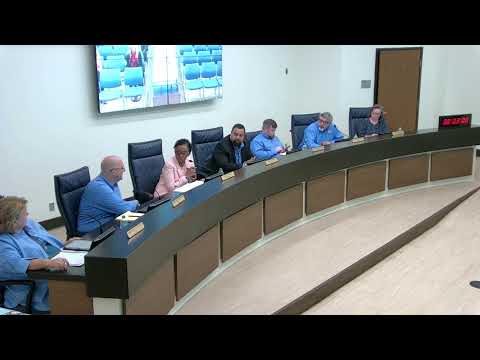
The Lynn Haven City Commission held a first reading of Ordinance 11‑77, which would amend the Unified Land Development Code to modify parking standards for “major recreational equipment” on residential property. The ordinance was modeled after Panama City language and would allow a single piece of major recreational equipment in a front or side yard subject to standards, instead of limiting placement to rear yards only.
What the ordinance would change: The draft ordinance defines "major recreational equipment" to include vehicles, vessels, trailers or large equipment used primarily for recreational purposes and would expand allowable parking locations on residential parcels while setting standards for setbacks and appearance. It also includes language that would prohibit major recreational equipment used for commercial purposes, a provision that prompted questions about food trucks and owner‑operators.
Discussion and concerns Commissioners and members of the public raised several concerns during first reading: - Code enforcement capacity: Commissioner Van de Grift warned the commission to consider enforcement burden if front‑yard parking becomes more common. "Code enforcement now has a hard enough time keeping up…" he said. - Exceptions and commercial use: Commissioners asked the city attorney to clarify whether the prohibition on "commercial purposes" would unintentionally affect food trucks or other small business equipment kept at residences. The city attorney said the provision appears aimed at equipment used by businesses and offered to verify intent with the authoring jurisdiction in Panama City. - Quantity limits: Some commissioners proposed allowing more than one item in certain driveways (examples ranged from no limit to a cap of two or three) and asked staff to consider driveway capacity and sightline issues.
Procedure and next steps This was the ordinance's first reading. The city attorney recommended follow‑up to clarify specific language (for example, the phrase related to commercial use) and to consider whether food trucks should be exempted or addressed separately. The ordinance will return for its second reading/public hearing as scheduled in the city's ordinance calendar and staff will provide revised language and answers to the questions raised.
No final vote on adoption occurred at first reading; the commission signaled interest in revisions before a second reading.
Quotes from the meeting "Code enforcement now has a hard enough time keeping up with what they have to deal with, and now there's going to be… a thousand more in the front yards," Commissioner Van de Grift said, urging caution.
"I don't know if we wanted to make a caveat specifically for food trucks because we like to be a food truck friendly city," one commissioner said during the discussion.
Staff follow‑up requests The city attorney will consult the Panama City ordinance author for intent on the "commercial use" prohibition and will draft clarified language for the second reading. Staff will also prepare information on typical driveway capacities, enforcement implications and potential exemptions for small‑scale commercial equipment such as food trucks.