Get Full Government Meeting Transcripts, Videos, & Alerts Forever!
Get email alerts on the Council Budget At Large Office Budgets topic
No spam. Unsubscribe anytime.
Detroit council debates bigger budgets for at‑large offices; council approves smaller, targeted increase
Summary
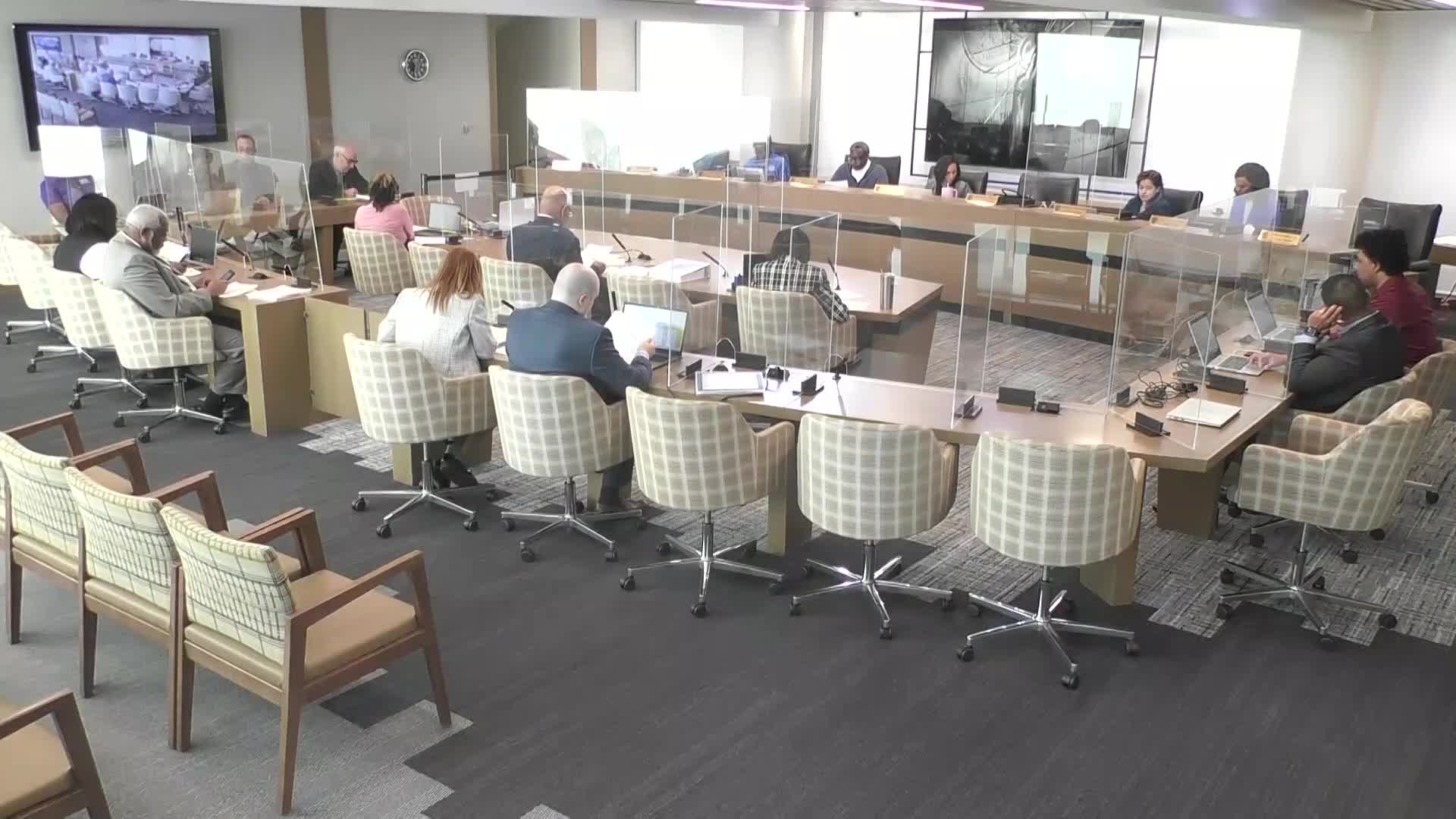
Detroit City Council members spent the closing-budget session debating whether to increase recurring budgets for at‑large council offices, a proposal Council member Mary Waters said would expand staff and citywide outreach.
Detroit City Council members spent the closing-budget session debating whether to increase recurring budgets for at‑large council offices, a proposal Council member Mary Waters said would expand staff and citywide outreach.
Waters presented a memo calling for an increase “from $1,340,000.00 to 1.534,” describing the request as a $500,000-per-office rise so at‑large offices could add staff, mailings and citywide outreach. “This funding adjustment is essential to support the broad citywide scope of at‑large responsibility and to ensure equitable, consistent service delivery for all Detroit residents,” Waters said while outlining staffing and outreach goals.
The proposal drew sustained pushback from several colleagues who said the request arrived too late in the budget process and lacked supporting documentation. Council member Scott Benson said the ask—later amended by Waters to $250,000 per office—was a “short‑fused request” that would add a substantial recurring obligation and that members had not been given time to review comparative data or itemized costs. Benson and others asked whether at‑large offices could fulfill the proposed services within current budgets or by working more closely with district offices.
Several council members urged more concrete numbers. Council member Coleman A. Young II described routine citywide outreach demands and said at‑large offices represent “7 times more people” than a single district, arguing for increased resources. Pro tem James Tate and other members called for greater coordination between at‑large and district offices to avoid duplication.
Waters cited a procurement estimate for a single citywide mailer at about $180,000 and said chief procurement staff had suggested a newsletter-to-registered-voters cost near $100,000 for roughly 240,000 recipients. Council staff later agreed to produce a report comparing resources allocated to at‑large versus district council offices in other cities.
When Waters moved the amended $250,000-per‑office recurring increase, the motion failed after objections and a vote. Later in the same session, Council member Durhall moved to add $100,000 per at‑large office as a recurring budget increase; the clerk recorded “hearing no objections, that action will be taken,” and the adjustment was placed in the budget.
Council members also recorded that $150,000 per at‑large office had previously been added earlier in the deliberations; together with the newly added $100,000, those figures affect the net increase but members noted they would still seek an LPD report to compare practices and funding levels in other cities.
Council members emphasized process and timing as issues: several said detailed, itemized cost estimates and examples from peer cities would be necessary before approving larger recurring increases in future budget cycles. Members who supported the larger increase said the aim was improved constituent outreach and faster response for residents across the city.
The council did not finalize any further recurring increases for at‑large offices during this session beyond the $100,000-per‑office addition and the previously recorded $150,000 allocation. Members agreed to a staff assignment to produce comparative data to inform future deliberations.
Ending note: the council directed staff to prepare a report from LPD comparing at‑large and district resource allocations in other jurisdictions and to provide itemized cost estimates for citywide mailings and proposed staffing changes.