Get Full Government Meeting Transcripts, Videos, & Alerts Forever!
Get email alerts on the Transit Accessibility topic
No spam. Unsubscribe anytime.
DDOT directors tell council bringing paratransit fully in‑house would nearly double operating costs; shelters to meet ADA standards
Summary
Detroit Department of Transportation Director described options for paratransit service delivery and estimated in‑house operation would cost far more than the current ‘everything but operations’ model; council pressed for a study before any major contract shifts and asked for more detail on how $2 million for shelters and benches would be used.
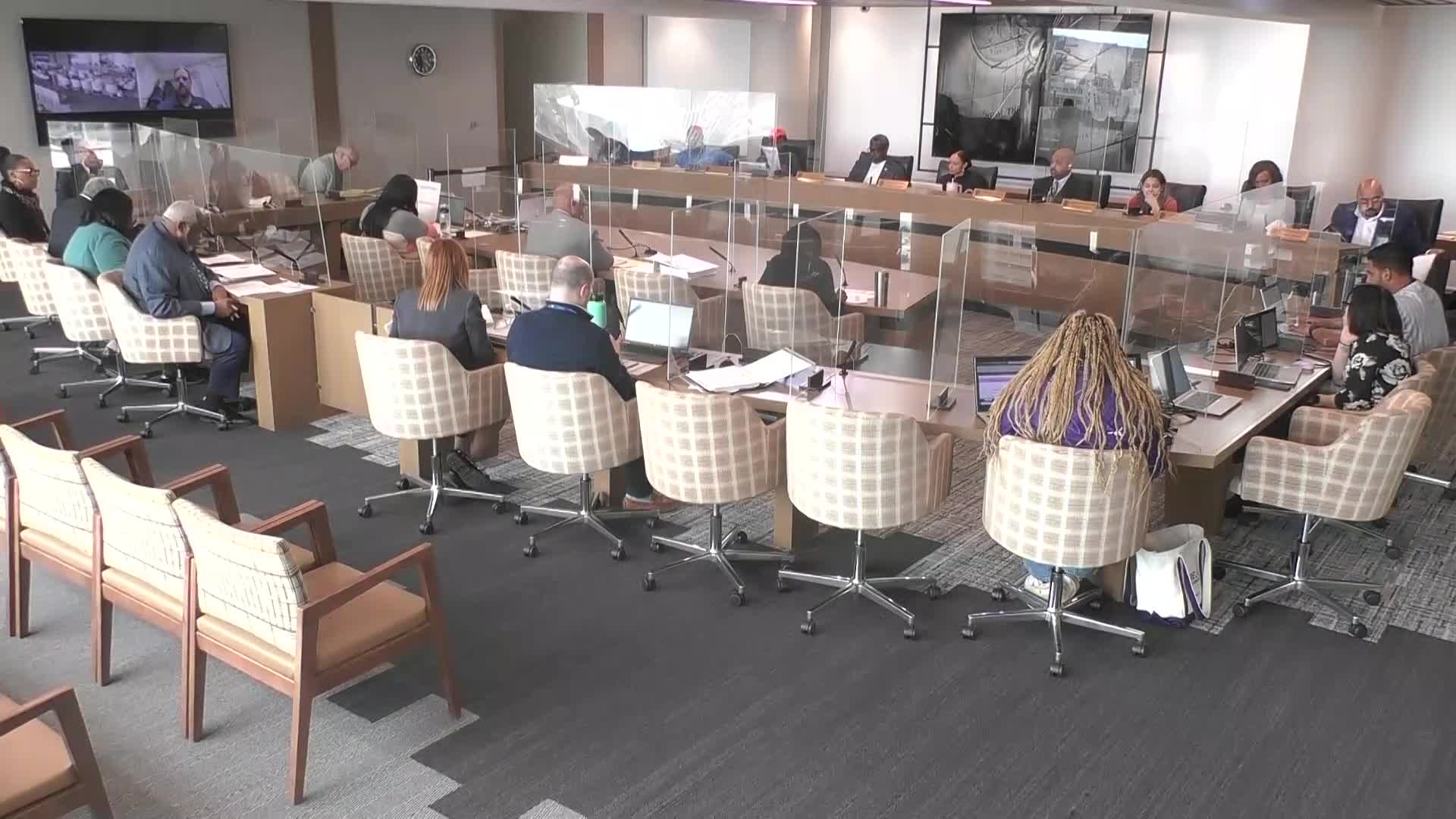
Detroit’s transportation director told City Council on May 20 that a full in‑house paratransit operation would likely cost substantially more than the current hybrid model, and that the agency should allow more time to evaluate whether to change the delivery model.
Why it matters: Council members and disability advocates said they continue to hear complaints about paratransit service quality and rider experience. The council asked DDOT for a more detailed, costed study before deciding whether to bring paratransit scheduling, vehicles and drivers fully under city management.
Director Malik Kramer summarized past analyses and the current hybrid arrangement: DDOT now runs scheduling, dispatch and customer service in‑house while contracting providers to operate vehicles. Kramer said a past analysis estimated annual costs of about $12–16 million for the current “everything but operations” model and roughly $21–31 million to operate fully in‑house. “Everything‑but‑operations…had a range of 12 to $16 million as kind of the annual cost. A DDOT in‑house operations…that range was 21 to $31 million,” Kramer told the council.
Kramer said the advantages of contracting include flexibility to scale capacity or shift work between vendors when problems arise; a fully in‑house model increases fixed costs (fleet procurement and maintenance, full‑time drivers with benefits) and reduces near‑term flexibility.
Council members asked for a formal research scope and cost estimate for a full analysis. Kramer recommended waiting another year to gather additional performance data from the current system and to assess the impact of recent operational changes. He said if the city moved to change the model it would likely face “pretty significant upfront cost to purchase the vehicles” and to staff and equip maintenance operations.
Shelters, benches and accessibility: The council also discussed a proposed $2 million increase for bus stop shelters and seating, and a separate recurring $2 million request for curb/landing pads and other stop improvements. Kramer said the ongoing formula grant program (FTA Section 5307) already programs capital for shelters and that roughly 100 replacement or new shelters are planned in the current capital rollout. He told the council every new or replacement shelter will meet ADA requirements: “Any place we're putting a replacement or a new shelter will be fully accessible…up to ADA accessibility standards.”
Kramer said the 5307 formula dollars are largely pre‑programmed in DDOT’s rolling capital plan—he offered to provide the council a location‑level breakdown of how the additional $2 million would be allocated and to follow up with a more detailed curb/landing‑pad plan.
Next steps: Council members asked DDOT to produce (1) a scoped cost estimate and timeline for an in‑house vs. hybrid paratransit feasibility study, and (2) a specific allocation plan showing where DDOT would place additional shelter/bench/curb funding if the council approves the supplemental amount in the closing resolution.