Get Full Government Meeting Transcripts, Videos, & Alerts Forever!
Get email alerts on the Utilities Energy topic
No spam. Unsubscribe anytime.
Lynn residents press National Grid over high winter gas bills; council votes to ask state regulators for review
Summary
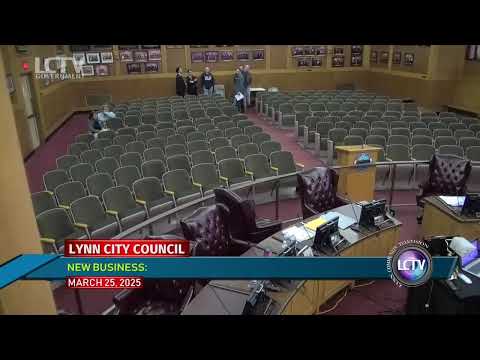
Lynn City CouncilUtilities Committee held a public hearing March 25 in which residents pressed National Grid officials for answers after unusually high natural‑gas bills this winter, and councilors voted to ask state officials and the Department of Public Utilities (DPU) for a review and clearer public notice.
Lynn City CouncilUtilities Committee held a public hearing March 25 in which residents pressed National Grid officials for answers after unusually high natural‑gas bills this winter, and councilors voted to ask state officials and the Department of Public Utilities (DPU) for a review and clearer public notice.
National Grid representatives told the committee cold weather and components inside the delivery charge explained much of the increase. "There are two main components to a bill: delivery and supply," a National Grid representative said. The company said winter temperatures in January averaged roughly 9.4% colder than the 20‑year average and that customer usage rose about 24% compared with the prior winter; an approved rate change that took effect in November 2024 also raised collection for programs such as Mass Save and low‑income assistance.
Why it matters: many Lynn households reported unexpected bills this winter that, in some cases, exceeded residents' monthly incomes and savings. The committee heard repeated testimony that delivery charges and pooled program costs were opaque, and that outreach and enrollment in assistance programs had not reached some affected residents.
National Grid presentation and relief options National Grid outlined the difference between supply (the cost the utility pays for gas, passed through to customers) and delivery (the company charge to operate and maintain the distribution system and to collect costs for programs such as Mass Save and low‑income assistance). The company said roughly half of the delivery charge goes to network operations while a substantial portion funds Mass Save and other mandated programs. Company staff said the recent winter relief deferment will reduce the delivery adjustment portion of bills by 10% for March and April, with the deferred amount recovered across lower‑use months in summer.
Company staff also summarized customer assistance options: a 25% discount rate for customers receiving means‑tested benefits (SNAP, MassHealth, fuel assistance), an arrears management program that National Grid said can forgive balances (company said qualifying customers on the discount rate who owe more than $300 and are at least 60 days past due may have arrears forgiveness up to $12,000 in a year), deferred payment agreements, budget billing and special medical/infant/elder protections. National Grid staff pointed to in‑person advocates who visit Lynn monthly at Kerwin Terrace and said multilingual staff are available to help customers enroll in programs.
Public comment: residents' experiences and concerns Dozens of residents spoke. Pam from the Mass Senior Action Council said program costs were not reaching some residents and noted that, "the delivery charge is more than their usage" for several neighbors. Mary Sweeney, a participant in a community solar farm, said the city must explain apparent discrepancies between solar production credits and billed usage. Other speakers described receiving sudden six‑hundred‑dollar bills, estimated billing after meter replacement, and difficulties getting Mass Save visits or reliable follow‑up from contractors.
Several residents urged state action: "None of this was voted on," one speaker said of the rate and program cost increases, and called for state oversight. Councilors also pressed company representatives for technical details about how program costs are recovered and whether those charges could be better signaled to customers ahead of the heating season.
Council response and vote After public comment the committee voted to request that the mayor and council draft a letter to state officials and the DPU asking for clearer public notice about program‑driven rate changes and for a review of the delivery charge reconciliation and Mass Save recoveries as they apply to Lynn customers. The motion carried by voice vote.
What comes next Councilors asked city staff and the mayor's office to draft a formal letter for council approval and to circulate it to the state delegation, the governor's office and the Department of Public Utilities. National Grid staff remained after the hearing and offered one‑on‑one assistance for customers who brought bills.
Ending The hearing left standing concerns about the transparency of delivery charges and how state‑level program costs flow onto monthly bills; the council's request to state officials aims to push for clearer notice and a formal review of recovery methods so residents may better anticipate bill impacts.