Get Full Government Meeting Transcripts, Videos, & Alerts Forever!
Get email alerts on the Arts And Culture topic
No spam. Unsubscribe anytime.
DIA tells Detroit council its exhibitions drew record crowds and millage funds support broad free programs
Summary
Detroit Institute of Arts staff updated the City Council on recent and upcoming exhibitions, millage-funded services for Wayne County residents, school and senior programs, and youth internships. The Tiff Massey exhibition alone has drawn nearly 200,000 visits, officials said.
The Detroit Institute of Arts told the Detroit City Council on Tuesday that recent exhibitions and millage-funded programs have substantially increased community engagement and visitation.
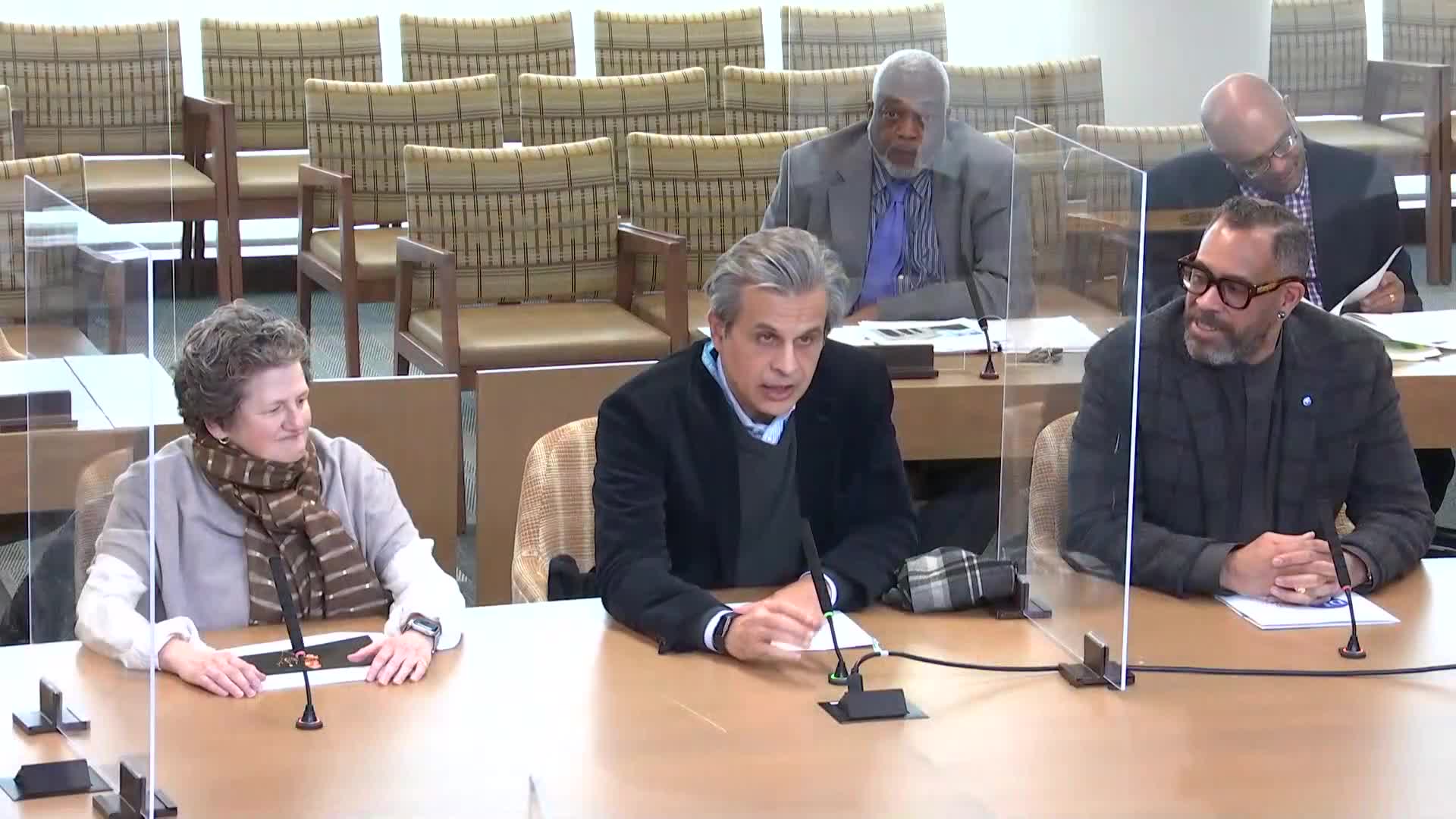
Salvador Ponce, speaking for the DIA, said the museum has mounted high-attendance shows and is expanding programs paid for by the museum millage that provides free benefits to residents of Wayne, Oakland and Macomb counties.
The presentation emphasized two recent exhibitions: Tiff Massey’s installation, which the DIA said ‘‘has drawn almost 200,000 visits’’ and has prompted record attendance, and an upcoming reinstallation of the museum’s African American galleries, which will be placed adjacent to Rivera Court and cover works from the early 19th century through about 1970. Judith Dockard, Deputy Director for Artification and Programs, described Massey’s work as large-scale wearable sculptures rooted in West African and Black American traditions and called the exhibition ‘‘an emotional’’ experience for visitors.
Ian Rapnick, the museum’s public affairs officer, outlined millage-funded public benefits: free general admission for Wayne County residents; free school visits including paid transportation for K–12 groups; senior programs that offer free group transportation and monthly music events; community partnerships such as the Inside Out public-art program; and paid summer internships for youth. Rapnick said the DIA provided roughly 32,000 Detroit students with visits in 2024 and that, across the millage period from 2013 through 2024, nearly 300,000 Wayne County students have participated in free field trips.
Council members asked for clarifications about specific points. Council member Coleman A. Young II asked whether works from private collections (the Whitaker collection) would appear in the African American reinstallation; museum staff replied that the Whitaker collection had participated in earlier exhibitions and that future opportunities were possible. Council member Mary Waters told museum staff she had been turned away at a museum entrance during a recent visit and the DIA apologized and said they would investigate that incident.
Rapnick also described community exhibitions and partnerships: the Inside Out program with outdoor installations in Palmer Park and the Avenue of Fashion, student art exhibitions including an annual Detroit Public Schools Community District (DPSCD) student show, and a Wayne County high school exhibition that will later display works at the Guardian Building. The museum said it operates a paid internship program for youth that places students in a range of departments.
On governance and finances, museum leaders said the operating endowment stood at about $444,000,000 as of December and that millage funds do not go to the endowment; millage revenue supports current operations, staff and programs, while the endowment is funded through separate fundraising.
The DIA staff provided written answers or promised follow-up where council members sought specific numbers, including the precise count of Detroit-based museum employees and the breakdown of membership by Detroit residents. The museum said current staff totals are approximately 449 employees and that 186 of those employees live in Detroit.
The museum’s presentation concluded with an invitation to council members to collaborate on outreach to boost youth participation in paid internships and the Teen Arts Council; several council members offered to help recruit students from Detroit schools.
The DIA presentation is part of the council’s budget hearing process; council members asked for additional written follow-up on staffing figures, teacher professional development schedules and details about prior agreements referenced during questioning.
The museum’s statements in the council chamber were limited to the material presented; where the council requested numbers or clarifications, DIA staff either cited the figures above or said they would provide further written information.