Get Full Government Meeting Transcripts, Videos, & Alerts Forever!
Get email alerts on the Ombudsman Report topic
No spam. Unsubscribe anytime.
Detroit ombudsman presents final annual report; council adds FTE and immigrant legal funding to executive session
Summary
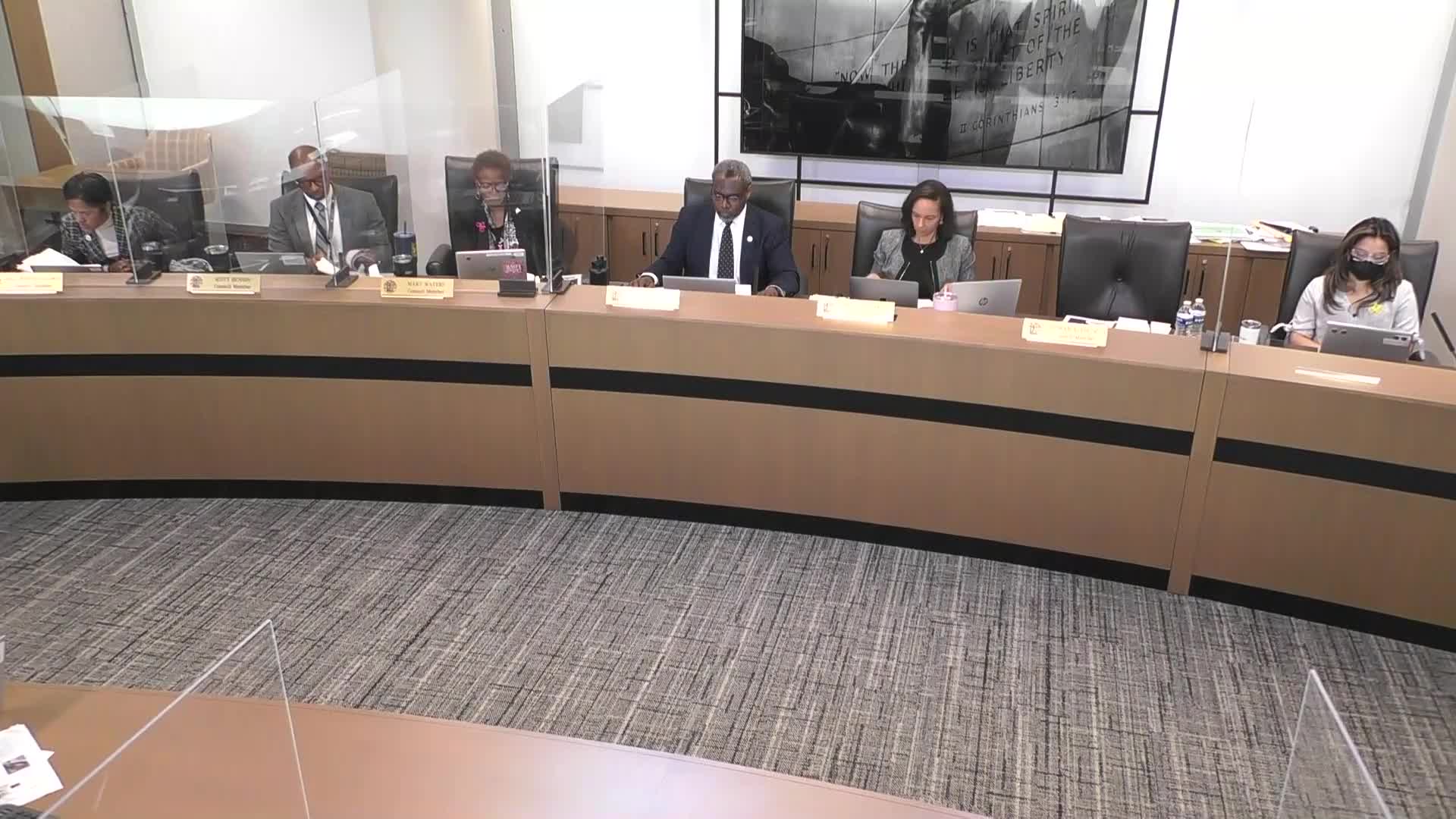
Bruce Simpson, ombudsman for the City of Detroit, presented his office’s ninth and final annual report to the Detroit City Council, outlining recommendations on education, code enforcement, housing fraud and immigrant services and asking for one additional full-time equivalent position in the office’s proposed budget.
Bruce Simpson, ombudsman for the City of Detroit, presented his office’s ninth and final annual report to the Detroit City Council, outlining recommendations on education, code enforcement, housing fraud and immigrant services and asking for one additional full-time equivalent position in the office’s proposed budget.
Simpson told the council that the ombudsman’s office has worked closely with Detroit Police Department leadership and community violence intervention partners and that the office’s approach is “balanced” and focused on producing results for residents: "The job of being the ombudsman for the city of Detroit requires me to have a balance objective approach when providing constructive criticism necessary to produce a product that our residents approve of." He highlighted recovery since Detroit’s 2013 Chapter 9 bankruptcy and said the city has produced major wealth gains in the past decade but still faces persistent problems that require attention.
Why it matters: Simpson’s recommendations tie service access, code enforcement and anti-fraud measures to residents’ daily quality of life and to larger efforts to retain and attract residents. The council moved promptly on several of his requests, adding further budget review of staffing and funding for immigrant legal services and agreeing to consider codifying an Office of Immigrant Affairs.
Actions and council decisions
- Council added the ombudsman’s budget item — including a request for an additional FTE — to the council’s executive session agenda after a motion was made and there were no objections. Simpson said the mayor’s proposed staffing level for the office is 17 FTEs while the ombudsman requested 19; the difference for one additional position was described as “under $200,000” (salary plus benefits) during the hearing. The council’s formal action was to place the budget discussion in executive session for further review.
- Council member Gabriela Santiago Romero moved to add to the closing resolution a directive to codify an Office of Immigrant Affairs and to create an ordinance establishing that office; the motion was carried by voice without objection.
- The council also agreed by voice to add $1,200,000 in one-time funding for immigrant case management and legal services to executive session consideration.
What Simpson recommended and the evidence he cited
- Education and small-business support: Simpson urged that city leaders prioritize education and support for small businesses alongside attracting major development. He said the city must address gaps in the public school system to retain middle-class families and build workforce capacity.
- Service access: Simpson said some departments (treasury, assessor, Housing and Revitalization Department) are not physically available to the public on some Fridays and urged increased in-person access to serve working residents who may use Fridays to attend to city business.
- Squatters and property fraud: Simpson warned that deed and mortgage fraud remain a problem and said the city will work with DPD on a comprehensive plan; he cited statistics attributed to the Wayne County Mortgage Fraud Task Force (13,013 inquiries, 2,343 cases opened, 1,172 search warrants, 505 arrest warrants, 347 convictions and 393 stolen homes returned) as evidence of the scale of the problem. Simpson said some responses may require state-level legislation in Lansing.
- Gas stations and convenience stores: Simpson noted roughly 200 active gas stations citywide and argued for incentives and financial support to help Detroit residents own and operate neighborhood gas stations and corner stores; he suggested the Detroit Economic Growth Corporation (DGC) could help administer such a program.
- Inspection and code enforcement of city-owned and affiliated properties: Simpson said the Buildings, Safety Engineering and Environmental Department (BSEED) performs property inspections but urged stronger enforcement so that vendors, affiliates and the city itself are not out of code. He used the Ford underground parking structure across from City Hall as a visual example shown in his presentation.
- Revenue opportunities: Simpson pointed to fee schedules in city code for dangerous buildings and trespass that could generate revenue and asked BSEED to provide confirmation before publication of a formal proposal.
Community engagement and office workload
Deputy Ombudsman Gail Bernard reviewed community engagement work from February 2024 through February 2025: nine monthly virtual office hours with 77 participants; 35 virtual community meetings; 22 satellite locations citywide; 50 in-person community events; 23 resource-table events; 70 emails reaching more than 15,000 people; and other outreach such as the Thanksgiving turkey drive (more than 700 families served) and school visits. Simpson and Bernard said most complaints are resolved without becoming formal investigations, though some require more intensive investigative work.
Councilmember questions and praise
Several council members praised Simpson’s office for its outreach and investigative work and asked for follow-up details. Council President Mary Sheffield and President Pro Tem James Tate publicly thanked Simpson for his service. Councilmember Mary Waters and Councilmember Leticia Johnson asked about the share of complaints that become formal investigations and about technological tools to improve complaint tracking. Simpson said the office’s case-management technology has been updated in past years and that his team works with the city’s GIS group to map complaints by district.
Quotes from councilmembers highlighted support for Simpson’s recommendations. Councilmember Gabriela Santiago Romero said the city should “codify the Office of Immigrant Affairs” and added that immigrant services and legal supports should be prioritized; she also moved the relevant additions to the closing resolution and executive session. Councilmember Scott Benson and others praised Simpson’s focus on code enforcement and anti-tobacco enforcement aimed at protecting youth.
Next steps and follow-up
- The ombudsman’s budget request (including the FTE) will be reviewed in executive session as the council directed.
- Council and staff indicated they will pursue codifying an Office of Immigrant Affairs by ordinance and will further consider the recommended one-time $1.2 million for immigrant legal services and case management in executive session.
- Simpson requested an additional appearance before council to place his 18 years of recommendations on the public record and to summarize outcomes and success rates; council members expressed support for that follow-up.
The hearing concluded after council members offered closing thanks to Simpson and his team; the council moved on to its next scheduled budget hearing on the Eastern Market.