Get Full Government Meeting Transcripts, Videos, & Alerts Forever!
Get email alerts on the Schools topic
No spam. Unsubscribe anytime.
Commission defers ordinance amendment to separate school regulations from other institutional uses after lengthy debate
Summary
Planning staff proposed removing the special‑use permit requirement for K–12 schools and creating clear design standards; commissioners deferred the amendment to allow staff and council coordination on thresholds, portable limits and specific uses.
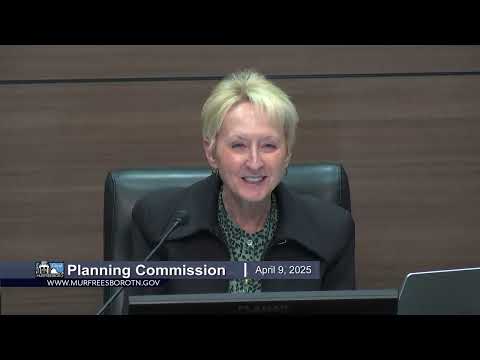
The Planning Commission on April 9 deferred action on a proposed zoning ordinance amendment that would separate K–12 school uses from other institutional group assembly uses, eliminate the Board of Zoning Appeals’ special‑use permit requirement for most schools, and set clearer standards for buffering, building height and certain thresholds for rezoning to a planned development.
Planning staff presented the draft ordinance and explained three circumstances that would still require rezoning to a Planned Neighborhood Development (PND) or Planned Unit Development (PUD): (1) when a school use is proposed on a property that has never hosted a school before; (2) when an addition or accessory structure of 50,000 square feet or greater is proposed; and (3) when athletic fields with lighting or amplified sound are proposed. Staff said the amendment would otherwise allow school uses and expansions by right in all zoning districts except park and would establish a Type C buffer where schools abut family residential zones to provide predictability for designers and applicants.
Commissioners and members of the public raised multiple concerns. Providence Christian Academy head of school Andy Sheets testified in favor of the amendment, saying private schools bear substantial construction and operating costs and should not face what he described as inequitable requirements compared with public schools. Sheets provided figures for school construction and operating costs and asked that projects already before the Board of Zoning Appeals be reconsidered under the new rules.
Commissioners debated several issues: whether private and public schools should be treated differently (some commissioners said public schools serve a public purpose and warrant relief; others said rules should be neutral), whether the proposed 50,000 square foot threshold was the right cutoff for triggering rezoning and public hearings, how to address long‑standing portable classrooms and whether to identify specific uses (for example, auto mechanics or large shops, ag barns, greenhouses, or animal uses) that should always trigger higher scrutiny. Commissioners suggested thresholds ranging from 5,000 to 50,000 square feet and discussed drafting a use‑based list in addition to a square‑foot threshold.
Staff said the draft could be revised to include additional triggers and to preserve conditions previously imposed by the Board of Zoning Appeals; staff noted that properties with prior special‑use approvals would remain bound to those conditions unless the school sought rezoning through the PND process to amend them.
After discussion, a motion to defer passed unanimously; commissioners asked staff to work with Council and affected stakeholders to refine the ordinance language, clarify a square‑foot threshold (commissioners suggested 20,000 as an option), add specified uses that would trigger planned‑development review, and address time limits or review processes for portable classrooms. Staff indicated they would return with revised language for commission and council review.
The public record for the item includes the draft ordinance, a list of recent school projects used to analyze the 50,000‑square‑foot threshold, and staff notes on buffering, height flexibility, and irrigation guidance.