Get Full Government Meeting Transcripts, Videos, & Alerts Forever!
Get email alerts on the School Firearms Policy topic
No spam. Unsubscribe anytime.
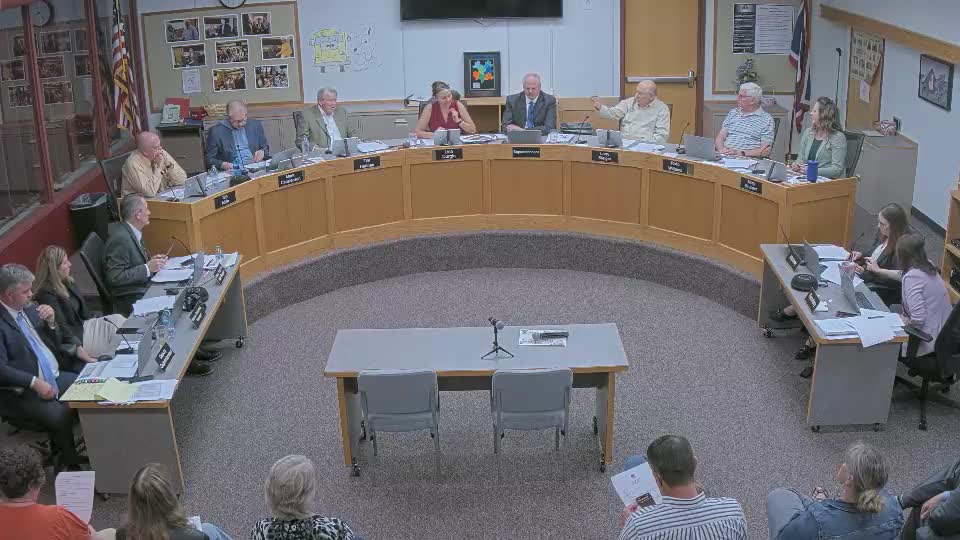
New concealed‑carry law prompts district to weigh policy options, insurance implications
Summary
House Bill 172 allows concealed carry in public schools under certain conditions and authorizes districts to regulate employees and volunteers; trustees asked administrators to develop policy options, consider public comment and examine insurance and liability impacts.
District administrators briefed the board on House Bill 172, the recently passed state law that allows concealed carry in public school facilities and preempts many local restrictions while granting school boards authority to adopt rules for employees and volunteers.
Administrators summarized the law’s provisions reported in the briefing: the statute permits concealed carry in public elementary and secondary school facilities; it allows districts to regulate or prohibit open carry, and to require firearms and ammunition be stored in personal lockboxes or biometric containers when not carried; it also permits the board to adopt training requirements for employees and volunteers (a suggested initial training course of not less than 16 hours of live‑fire plus eight hours of scenario‑based training was mentioned in the briefing as one statutory example). The law includes exemptions for facilities with explosive or volatile materials and creates a misdemeanor offense for knowingly prohibiting a person with a lawful concealed-carry permit from entering where the statute allows such entry.
Trustees asked legal and risk‑management questions. District counsel and legal staff said the statute allows the board to create rules for employees and volunteers, but that adding requirements beyond the statute’s list could invite legal challenges; counsel recommended public notice and a 45‑day Administrative Procedure Act (APA) comment period if the district adopts new rules that amount to administrative regulation. The board’s insurer advised trustees that, under the district’s current liability insurance, the general public would be covered in an active‑shooter event but staff and volunteers who carry under district policy would not be covered unless the district purchased additional coverage; administrators said that additional coverage to include staff/volunteer coverage would cost roughly $20,000 per year (district estimate shared at the meeting).
Administrators recommended the policy committee draft options for board consideration, host public comment (including hearings outside regular board meetings), and consider a first reading followed by public notice under the APA. Trustees asked for more detailed recommendations, legal review and insurer input; the board set the matter for expedited policy‑committee work and planned dinner/committee sessions and follow‑up public hearing(s) because the law takes effect July 1.
What the board did and did not do The board did not adopt a new policy at the meeting. Trustees directed the policy committee and district counsel to draft policy options and to coordinate public hearings and insurer review; there was no formal vote on a specific concealed‑carry policy at the meeting.
Next steps Staff and counsel will produce policy options, obtain insurer cost information, follow APA notice timing as needed, and schedule policy‑committee and public hearings prior to any first reading of a policy.