Get Full Government Meeting Transcripts, Videos, & Alerts Forever!
Get email alerts on the Infrastructure Fish Passage topic
No spam. Unsubscribe anytime.
WSDOT outlines $82 million estimate, multi-year plan to replace I‑5 culverts to restore fish passage at McAleer Creek
Summary
WSDOT presented a design-build project to replace two culverts on McAleer Creek under I‑5 and one on Scriber Creek, estimating $82 million for design, right-of-way and construction for three sites, with $17 million currently funded for design and ROW and construction funding pending legislative decisions.
Lauren Padgett, public information officer for projects and design at the Washington State Department of Transportation, described a design-build package to replace three culverts, two on McAleer Creek under Interstate 5 and one on Scriber Creek under SR‑524, intended to improve fish passage and open miles of upstream habitat.
“We’re estimating a total cost for design right of way and construction of about $82,000,000 for the 3 culverts,” a WSDOT project presenter said during the forum, adding that approximately $17,000,000 is currently funded for design and right-of-way work and that construction funding has not yet been secured.
WSDOT staff said the design phase will reach roughly 30 percent before the design-builder completes detailed design; the agency expects proposals from design-build teams in the summer of 2027, an award in fall 2027, and possible construction beginning in spring 2028 if funding and scheduling follow the current plan. WSDOT staff emphasized the funding and timeline are contingent on legislative priorities.
The project is part of the state’s fish-passage efforts tied to a court injunction requiring correction of certain state-owned culverts, WSDOT staff said. Replacing the McAleer and Scriber structures would open about 5.86 miles of upstream habitat for Chinook, sockeye, coho, coastal cutthroat and steelhead, according to WSDOT’s presentation and Department of Fish and Wildlife maps.
WSDOT described likely construction staging that could include lane shifts on mainline I‑5 and in the Northeast Cloverleaf area, with temporary excavation from the east side of I‑5 and incremental placement of larger precast concrete structures. Staff said sequencing and exact traffic impacts will be decided by the design-builder for constructability and efficiency, and that lane reductions have not been determined.
WSDOT staff also said one previously considered culvert (an unnamed tributary under a city maintenance road) was removed from the bundle after consultation with tribes and the Department of Ecology; that crossing does not meet the injunction criteria because it does not go under a state-owned roadway. WSDOT noted the bundle originally included an additional Thornton Creek site that has been removed and is being delivered separately because of complexity.
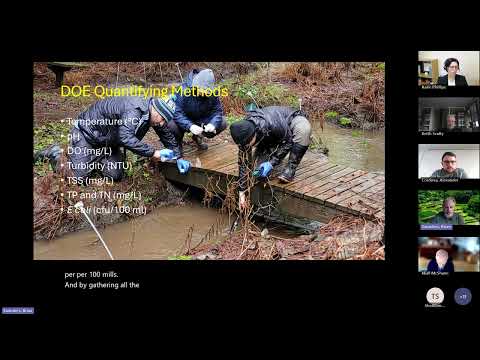
Forum participants asked about monitoring and responsibility after construction. WSDOT said design-build contracts include a post-construction monitoring period typically assigned to the design-builder; the state will maintain monitoring responsibility for crossings under state right-of-way after that period. WSDOT also said it will hold essential-services briefings and additional public outreach as the project nears the construction phase.
Officials emphasized the project’s trade-offs: the crossing under I‑5 is a complex, high-impact location that requires major traffic management to open several miles of habitat. WSDOT staff urged continued communication with local jurisdictions about sequencing and construction impacts and said more detailed monitoring, sequencing and permitting details will be firmed up in the RFP and proposal phase.