
District describes ESSER late-liquidation request and $47 million figure; staff say classroom operations not immediately affected
Get AI-powered insights, summaries, and transcripts
Subscribe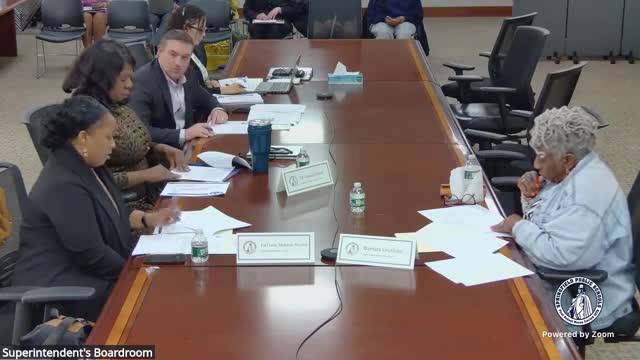
Summary
Superintendent and finance staff described Springfield’s late-liquidation requests for ESSER capital projects and said the district has paid most invoices and is continuing to seek reimbursement; staff said the reported $47 million figure on state-level actions refers to outstanding reimbursements rather than an immediate classroom budget cut.
Superintendent Dr. Dunnell and Chief Pat Roach briefed the subcommittee on an item labeled in the agenda as a possible $47 million cut related to federal ESSER grant funding and late-liquidation reimbursements.
Roach said the district applied for roughly $58 million in late-liquidation reimbursements tied to capital projects (HVAC upgrades, outdoor classrooms and playgrounds, an amphitheater at Scitech, an auditorium and gym work at Central, dishwashers and other site work). He said the district has paid roughly $54 million of those costs and has about $4.4 million unspent that remains associated with work not yet completed (the Scitech amphitheater was cited as one remaining major project). Roach told the subcommittee he expects DESE to continue processing reimbursements and that the state has indicated it will contest federal decisions denying some ESSER reimbursements; the district has a draw window opening April 20 to request additional funds.
Crucially, Roach and the superintendent told committee members that, because of earlier local decisions to avoid using ESSER funds for recurring salaries, the district does not expect an immediate impact to classroom staffing or day-to-day instruction if reimbursements are delayed. If federal reimbursement were ultimately denied for already-spent projects, the district said it would coordinate with city officials on how to address any resulting shortfall (bonds or other financing were discussed as possibilities) but emphasized there would be no immediate staff layoffs tied to the current situation.
Why it matters: the ESSER late-liquidation issue relates to large capital projects funded by federal COVID-relief grants; uncertainty about federal reimbursement timing could affect capital timelines and city-level finances but — according to district staff — should not directly affect classroom operations unless reimbursements are formally denied and city financing choices change.