Get Full Government Meeting Transcripts, Videos, & Alerts Forever!
Anacortes planning commission reviews draft climate element; commissioners debate electrification, battery storage and shoreline links
Summary
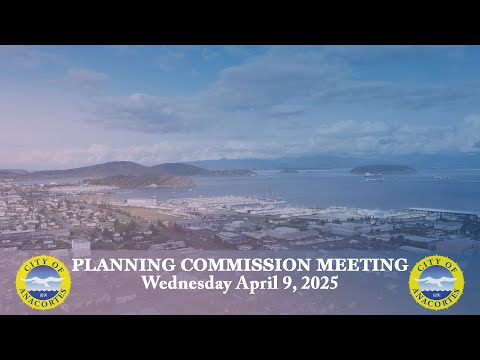
At its April 9 meeting the Anacortes Planning Commission reviewed draft goals and policies for a new climate element of the comprehensive plan and proposed edits to the environment and conservation element; presenters said the draft would move the city toward state greenhouse‑gas and resilience requirements but would not by itself close the gap to net‑zero.
Anacortes — The Anacortes Planning Commission on April 9 reviewed a draft climate element that city consultants say would set the city on a “good path” toward meeting state greenhouse‑gas and resilience requirements while leaving additional work for later implementation.
Consultants from MAKERS and Parametrics presented the draft goals and policies and explained how the proposals map to state guidance. John Coleman, director of the city’s Planning, Community and Economic Development Department, introduced Katie Saunders of MAKERS and Beth Miller of Parametrics, who led the technical overview and the draft list of goals and policies.
“This effort can do is set some initial ideas of targets,” Saunders said, describing the draft as the goals and policies portion of a two‑volume submission that will include analysis and recommended next steps. Parametrics’ Miller summarized statutory requirements and the two largest local levers she and the consultants identified: building fuel switching and reduced vehicle miles traveled. “First reduction is you have to have a plan that will result in reduction of overall greenhouse gas emissions, especially from transportation and land use,” Miller said.
Why it matters: the state requires a greenhouse‑gas emissions reduction subelement and resilience measures as part of the comprehensive plan update. The commission was shown a high‑level inventory and a draft implementation list that the consultants say would not, by itself, achieve the state’s full targets but would capture most locally actionable reductions.
What the draft would do: The consultants said the draft climate element contains 15 goals and 59 policies, of which they flagged 35 as “high priority” measures from Department of Commerce guidance. Key topics in the draft include: building energy (electrification and efficiency), reducing per‑capita vehicle miles traveled through land‑use and multimodal policies, local renewables and distributed solar, EV charging infrastructure, shoreline and coastal ecosystem restoration, urban forestry and wildfire risk management, and water and wastewater system resilience.
Major points raised by presenters…
Already have an account? Log in
Subscribe to keep reading
Unlock the rest of this article — and every article on Citizen Portal.
- Unlimited articles
- AI-powered breakdowns of topics, speakers, decisions, and budgets
- Instant alerts when your location has a new meeting
- Follow topics and more locations
- 1,000 AI Insights / month, plus AI Chat