Get Full Government Meeting Transcripts, Videos, & Alerts Forever!
Get email alerts on the School Bus Safety topic
No spam. Unsubscribe anytime.
Shelton aldermen open public hearing on stop-arm camera ordinance after informational session
Summary
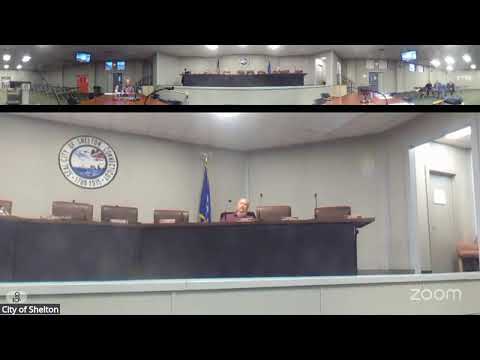
Shelton aldermen convened an informational session and then opened a public hearing on a proposed ordinance to authorize automated stop-arm camera enforcement for school buses, hearing a presentation from a vendor that said the program would be paid from fines rather than city general funds.
Shelton aldermen convened an informational session and then opened a public hearing on a proposed ordinance to authorize automated stop-arm camera enforcement for school buses, hearing a presentation from a vendor that said the program would be paid from fines rather than city general funds.
Raymond Baldwin Jr., administrative assistant for special projects in Mary Louretti’s office, told the Board that in one week earlier this year Shelton school bus drivers reported "581 violations of the stop school bus law" and said the city’s roughly 60 drivers make about 300 runs per day across a 180-day school year. Baldwin said those counts translate to a high number of dangerous encounters and that the city needs "a plan and a tool" to help bus drivers.
Brad McDowell of BusPatrol described the vendor’s system, which he said uses an automated violation-analysis tool called AVA and a two-person human review at BusPatrol before any potential citation is sent to local review. "We only send tickets to folks that you say yes to," McDowell said, describing an online review dashboard he called AlertBus for local reviewers. He said the vendor would handle mailing and payments and that program revenue can be used for public-safety initiatives under Connecticut law.
Why it matters: Aldermen were asked to consider how the city will implement review and appeal processes, who will be the local determiners of citations, and what the contract terms and revenue split will mean for ongoing operations. The presentation led to questions about error rates, camera coverage, and administrative procedures for hearings.
Details from the presentation and aldermen’s questions
- Program model and cost: McDowell said the program is intended to be violator-funded. He described a fee structure in which the civil penalty is $250 per paid citation and said BusPatrol’s operational fees include a recurring per-bus charge and a per-ticket fee when payments are collected (the presenter stated the recurring per-bus fee as $2.50 per bus per month and a $65 fee per paid ticket). He said any monthly per-bus fee rolls over during months with no violations and that at contract end any residual balance would be forgiven.
- Technology and accuracy: McDowell said AVA differentiates objects across multiple lanes and that two BusPatrol employees review each potential infraction before it reaches local reviewers. He described the camera as a 180-degree device that provides three photos (approach, adjacent, and passing) plus video links. On error rates, McDowell acknowledged that no system is perfect but said the combination of AVA and two human verifiers reduces misreads: "Ava reads the license plate and tells us, and then we have 2 humans verify." He also described processes to address stolen or fraudulent plates and transfer-of-liability procedures when a vehicle is driven by someone other than the registered owner.
- Local review and appeals: McDowell said local personnel chosen by the Shelton police department (they may be civilian reviewers, not necessarily sworn officers) would perform the final yes/no review; he urged timely review so tickets can be issued within statutory windows. He said residents retain a right to a hearing; the vendor recommended that the mayor appoint hearing officers (not the same person who reviews infractions and preferably not a police department member) to hear appeals in a manner similar to parking-authority hearings.
- Implementation details: Shelton staff indicated they will identify a local program director (Baldwin was named as the city’s program director during the meeting) and coordinate installation and deployment. Frank Scalzo, identified as director of operations for school buses, said the city transports roughly 4,000–5,000 students and that BusPatrol representatives and local staff visited Bridgeport to observe an active program. McDowell said the vendor will install and maintain cameras at no upfront cost and will transfer or refurbish units as the district retires buses.
Board actions and next steps
During the session aldermen approved a motion to adjourn the informational portion, then formally opened a public hearing on the proposed "school bus stop arm program and enforcement" ordinance. The hearing was later adjourned and the board indicated the ordinance will be acted on at the next regular Board of Aldermen meeting.
Quotes (selected)
"In just 1 week alone, this past January, our school bus drivers reported 581 violations of the stop school bus law," Raymond Baldwin Jr. said, stressing the frequency of stop-arm passings in Shelton.
"We only send tickets to folks that you say yes to," Brad McDowell said, describing the two-step human review and the role local reviewers would play.
What remains unresolved
Aldermen asked for specifics the vendor did not provide at the informational session, including the vendor’s internal per-bus installation cost, a final, city-approved set of business rules that define when a camera-recorded event becomes a local citation (for example, whether review will require the stop arm to be fully extended), and the identities of hearing officers the mayor would appoint to handle appeals. The proposed ordinance will return to the Board at its next regular meeting for further action.
Ending note
The Board scheduled formal consideration of the ordinance at its next regular meeting after completing the required public hearing process.