Lifetime Citizen Portal Access — AI Briefings, Alerts & Unlimited Follows
Presenters pitch $109 million American Globe Center for Norwich waterfront, seek state and private funding
Loading...
Summary
Tom Evans and Jim Warren presented plans for the American Globe Center during a Norwich informational meeting, pitching a $109 million cultural campus at the downtown waterfront that would include a recreation of the 1614 Globe Theatre and an indoor performing arts center.
Tom Evans and Jim Warren presented plans for the American Globe Center during a Norwich informational meeting, pitching a $109 million cultural campus at the downtown waterfront that would include a timber‑framed recreation of the 1614 Globe Theatre, an indoor performing arts center, gallery and event space.
The proposal, presented by Tom Evans (presenter, American Globe Center) and Jim Warren (presenter, American Globe Center), said the project would be funded primarily with private investment, New Markets Tax Credits and a draft state appropriation. Kevin Brown, president of NCDC, joined the presenters at the meeting and flagged early state interest.
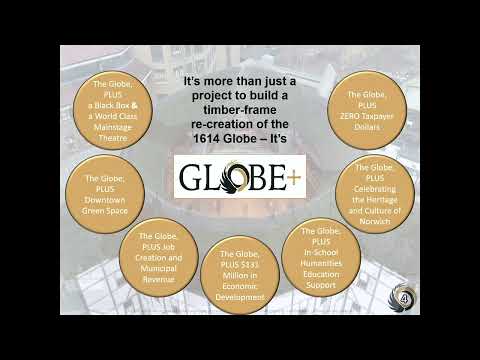
The presenters argued the center would be an economic engine for downtown Norwich. Evan's projection—based on a conservative 50% average attendance across a repertory model—estimated roughly $131,000,000 in revenue flowing to local businesses and between $300,000 and $500,000 in municipal revenue from a proposed $1-per-ticket surcharge. Evans said the campus would create about 100 jobs and that ticket prices would include very low‑cost options: “You’ll be able to see a show in the globe for $10,” and he added that top prices would be modest, with Globe seats topping out near $45 and a main‑stage maximum of about $60.
“We are offering our actors a different type of contract, so they’re going to want to move to town, stay in town, raise their families,” Evans said, arguing the project would increase the local tax base without “any municipal dollars from Norwich embedded in our plan today.” He described a three‑year construction timetable and said the group hopes to open on Shakespeare’s birthday, April 23, 2028.
The heart of the proposal is the 1614 Globe recreation. “Shakespeare built a theater of the imagination into his plays,” Jim Warren said, describing staging conditions—an open‑roof, audience on three sides and close physical proximity—that the presenters say will create a distinctive live experience and a “third place” for residents and visitors. Warren pointed to prior examples, including the Blackfriars Playhouse in Staunton, Virginia, and the Stratford and London Globes, to support the audience and economic claims.
Project budget and fundraising: presenters said the total budget is $109,000,000, with about $9,000,000 earmarked for a restaurant. They described a capital raise that includes approximately $37,500,000 from impact investors who would receive a tiered, modest return over time and expected to pursue New Markets Tax Credits through a certified CDE. Evans said state legislators had drafted a short bill proposing a $3,000,000 appropriation to NCDC to help acquire parcels and begin early planning; he said the bill is progressing through the legislative process but that the timing and disbursement are “not gonna show up for a while.” The presenters also described a $1,614,000 “1614 kickoff prospectus” to fund feasibility, early planning and outreach.
Design and site issues: the presenters showed conceptual renderings for a campus of buildings set above the flood plain, explaining architects have proposed terracing to place the Globe and performing arts center above the river flood line while retaining a riverwalk below. They identified target parcels downtown, including the octagonal building near the top of the hill, two nearby law offices and 101 Water Street (a parking deck they said is likely not available at present). Evans said the team would pursue parcel acquisition but would not ask Norwich for municipal funding in the current plan.
Education and local partnerships: the presenters said education and workforce development are core to the plan: internships, K‑12 partnerships, summer camps, teacher training and potential graduate technical programs tied to the center. Evans and Warren spoke of discounted or free tickets for local students and collaboration with local theaters. “We’ve already done some workshops with Chestnut Street,” Evans said, and he repeatedly emphasized a willingness to coordinate with existing downtown arts groups so they are not displaced.
Questions and local concerns: several elected members asked for more detail and cautioned about unintended consequences. “So morally, I’m in support of this,” Alderman Singh said, but he pressed for more financial detail and asked about expected returns. Alderman Hayes asked specifically, “How do you envision working with them so they don’t get pushed out?” and the presenters pledged promotional partnerships, passport discounts and cross‑marketing to route visiting audiences to existing local theaters and arts venues.
On the legislative funding element, the city manager asked, “Can you clarify a little more about the, $3,000,000 proposal by the legislature at this point.” Evans replied that Senator Austin had placed a bill on the floor to provide $3,000,000 to NCDC to begin the process and that the delegation supporting the project would need more detailed plans as the bill moved through Hartford.
No formal city action or vote was taken at the meeting. Presenters asked for municipal support in conversations with the state delegation, help identifying available parcels and connection to local fundraising and investor networks. They said they would continue fundraising and planning work and requested stakeholder meetings with local theater leaders, city staff and council members.
The presentation closed with an offer from the presenters to meet again and with Warren noting personal commitment to the project: “I live here now, so I’m happy to have coffee with anybody who wants to talk about this.”
The Norwich informational provided a first look at the American Globe Center proposal and left several follow‑ups for council and staff: detailed pro forma and risk analysis, a clarified parcel list and purchase strategy, additional information on investor commitments and New Markets Tax Credit partners, and a timeline tied to state appropriation outcomes.