Get Full Government Meeting Transcripts, Videos, & Alerts Forever!
Get email alerts on the Early Childhood Regulations topic
No spam. Unsubscribe anytime.
EEC seeks public comment on rule changes to raise subsidy eligibility to 85% of state median income
Summary
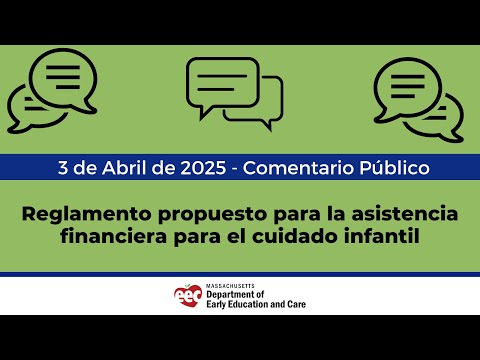
The Department of Early Education and Care opened a virtual public-comment session on proposed regulatory revisions to align agency rules with Chapter 15A, Section 13A, raise income eligibility to 85% of the state median income and add priority access for certain groups; the public comment period closes April 15.
The Department of Early Education and Care held a virtual public-comment session to review proposed regulatory revisions that agency staff said would align the department’s rules with Chapter 15A, Section 13A and raise income eligibility for a child-care subsidy program to 85 percent of the state median income.
Department staff said the package would also create priority access for households at or below that eligibility threshold and for certain vulnerable groups, and would include administrative changes to documentation, technology and outreach to non‑English speakers.
Robert Auschmanns, a department regulatory attorney, framed the session as part of implementing budget and statutory directions. “La regulación que estamos acá hoy para discutir se ha hecho en respuesta a la codificación, que es el capítulo quince de sección trece A,” he said, explaining the proposed rules are intended to align the department’s regulations with the legislature’s coding.
Nicolás, a department staff member who described his role as coordinating financial resources and vouchers, summarized the primary policy changes presented: “el principal es incrementar la elegibilidad al ochenta y cinco por ciento de el ingreso estatal promedio,” and said the proposal would include “acceso prioritario para personas que están en ese porcentaje del SMI” as well as priority for families experiencing homelessness, survivors of domestic violence and families with a child with a disability.
Staff also said the draft regulations would add program supports including help with documentation for applicants, updated technology, and expanded outreach to community partners and non‑English speakers.
A single public commenter raised two questions. Margaret (resident) asked for clarity about what family documents would be accepted to obtain an extension while on a probationary period, noting there is currently little guidance: “Tenemos muy poca información sobre las cosas que la familia podría presentar para estas extensiones.” She also asked whether the code change would affect how subsidies count for tax or benefit purposes; staff said that question goes beyond the department’s immediate interpretation and would be noted for consideration. The transcript does not record a definitive departmental answer on tax treatment; that issue was marked “not specified” in the session.
Staff reminded participants that the full draft and redline are available on the department website and that the public comment period is open through April 15. A department presenter said, “Estamos hablando del quince de abril, para que manden comentarios,” and that the department and the board will review submitted comments and include them in materials for a future board meeting where a final vote will be taken.
Background: presenters noted this is a follow-up to a broader regulatory rewrite completed about two years ago and that the legislature recently codified some elements into statute, prompting the narrower set of regulatory edits now under review.
Next steps: the department will accept written comments through April 15, incorporate public input into board materials, and bring the revised regulations back to the board for a final vote at a later meeting; no final regulatory vote was taken at this public‑comment session.