Get Full Government Meeting Transcripts, Videos, & Alerts Forever!
Get email alerts on the 2034 Olympics Climate Resilience topic
No spam. Unsubscribe anytime.
Panelists at University of Utah forum outline climate‑resilience priorities for 2034 Olympics, emphasize reuse of 2002 venues
Summary
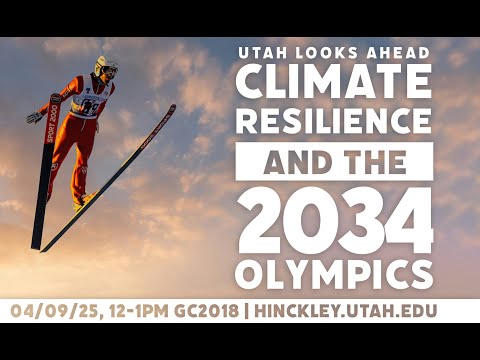
Panelists at a Hinckley Institute of Politics forum at the University of Utah said Salt Lake City’s bid to host the 2034 Winter Olympics includes commitments to reduce emissions, reuse venues from the 2002 Games and address regional air quality and the health of the Great Salt Lake.
Panelists at a Hinckley Institute of Politics forum at the University of Utah said Salt Lake City’s bid to host the 2034 Winter Olympics includes commitments to reduce emissions, reuse venues from the 2002 Games and address regional air quality and the health of the Great Salt Lake.
The panel — which included Park City sustainability staff, Ski Utah representatives, a former U.S. Olympic athlete and University of Utah sustainability staff — described a mix of technical, policy and community measures they say are necessary to deliver a climate‑resilient Games and long‑term legacy for Utah.
Cecilia Peterson, a Park City sustainability official who worked on the bid process, said one of the Olympics’ selling points was that the state would not need large new competition venues. “The fact that we don’t have to build new venues is huge for the bid,” Peterson said, adding that the Olympic Legacy Foundation and bid materials aimed for a “climate‑positive” outcome by measuring emissions from venues, transportation and legacy programs and offsetting or reducing them. She also said the International Olympic Committee factored climate commitments into its scoring of candidate sites.
Panelists described several areas of emphasis. Peterson and others cited air quality and the ecological health of the Great Salt Lake as top priorities tied to the Games’ promise to improve regional conditions rather than exacerbate them. Peterson said the bid and legacy planning reference ISO standards and circular‑economy principles for procurement and temporary structures.
Former U.S. Nordic combined athlete and GIS analyst Jared Shumate summarized research on snow reliability at Olympic outdoor venues. Using satellite imagery from 2002 through 2023, Shumate said, his team found that Soldier Hollow — the cross‑country, biathlon and Nordic combined site — was the most vulnerable: in 11 of the 23 years examined less than 25% of Soldier Hollow’s mapped area was covered by snow in March, and natural snow depth there averaged less than about 3 inches for much of March. “More or less, all of the venues are pretty reliable January and most of February, and then everything really trails off in March,” Shumate said, noting that the Paralympic Games, held in March, face greater snow reliability risk.
Panelists and athletes discussed snowmaking and athlete safety. Shumate and others said manmade snow behaves differently from natural snow, can break down into piled berms as it melts, and in some races increases the risk of crashes and injury. Panelists noted that snowmaking can extend reliability but requires substantial water, energy and infrastructure; it also has temperature limits and operational costs.
On municipal policy and infrastructure, Peterson described Park City’s existing climate work: a stated net‑zero (carbon neutral) target for the city, participation in a Utah renewable communities effort, and efforts to address building energy use through so‑called “stretch” codes within the constraints of Utah state authority on energy codes. She said Park City is also pursuing waste‑reduction strategies, landscaping (