Get Full Government Meeting Transcripts, Videos, & Alerts Forever!
Get email alerts on the District Finance topic
No spam. Unsubscribe anytime.
Business services presents budget ranges, self‑insurance update and facility priorities
Summary
District business services leaders briefed the board on budget projections, enrollment trends, a switch to self‑insurance, remaining referendum projects and the need to plan for possible multi‑million‑dollar reductions in later referendum years.
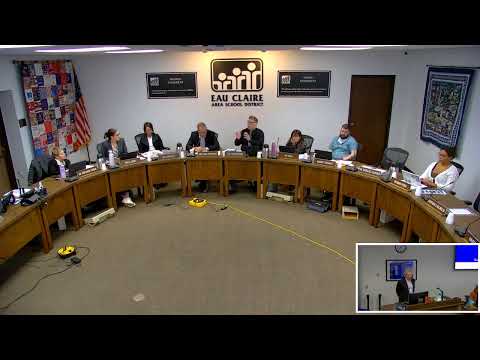
The board received an extended business services and finance briefing from Dr. Elworthy (doctor Elworthy in the transcript) and staff covering payroll and financial‑system replacements, the district’s move to self‑insurance in 2025, enrollment and revenue projections, and capital project priorities.
Dr. Elworthy said the district is implementing a new payroll/financial system planned for October and that the district implemented self‑insurance this year. He said increased Medicaid claiming and other procedural improvements produced higher recoveries for high‑cost special education this year — "We claimed over $2,200,000 compared to about $600,000," he said — and that the district has tightened procurement and RFP practices to get better value from major purchases.
The presentation described capital planning for the 2022 referendum projects: stadiums targeted for roughly 2,500 seats, library/media center overhauls at Memorial and North, technology closet and fiber work and other infrastructure updates. Dr. Elworthy said the district currently has about $52,000,000 remaining in referendum funds and that arbitrage and investment rules require moving those funds into a different investment vehicle if the money is not spent; the district expects to complete work within the next year if possible.
Elworthy summarized budget projections and risks: enrollment is declining in the district’s K‑4 cohort relative to graduating classes, state revenues and allowable revenue limits are primary drivers of the budget, and the district is modeling multiple scenarios for salary and benefit increases. He said the district is planning for a range of outcomes and told the board that, if unaddressed, the district could face a net reductions need of about $12,000,000 in year four of the referendum cycle. He also said his working goal is to restore $500,000 to the fund balance over time.
Other operational details presented: the district has moved toward bulk purchasing (paper) and bus/coach criteria for transportation decisions that produced savings; the new self‑insurance program tracked 172 visits in its first month and 222 in the next month; imaging referrals to a third party produced reported savings of about $123,300 in two months; and the district plans to propose the creation of a Fund 26 to manage capital projects with a required five‑year plan.
Board members asked for additional visuals and stressed the need to clarify ranges and assumptions; several members asked for a shorter frequent update cycle so the board can revisit projections as renewals and other data are finalized. No formal action was taken; the briefing was for information and future budget planning.