Get Full Government Meeting Transcripts, Videos, & Alerts Forever!
Get email alerts on the Student Mental Health topic
No spam. Unsubscribe anytime.
SMOB finalists push for more counselors, training and peer programs to address student mental health
Summary
At the debate, finalists for Anne Arundel County’s student member seat prioritized increased counselors, teacher training and peer-based programs to reduce stigma and expand services.
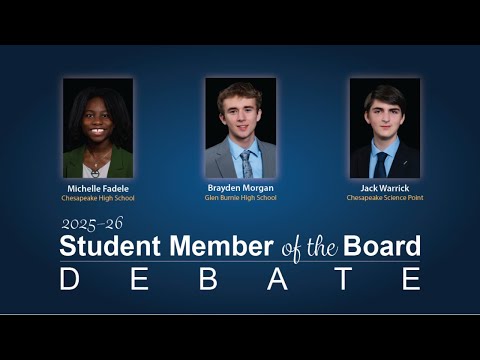
Annapolis, Md. — Mental-health supports were a central focus of the student member of the Board of Education debate on April 21, when all three finalists urged expanded counseling services, teacher training and peer programs to reduce stigma and reach students countywide.
Braden Morgan said he would advocate for more school therapists and “school sites” offering services, and he urged use of existing programs such as the Children’s Guild to broaden access. “Mental health leads to a lot of other growth such as student success, school safety, and an overall sense of well‑being and community,” Morgan said.
Jack Warwick called for bolstering student support services inside schools and adding programs that lower barriers to care. He said creating chapters of a student organization he called “Avidum” in every secondary school could help reduce stigma and change school culture: “Avidum improves students’ abilities to recognize oppression, has positive impacts on school culture, and especially importantly, lowers the stigma around seeking help,” Warwick said.
Michelle Fadel proposed training teachers to recognize mental‑health concerns in the classroom and described mentorships that pair students with both adults and peers. “Teachers know the students first then and there, and they know what they do normal and they could see if something happens going wrong,” Fadel said, adding that students should be able to seek help from counselors, administrators or teachers depending on circumstances.
All three candidates also suggested low‑cost or nonbudget measures to complement hiring more clinicians. Proposals included student mental‑health clubs, peer support networks, anonymous feedback channels and campaigns to increase awareness of services already available at school sites. Candidates repeatedly emphasized that raising awareness is a necessary step before expanding programs.
Candidates did not offer specific counselor‑to‑student ratios or dollar figures during the debate; those details were described as “not specified.”