Get Full Government Meeting Transcripts, Videos, & Alerts Forever!
Get email alerts on the Strategic Partnerships topic
No spam. Unsubscribe anytime.
District outlines partnership strategy; officials tighten classification, tracking and reporting
Summary
District staff presented a year‑one report on strategic partnerships, described a three‑tier intensity rubric and highlighted new or expanded partners including Madison Reading Project, Focused Interruption and Edgewood College.
The Madison Metropolitan School District’s instruction work group received a year‑one update on strategic partnerships and a briefing on the district’s partnership classification and tracking system.
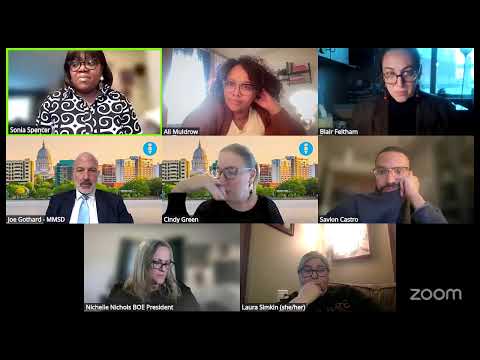
Sonia Spencer, senior director of strategic partnerships, told the board the office has refined a rubric that categorizes partnerships as low, medium or high intensity and is building an inventory for districtwide tracking. She said low‑intensity partnerships (rubric score 7–14) are typically school‑level or smaller contributions and require no board notification; medium‑intensity (15–24) and high‑intensity (25–38) partnerships require superintendent and board notification and annual reporting from the partner.
Spencer described the district’s current partnership mix: approximately 59 active district‑level partnerships (29 low‑intensity, 21 medium‑intensity and the remainder high‑intensity) and partnerships at 52 schools. She said common partnership goals this year have focused on literacy, tutoring and mental‑health supports and that some long‑standing partnerships are expanding their scope. As an example she said the Madison Reading Project, formerly a school‑level partner in some sites, is being expanded toward a districtwide literacy role.
Spencer also highlighted three new or recently emphasized relationships: Focused Interruption (a violence‑prevention and intervention group), Edgewood College (support for literacy/tutoring) and an expanded relationship with UW‑Madison Athletics around early‑literacy reading events and donated books. She said medium‑ and high‑intensity agreements include required end‑of‑year reports so the district can assess impact and consider adjustments to intensity level or terms.
Board members asked clarifying questions about how volunteer organizations and small community groups can support schools outside the formal partnership approval track. Spencer said volunteers should contact school secretaries or the district volunteer coordinator and follow the volunteer clearance process; she also encouraged community members to start by volunteering in schools to develop local relationships. Board members also pressed Spencer and Superintendent Gothard on using student and family voice to prioritize partnership objectives; Spencer and Gothard agreed that deepening student and family input should guide future partnership priorities.
Spencer asked board members for support in two areas: (1) continued engagement and visibility for partnerships at the board level so partners can present results publicly, and (2) periodic review of board policy to confirm that the partnership approval and reporting process is still suited to district needs. Simpson Street Free Press, Big Brothers Big Sisters, Centro Hispano, United Way and other long‑standing partners were discussed as examples of collaborations that produce reported outcomes and that the district is trying to track more consistently.
No board action was taken on policy at the meeting. The presentation concluded with an invitation for more direct partner engagement and for schools and departments to use the district’s partnership rubric and reporting processes.