Get Full Government Meeting Transcripts, Videos, & Alerts Forever!
Get email alerts on the Foreign Policy topic
No spam. Unsubscribe anytime.
Secretary Rubio presses NATO allies to raise defense spending, meets Indo-Pacific partners on China
Summary
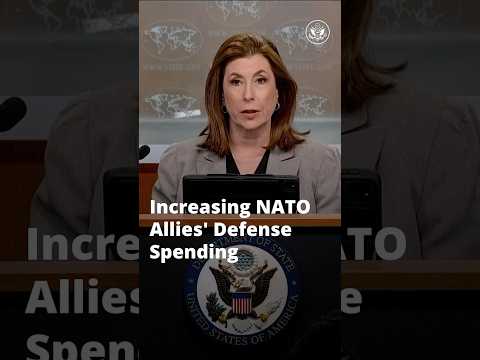
A State Department spokesperson said Secretary Rubio traveled to Brussels to attend the NATO foreign ministers conference and urged allies to increase defense spending, saying four NATO members — Estonia, Latvia, Lithuania and Poland — have publicly supported President Trump’s call for allies to raise defense spending to 5 percent of gross domestic product.
A State Department spokesperson said Secretary Rubio traveled to Brussels to attend the NATO foreign ministers conference and urged allies to increase defense spending, saying four NATO members — Estonia, Latvia, Lithuania and Poland — have publicly supported President Trump’s call for allies to raise defense spending to 5 percent of gross domestic product.
The spokesperson said another 10 NATO allies have announced additional increases to their defense spending since President Trump took office in January. “In the words of Secretary Rubio, ‘We want NATO to be stronger. We want NATO to be more viable. And the only way NATO can get stronger and more viable is if our partners, the nation states that comprise this important alliance, have more capability,’” the spokesperson said.
The briefing excerpt also said Rubio met with Indo‑Pacific partners to discuss what the statement called “the threats the Chinese Communist Party poses to our security and prosperity.” The spokesperson quoted Rubio as saying, “The region needs to be free from China’s coercive and unfair trade policies. Our security depends on” — the excerpt provided ends at that point.
The briefing excerpt did not announce specific policy changes, timelines or funding commitments. It recorded travel and meetings and summarized public statements about allied defense spending and concerns raised with Indo‑Pacific partners about China.