Get Full Government Meeting Transcripts, Videos, & Alerts Forever!
Get email alerts on the Medicaid Expansion topic
No spam. Unsubscribe anytime.
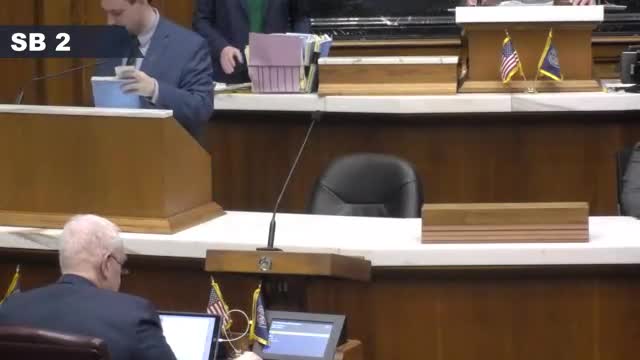
House passes bill tightening Medicaid expansion rules after hours of debate
Summary
The Indiana House passed Senate Bill 2, a package of changes aimed at the state's Medicaid expansion that the billauthor said would improve fiscal integrity and eligibility verification. Lawmakers debated redetermination frequency, retroactive coverage, and whether changes would cut access for vulnerable residents.
The Indiana House on April 8 passed Senate Bill 2, a bill the author said is intended to maintain the sustainability of the state's Medicaid expansion by tightening eligibility checks, clarifying presumptive eligibility and adding reporting and redetermination options.
The bill's sponsor, Representative Dr. Barrett, told the chamber the measure closes loopholes and adds safeguards including tightened presumptive eligibility, measures to track improper payments and a provision allowing retroactive eligibility for patients who qualify after receiving urgent care. "This is not a discontinuation of the services, but an alignment," Barrett said.
Supporters and opponents framed the debate as a choice between stewardship of public dollars and protection of access. Representative Shackleford read a constituent letter opposing the bill that warned it would force hundreds of thousands of Hoosiers off coverage and increase health-care costs; the letter said, "This legislation will not only create an unnecessary bureaucratic burden, but it will also increase healthcare costs for all Hoosiers by forcing hundreds of thousands of low income individuals off their coverage." Representative Shackleford and others emphasized the administrative burden of more frequent redeterminations and the danger of gaps in coverage for rural and low-income residents.
Representative Bauer and Representative Garcia Wilburn questioned whether the bill targets recipients rather than managed-care contractors and warned that added administrative costs could outweigh savings. "If we want to go after fraud... let's address the whistleblower lawsuit alleging that several institutions committed tens, likely hundreds of millions of dollars in Medicaid fraud," Bauer said. Garcia Wilburn said the bill risks losing federal matching dollars and could harm rural hospitals and providers.
Barrett and other supporters said the chamber had already removed a numerical enrollment cap that was in the senate version and that the bill includes protections such as 30 days of retroactive eligibility and specific language aimed at ensuring outreach to medically underserved rural areas. "There already is provisions in this bill to make sure that those in underserved areas, those in rural Indiana get this coverage," Barrett said.
The bill also includes a provision requiring the Medicaid office to post monthly reports and expenditures and to submit reports to the Medicaid oversight committee. Barrett said the agency was comfortable with the operational changes and that the legislation responds to uncertainty about federal policy and pending litigation affecting the state's expansion.
Votes at final passage were recorded in the House; the transcript records the bill as passed. The transcript does not include a single roll-call tally for the final passage within the recorded segments, and the bill sponsor identified several edits made in committee that removed a cap and added protections.
The package drew sustained floor debate across members concerned about coverage continuity, redetermination frequency and who would bear administrative burden. The House advanced the bill to final passage and the clerk was to inform the Senate of the action.
The House discussion followed committee-level changes made in previous sessions and reflects ongoing state-level debate over Medicaid expansion implementation and fiscal oversight.